The-overnighters

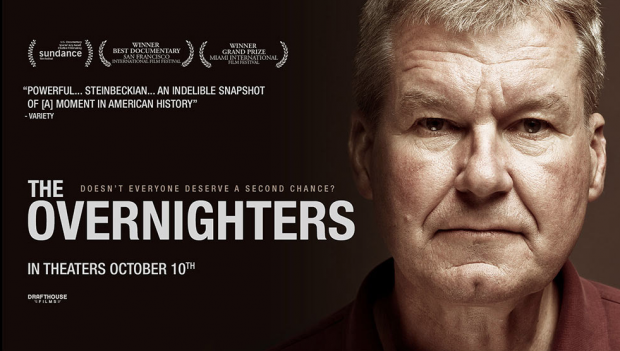
Over the break, I watched the documentary Overnighters on Netflix. 

In short, the documentary chronicles the story of a pastor who opens the church to migrant workers in North Dakota during the energy boom in that state. The pastor faces pushback from his congregation, neighbors, and city officials who do not appreciate having these men – some with criminal records – housed so close. 

In my opinion, the pastor is right, and the congregants are wrong, about the purpose of a church. The church should be in a community to serve, especially its needy neighbors. That said, the logistics of how to serve may be up for debate. Also, it is at least arguable that by serving the migrant workers the church strayed from serving its congregation. It would have been helpful if the church had a clear statement on its purpose and priorities. Many social enterprises have extremely vague purpose statements, which I do not think are very helpful. Benefit corporations are often required by statue to “benefit society and the environment.” A purpose statement like that would not have helped the church in Overnighters much at all. A statement that showed that those in need would be prioritized over the comfort of the congregants (or vice-versa) would have been more helpful.  

The more valid complaint from the congregation, is the claim that an appropriate process for initiating the housing program was not followed. Sometimes even if stakeholders agree on the ultimate action taken by the organization, the stakeholders will still be upset if they are not included, or listened to, in the decision making process. I think this complaint is likely also found in businesses. Assuring the proper processes are set forth and followed can be quite important for businesses, especially in closely-held and family run businesses, where the stakeholders are deeply invested. 

The documentary is depressing and does not paint a pretty picture of human nature, but I do think things would have worked out a bit better for most of those involved if purpose, priorities, and process were paid more attention.  Of course, that is much easier written than done. 

Ponzi schemes recur with an astounding regularity.  The latest comes from the Woodbridge group of companies.  The $1.2 billion scheme ran for about five years.  It took advantage of about 8,400 investors, many of them elderly. 

Like many other Ponzi schemes, commission-hungry sales agents brought fresh infusions of capital to the scheme.  Interestingly, the scheme allowed sales agents to pick how much they would receive in commissions:

The sales agents were paid well. According to the SEC complaint, “Woodbridge offered its [mortgage] product to its external sales agents at a 9% wholesale rate, and the agents in turn offered the [mortgage notes] to their investor clients at 5% to 8% annual interest — the external sales agent received a commission equivalent to the difference,” the SEC asserted.

In total, Woodbridge may have paid out over $64 million in commissions to sales agents.  Some of these sales agents had been kicked out of the securities industry.  The Investment News details some of the sales claims that enabled the scheme:

For example, one insurance salesman and former broker, James H. Gilchrist, promoted the loans at dinners in Jensen Beach. The invitation encouraged potential attendees to “learn how to earn 6% fixed interest” a year, touting “monthly income checks” and “no market risk” along with an entree of chicken alfredo, salmon or shrimp scampi. “How to make your retirement savings CRASH PROOF,” the invitation declared. Mr. Gilchrist did not return calls for comment.

Any registered brokerage firms that sold these investments may have a problem on their hands.  Brokerage firms have an obligation to do some diligence on the product to make sure that there is some reasonable basis for believing the product to be suitable for some customers. FINRA’s guidance provides that:

(a) The reasonable-basis obligation requires a member or associated person to have a reasonable basis to believe, based on reasonable diligence, that the recommendation is suitable for at least some investors. In general, what constitutes reasonable diligence will vary depending on, among other things, the complexity of and risks associated with the security or investment strategy and the member’s or associated person’s familiarity with the security or investment strategy. A member’s or associated person’s reasonable diligence must provide the member or associated person with an understanding of the potential risks and rewards associated with the recommended security or strategy. The lack of such an understanding when recommending a security or strategy violates the suitability rule.

From what I’ve seen, I’m not sure how these products would have passed careful scrutiny.  


Article-h-m2-0108

Swedish clothing giant H & M caused a huge stir this week with an ad campaign depicting a young black boy in a sweatshirt that proclaimed him the “Coolest Monkey In the Jungle.”  The company’s misstep is surprising given the public condemnations of the use of the word “monkey” in Europe over the past few years when soccer fans have used it as a slur against black players. Notwithstanding H & M’s many apologies, several megastars have denounced the company and some have even pulled their fashion collaborations. As usual, several have called for boycotts of the retailer. But will all of this really matter? The sweatshirt was still for sale in the UK days for days after the controversy erupted, and the Weeknd, one of the megastars who vowed to never work with H & M, still has his 18-piece H & M collection available online and available for purchase on the store’s  U.S. portal.

I’m headed out of the country tomorrow and in my quest for a new sweater, I glanced in the H & M store in my local mall earlier today. The store was packed and likely with fans of the artists who called for a boycott. No one was walking with picket signs outside. But as I have written about herehereherehere and at other times on this blog, I’m not sure that young American consumers–H & M’s fast fashion demographic–have the staying power to sustain a boycott. Perhaps the star power behind this boycott will make a difference (but I doubt it).Wall Street hasn’t punished the store either. The stock did not take a major hit. Moreover, CNBC has reported that in December, the company reported its biggest quarterly drop in ten years. This means that H & M’s pre-existing financial woes will make it even more difficult to determine whether a boycott actually affected the bottom line. 

Time will tell regarding the success of this latest boycott effort but in the age of hashtag activism, I don’t have much confidence in this latest boycott effort.


The new semester is upon us, and AALS (as it tends to) ran right into the new semester.  Joan Heminway provided a nice overview of some of her activities, including her recognition as an outstanding mentor by the Section on Business Associations, and it was a pleasure to see her recognized for her tireless and consistent efforts to make all of us better.  Congratulations, Joan, and thank you! 

I, too, had a busy conference, with most of it condensed to Friday and Saturday. (As a side note, it was pretty great to run along the water in 55-65 degree weather. As much as I love New York and appreciate San Francisco and DC, I’d be quite content with AALS moving between San Diego and New Orleans.)  I spoke on a panel with my co-bloggers, as Joan noted, about shareholder proposals, and I spoke on a panel about the green economy and sustainability, which was also fun.  It’s nice when I am able to spend some time with a focus on my two main areas of research. 

As to our panel on shareholder proposals, I thought I’d share a few of my thoughts.  First, as I have explained in the past, I am not anti-activist investor, even though I often think their proposals are wrong headed. I think shareholder (and hedge fund) activist can add value, even when they are wrong, as long as directors continue to exercise their judgment and lead the firm appropriately.   

Second, although I tend to have a bias for staying the course and leaving many laws and regulations alone, I am open to some changes for shareholder proposals. The value of the current system (especially one that has been in place for some time) is that everyone knows the rules, which means there is some level of efficiency for all the players.  

That said, the threshold for shareholder proposals has been in places since the 1950s.  The Financial Choice Act looks to move the proxy threshold from $2,000 and one-year holdings to a 1%/three-year hurdle.  That is a pretty big move. Updating the $2,000 threshold from 1960 would mean raising the threshold to around $16,000, so a move to what can be millions may be too much.  But $16,000 (basically updating for inflation), would make some sense to me, too.  Anyway, just a few simple thoughts to start the year. Hope your classes are starting well.  

AALS2018(SHProposalPanel)

Last week, I had the privilege of attending and participating in the 2018 annual meeting of the Association of American Law Schools (#aals2018).  I saw many of you there.  It was a full four days for me.  The conference concluded on Saturday with the program captured in the photo above–four of us BLPB co-bloggers (Stefan, me, Josh, and Ann) jawing about shareholder proposals–as among ourselves and with our engaged audience members (who provided excellent questions and insights).  Thanks to Stefan for organizing the session and inspiring our work with his article, The Inclusive Capitalism Shareholder Proposal.  I learned a lot in preparing for and participating in this part of the program.

Earlier that day, BLPB co-blogger Anne Tucker and I co-moderated (really, Anne did the lion’s share of the work) a discussion group entitled “A New Era for Business Regulation?” on current and future regulatory and de-regulatory initiatives.  In some part, this session stemmed from posts that Anne and I wrote for the BLPB here, here, and here.  I earlier posted a call for participation in this session.  The conversation was wide-ranging and fascinating.  I took notes for two essays I am writing this year.  A photo is included below.  Regrettably, it does not capture everyone.  But you get the idea . . . .

  AALS2018(Regulation)
In between, I had the honor of introducing Tamar Frankel, this year’s recipient of the Ruth Bader Ginsburg Lifetime Achievement Award, at the Section for Women in Legal Education luncheon.  Unfortunately, the Boston storm activity conspired to keep Tamar at home.  But she did deliver remarks by video.  A photo (props to Hari Osofsky for getting this shot–I hope she doesn’t mind me using it here) of Tamar’s video remarks is included below.

Tamar(Video-HariO)

Tamar has been a great mentor to me and so many others.  She plans to continue writing after her retirement at the end of the semester.  I plan to post more on her at a later time.

On Friday, I was recognized by the Section on Business Associations for my mentoring activities.  On Thursday, I had the opportunity to comment (with Jeff Schwartz) on Summer Kim‘s draft paper on South Korean private equity fund regulation.  And on Wednesday, I started the conference with a discussion group entitled “What is Fraud Anyway?,” co-moderated by John Anderson and David Kwok.  My short paper for that discussion group focused on the importance of remembering the requirement of manipulative or deceptive conduct if/as we continue to regulate securities fraud in major part under Section 10(b) of, and Rule 10b-5 under, the Securities Exchange Act of 1934, as amended.

That summary does not, of course, include the sessions at which I was merely in the audience.  Many of the business law sessions were on Friday and Saturday.  They were all quite good.  But I already am likely overstaying my welcome for the day.  Stay tuned here for any BLPB-reated sessions for next year’s conference.  And in between, there’s Law and Society, National Business Law Scholars, and SEALS, all of which will have robust business law programs.

Good luck in starting the new semester.  Some of you, I know, are already back in the classroom.  I will be Wednesday morning.  I know it will be a busy 14 weeks of teaching!

Over the holidays, I saw The Greatest Showman and Molly’s Game.  You wouldn’t have thought they’d be all that similar, but in fact, they’re both stories about nontraditional entrepreneurs who build unusual businesses from scratch. Molly’s Game understands that; sadly, Greatest Showman does not.  As a result, Molly’s Game is the more successful film.

The bulk of Molly’s Game is spent on building a business.  She learns the field, she identifies prospects, she finances and markets her game, she maintains her position and handles competition.  This is the heart of the movie and much of its appeal lies in the illustration of her ingenuity and expertise.

Those are also the best parts of The Greatest Showman, yet – and I rarely say this about a movie – the film was too short (1.5 hours). Too short because it quickly moves away from that theme to focus on a different story, namely, something about inclusion and acceptance for people who don’t fit society’s mold.  As one review put it, “it doesn’t really tell Barnum’s story. Rather, it appropriates his name for a pop-culture sermon on inclusion that lets us know, just in case we didn’t realize, that 500-pound men and bearded ladies are not just perfectly valid citizens but ‘glorious.’”

Now that’s a problematic theme for Barnum, and it’s more problematic when the whole idea is filtered through able-bodied, gorgeous, and white Hugh Jackman for the grownups and Zac Efron for the kids, but also, it gets away from what Barnum is famous for – what the title of the movie suggests – namely, his marketing genius.

Barnum is sometimes known as the Shakespeare of advertising for developing PR techniques that are still in use today.  He was skilled at writing punchy, eye-catching copy, spinning a yarn – which the movie tells us but only barely demonstrates, most prominently in a single, early moment when he enchants his daughters with an improvised tale to distract from his inability to afford a birthday gift.

(Sidebar:  The X-Files episode “Humbug” features a gem of a scene in which the curator of a local museum of circus oddities illustrates, in delightfully understated fashion, the type of storytelling power for which Barnum is remembered.  You can see it online here, just jump to the 21:14 mark – at least until someone sends a takedown notice.)

Anyhoo, given Greatest Showman’s short runtime, way more space could have, and should have, been devoted Barnum’s publicity stunts, his advertising skills, the efforts it took to build his brand, and his own ethical line (which didn’t, umm, necessarily match the law’s) between salestalk and fraud.  If the movie understood itself better, it could have highlighted those aspects of the character, and it wouldn’t even have had to sacrifice the feel-good-be-yourself message to do it.

So in the end, Greatest Showman didn’t live up to its own hype (Barnum would have been appalled). Molly’s Game, though, was a master class in salesmanship and business savvy.

As I have written about in past posts (see, e.g., here and here), I fall among those who do New Year’s resolutions.

In 2017, I was 25 out of 34 (73.5%). (Yes, I set 34 resolutions; I may be crazy).

The biggest realization I had this year was that I struggled with resolutions that required daily/weekly tracking. A daily/weekly resolution has at least three issues: (1) if screw up once, you’ve blown the resolution for the year, (2) just tracking the resolution takes habit formation and daily/weekly time, and (3) creating a daily/weekly habit is generally difficult.

So, instead of a resolution to run 5x a week, I had better luck with an achievement goal like “run a mile under 5 minutes by the end of the year.” If the achievement goal was tough enough to require roughly 5x a week running then the achievement goal could get you to basically the same place as the weekly goal without the meticulous tracking requirement and with allowing occasional time off. The bigger achievement goals, however, may need to be broken into smaller steps.

My toughest resolution for 2018, and I “only” have 22 resolutions this year, will probably be “at least 15 minutes of quiet/reflection/prayer before any screens (computer, TV, phone, etc.)” I think I had to structure this one as a daily goal, as its importance is tied up in getting each day off to a good start. We will see how it goes – so far so go, but we are only 5 days deep in 2018. It is possible that I will not do this every day, but the “stick” is that I don’t get any internet use that day either. 

Best of luck to all in 2018, whether you choose to make resolutions for the year or not.

The New York Times recently covered the puzzling persistence of high mutual fund fees.  The article focuses on Baron Funds, a mutual fund family led by Ronald S. Baron. It points out that Baron’s fees exceed the industry average by 54 percent.  Despite the high fees and finishing ahead of their indexes this year, the funds lag behind their benchmarks over a five year period. Baron argues that investors should take a broader view.  According to Baron, an investor that bought his flagship fund in 1994 would have roughly doubled the return otherwise obtainable from holding the S&P 500 over the same period. 

Notably, and not addressed by the Times, the content of Baron funds has changed since their launch.  Investors should not expect today’s large Baron funds to replicate their early performance.  Although Baron funds once made concentrated bets on small companies, the funds have changed as they have grown.  One 2012 article, pointed out that Barons changed its investment policies after a large stake in Sotheby’s imploded.  Baron changed the rules so that “no new investment can account for more than 10 percent of any of [the] funds.”  

Mutual funds get away with high fees for a variety of reasons.  Selling an investment may have tax consequences. Ordinary investors also struggle to understand exactly how much they pay asset managers.  Many rely on commission-compensated financial advisers. Mutual funds frequently pay a financial adviser to sell fund shares and a trail commission while the assets remain with the fund.  Unsurprisingly, financial advisers may leave client assets in these higher-fee funds.    

Today’s retail distribution channel also does a poor job of educating clients about fees.  Many clients fail to grasp even how their financial adviser gets paid.  One survey found that about a quarter of those over the age of fifty either incorrectly believe that their financial advisers give advice for free.  A sizable percentage know they pay something but don’t understand how much they pay their advisers.  With so much confusion about how financial advisers get theirs, it’s unsurprising that many investors lose track of mutual fund manager compensation.

In theory, a mutual fund’s directors should look out for the interest of the fund’s shareholders.  The Times called on Professor William Birdthistle to explain how mutual fund directors often identify more with the fund companies that pay them than shareholders.  Birdthistle also has an excellent book on the mutual fund industry that goes into much more detail about mutual fund governance issues.

At a time when many boards may be thinking of tax planning and possible M & A deals, they may have to start focusing more on the unseemly topic of their executives’ sex lives because the flood of terminations and resignations due to sexual misconduct shows no signs of slowing down. One of the most shocking but underreported terminations in 2017 related to VISA. The CEO, one year into the role, chose to terminate one of his most valuable executives after an anonymous tip about sexual misconduct.  He wanted his employees to know that the corporate culture and values mattered. Board members should look closely at the VISA example.

We will continue to see the rise of the #MeToo movement spurred on in part by the messaging from a star-studded task force  formed to address Hollywood issues and the establishment of a multimillion-dollar legal defense fund to help blue-collar workers. Even Supreme Court Chief Justice Roberts addressed sexual harassment in the court system in his Year-End Report on the Federal Judiciary.  More people than ever may now choose to come forward with claims of harassment or assault. Whether companies choose to terminate wrongdoers or the accused choose to resign “to spend more time with their families,” it’s a new day. As I’ve written here, companies will need to re-evaluate policies and training to navigate these landmines.

Board members will need to step up too. Boards of any size institution (including nonprofits) need to take the job of CEO succession planning seriously because the chief executive could leave, retire, or die. Boards must not only consider the possibility of a harassment scandal in the C-Suite but they must also worry about their fellow board members. Unfortunately, a KPMG study revealed that only 14% of board members believe they have a detailed succession plan for themselves. Members of the C-suite will also need to think more clearly about succession planning in the lower ranks. HR may have to redouble efforts to ensure that high-potential employees have no skeletons in the closet that have been swept under the rug. 

In the meantime, I and other former members of the Department of Labor Whistleblower Protection Advisory Committee have written an op-ed in the Boston Globe. Even if I had not co-authored the piece, as a former defense-side employment lawyer and compliance officer, I would recommend that company leaders take a look at it. Some of our recommendations for strengthening corporate culture are below:

1) have a trustworthy, independent system, with multiple reporting mechanisms, staffed with the proper skills to conduct swift, full, and fair investigations and to carry them to a just resolution, observing principles of confidentiality and discretion, and including ongoing protection of those who report;

2) make sure that there is a clear, credible anti-retaliation policy that protects accusers and witnesses who come forward in good faith;

3) require strong accountability for all levels of management for reporting and responding to complaints;

4) implement specific policies that direct bonuses, raises, and other incentives and opportunities to those who, in addition to meeting business targets, actively prevent and respond appropriately to harassment, retaliation, and other compliance problems. Consider clawbacks if unsupportive behavior later comes to light. Call out injurious behavior (without necessarily naming names) and credit exemplary behaviors;

5) periodically assess the culture and require an independent outside entity to confidentially administer anonymous surveys and interviews. The best of these use benchmarked and validated questions that can provide insight into the effectiveness of the compliance program and whether employees trust the system; and

6) make sure to involve unions and other formal and informal employee groups in developing new policies.

I wish all of our readers a happy and healthy new year. I wish board members and company executives good luck.