Reading closely is a highly valuable skill for both lawyers and law students.  But reading closely is not the only key to getting the most out of reading materials.  Often, knowing what to look for can help us discern what we’re really being told. An article at LawFare, How to Read a News Story About an Investigation: Eight Tips on Who Is Saying What, by Benjamin Wittes, does a nice job of providing some tools to help read news stories more carefully, and perhaps accurately, especially when it comes to sources.  Note that this piece applies to reputable reporters, not everyone who has written something about current events.  

One solid takeaway: 

Reporters publish what they know. If a story describes a series of interactions between a witness or a subject of an investigation and the investigators and the story contains information about one side’s thinking but not the other’s, that’s a powerful sign of where the disclosure came from.

Many of the skills here would translate into other settings, too.  For example, Wittes’ first rule: The Words Describing a Source Should Be Presumed Accurate.  He says, “Always start with the precise words the journalist is using to describe her sources. An ethical journalist will never write a sentence that is not on its own terms true.” This should be true of a SEC filings or other corporate disclosure documents, too, but it does not mean that the words will clearly communicate the same thing to all readers. 

Wittes’ Rule No. 2 also applies: Don’t Make Hasty Assumptions About Vague Sourcing.

While the words have to be true, they emphatically do not have to be evocative of some larger truth. While the words have to be true, they emphatically do not have to be evocative of some larger truth. The conventions associated with sourcing stories like these permit a certain degree of misdirection about which the reasonable reader should be savvy. Reporters have a duty to inform the public; they also have a duty to protect their sources. These goals often conflict, and the solution is sometimes to inform the public in a fashion that is technically accurate but is not what a naive reader would expect certain words to mean.

As to this rule, I would not say that “misdirection” is permitted in SEC filings, but this last part seems generally true of many SEC disclosures: they inform the public in a “technically accurate” way but not necessarily in a way that “a naive reader would expect certain words to mean.” I know some people will disagree with my cynical view on this, but that’s my take.  The closing advice: “Read sourcing sentences both literally and broadly.”  Same with disclosures.  

I recommend reading Wittes’ piece for its intended purpose and to see what you might take away for application in other settings. It’s a solid and thought-provoking overview, whether you agree with my assessment or not. 

Screenshot 2017-09-03 19.09.35

Now that Hurricane Harvey’s threat to the United States has dissipated, we can begin to fully appreciate the damage it has caused to person, property, and business.  It’s staggering.  The screenshot included above was captured from the Houston Chronicle’s website yesterday.  Although I am not sure how one calculates such things, Wikipedia notes that, “[b]ased on current damage estimates made by multiple agencies, Hurricane Harvey is likely to be at least the second-most costly natural disaster in U.S. history, behind only Hurricane Katrina in 2005.”  I am heartbroken for all those who have lost so much, yet grateful for those who survived such a wicked storm, including the BLPB’s own Doug Moll.

I am confident that too many folks are using this holiday weekend–one they had hoped to spend enjoying last-of-summer moments with family and friends–mourning the loss of life and digging out from the mess at their homes or workplaces.  The damage in Tennessee from the related rain and winds was significant but pales in comparison to what the folks have suffered and continue to contend with in Houston and the surrounding areas.  Luckily, the storm threw very little at Knoxville, since the heart of it passed to the West of us.  West and middle Tennessee were hit harder.

Many of us give to local and national charities at times like this, not knowing what else we might have to offer from afar.  Certainly, financial support directed to the right paces is always a good idea.  But there’s more we, as licensed attorneys, can do.  As you may have heard, the Texas Supreme Court has entered an order to permit the practice of Texas law by out-of-state licensed attorneys.  Our dean informed us about a helpful information page on the ABA website that you may want to check out that includes related and other information about how attorneys can help through and outside the ABA.  And there are many other websites with valuable information that we can either pass on or use to help.  Among others, on Labor Day, I might recommend the Department of Labor’s website, which has a webpage dedicated to recovery efforts.

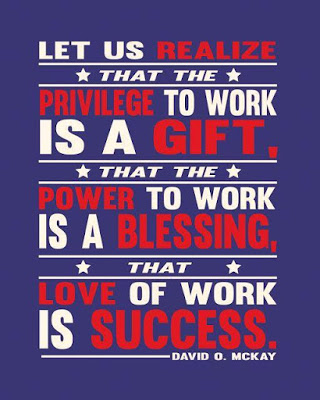
I know it’s early for Thanksgiving, but let’s all take a moment to be grateful for what we have this Labor Day.  For me, having a job that I love that enables me to help others while working with really intelligent and kind people is something to be grateful for every day.  Labor Day is a good day to remember that, so I have chosen an image to honor that sentiment below.  But let’s also take a moment to reflect on those whose lives and homes and work have been destroyed or disrupted by Hurricane Harvey and consider how we can play a role in the recovery.  Happy Labor Day, y’all.

  LaborDay2017(Poster)


So last week I posted about the problem of buyer/customer discrimination; we have laws to deal with discrimination by employers, by businesses that sell to the public, by landlords – but there isn’t much to address discrimination that runs in the other direction.

It was timely, then, that this article has been making the internet rounds:

When Penelope Gazin and Kate Dwyer decided to start their own online marketplace for weird art, they didn’t expect it to be easy. After all, the L.A.-based duo of artists were bootstrapping the project with a few thousand dollars of their own money and minimal tech skills. But it wasn’t just a tight budget that added friction to the slow crawl toward launching; the pair also faced their share of doubt from outsiders, spanning from the condescending to the outright sexist.

…  After setting out to build Witchsy, it didn’t take long for them to notice a pattern: In many cases, the outside developers and graphic designers they enlisted to help often took a condescending tone over email. These collaborators, who were almost always male, were often short, slow to respond, and vaguely disrespectful in correspondence. In response to one request, a developer started an email with the words “Okay, girls…”

That’s when Gazin and Dwyer introduced a third cofounder: Keith Mann, an aptly named fictional character who could communicate with outsiders over email.

“It was like night and day,” says Dwyer. “It would take me days to get a response, but Keith could not only get a response and a status update, but also be asked if he wanted anything else or if there was anything else that Keith needed help with.”

Dwyer and Gazin continued to deploy Keith regularly when interacting with outsiders and found that the change in tone wasn’t just an anomaly. In exchange after exchange, the perceived involvement of a man seemed to have an effect on people’s assumptions about Witchsy and colored how they interacted with the budding business. One developer in particular seemed to show more deference to Keith than he did to Dwyer or Gazin, right down to the basics of human interaction.

“Whenever he spoke to Keith, he always addressed Keith by name,” says Gazin. “Whenever he spoke to us, he never used our names.”

Stories like this are pretty common; for company founders, they may be disadvantaged but they can just try to power through it – as these women did – but when the woman on the receiving end is someone else’s employee, it can affect her job performance, as illustrated by this twitter thread.

In sum, plus ça change, plus c’est la même chose.


There has been quite a lot written about the relative lack of women on boards of directors (and their impact on boards of directors). See here, here, here, here, here, here, here, and here. Women hold slightly less than 20% of the board of director seats at major U.S. companies, depending on what group of companies you consider. See here, here, and here.

In this post, I am not going to discuss the vast literature on the topic of women in the boardroom or the quotas that some countries have established, but I do want to point out the curious lack of fathers at playgrounds in Nashville this summer. I am including this post in the Law & Wellness series because I think men and women would both benefit if we saw more fathers at playgrounds during the week.

During ten trips to our popular neighborhood playground, during weekday working hours, I saw 6 men and 72 women. Now, it is probable that some of the people I saw were nannies or grandparents, but I excluded the obvious ones and quite a large percentage seemed like parents anyway.

This is an extremely small sample, but the percentage of fathers at playgrounds with their children looks lower than the percentage of women on boards. While I haven’t counted, I have noted fairly similar ratios at the public library story-time, the trampoline park, the zoo, and the YMCA pool during weekday working hours.   

Perhaps this is not surprising, and perhaps the ratios are different in non-Southern cities (though Nashville is pretty progressive, at least for this area of the country). But I will say that I sometimes feel out of place and sometimes feel the need to explain myself when I am out solo with my children during “working hours.”

When asked, I do have a “good” explanation – a fabulously flexible job – but I sometimes imagine those conversations if I had chosen to stay home while my wife worked or if I were taking time off a “normal” 8 to 5 job. Unfortunately, I don’t think we are at a place, at least in my community, where we give fathers much respect for taking care of their children.  I consider raising my children an incredibly important and valuable role. Raising children is demanding and draining, but my life is undoubtedly richer for it. Over the last few years, I have also gained quite a lot of appreciation for people who raise children on their own; the job is difficult enough for my wife and me together. I am not sure what actions from government and business would be best for children, but I do know that both should be seriously considering their options. 

Uber has a new CEO. Perhaps his first task should be to require one of his legal or compliance staff to attend the FCPA conference at Texas A & M in October given the new reports of an alleged DOJ investigation.. I might have some advice, but Uber needs to hear the lessons learned from Walmart, who will be sending its Chief Compliance Officer. Thanks to FCPA expert, Mike Koehler, aka the FCPA Professor, for inviting me. Mike has done some great blogging about the Walmart case (FYI- the company has reported spending $865 million on fees related to the FCPA and compliance-related costs). Details are below:


THE F​CPA TURNS 40:
AN ASSESSMENT OF FCPA ENFORCEMENT POLICIES AND PROCEDURES

FCPA ConferenceThursday, October 12, 2017
Texas A&M University School of Law
Fort Worth, Texas

This conference brings together Foreign Corrupt Practices Act enforcement officials, experienced FCPA practitioners, and leading FCPA academics and scholars to discuss the many legal and policy issues relevant to the current FCPA enforcement and compliance landscape.

Register here

AGENDA

[Click here to download agenda pdf]

Registration, 8:30 a.m.

Morning Session, 9:00 a.m. to Noon

FCPA Legal and Policy Issues

  • Daniel Chow, Professor, Ohio State School of Law
    China’s Crackdown on Government Corruption and the FCPA
  • Mike Koehler, Professor, Southern Illinois School of Law
    Has the FCPA Been Successful In Achieving Its Objectives?
  • Peter Reilly, Associate Professor, Texas A&M School of Law
    The Fokker Circuit Court Opinion and Deferred Prosecution of FCPA Matters
  • Juliet Sorensen, Professor, Northwestern School of Law
    The Phenomenon of an Outsize Number of Male Defendants Charged with Federal Crimes of Corruption
  • Marcia Narine Weldon, Professor, Univ. of Miami School of Law
    What the U.S. Can Learn from Enforcement in Other Jurisdictions and What Other Jurisdictions Can Learn from Us

Luncheon, Noon to 1:00 p.m.

Afternoon Session, 1:00 to 3:00 p.m.

FCPA Conference JorgensenKeynote address

(1:00 to 2:00 p.m.)

  • Jay Jorgensen
    Executive Vice President, Global Chief Ethics and Compliance Officer, Walmart

Follow-up panel (2:00 to 3:00 p.m.):

FCPA Enforcement and Compliance Landscape: Past, Present, and Future

  • Kit Addleman, Attorney, Haynes and Boone LLP, Dallas and Fort Worth Offices
  • Jason Lewis, Attorney, Greenberg Traurig LLP, Dallas Office

CLE Credit for Attendees

All attendees are eligible for ​​5 hours of CLE credit. The morning session offers ​3 CLE credits. The afternoon session offers 2 CLE credits, one of which will be an Ethics credit. Forms will be provided to attendees at the conference. CLE ​credit is free for all attendees.


And so it continues:

In a recent case in the United States District Court, District of Columbia, a court messes up the entity (referring to one of the parties as “Howard Town Center Developer, LLC, is a limited liability corporation (‘LLC’)”) and also does a fine job of improperly stating (or really, failing to state) the law for veil piercing. 

I took the initiative to pull the initial complaint and the answer to see if either of the parties were responsible for calling the LLC a corporation. Both sides properly referred to the LLC as a “limited liability company,” so it appears the corporation reference is a court-created issue.

In the case, a property developer brought action to require a university landowner to reinstate a ground lease and development agreement between developer and university, after the university sent notices of termination. The University counterclaimed to recover unpaid rent. The court determined, among other things, that the university was entitled to the damages it sought of $1,475,000 for unpaid rents and to attorney fees related to the developer’s breach of a ground lease and development agreement. But the opinion doesn’t stop there.

It is quite clear that the developer LLC does not have the funds to pay the judgment, so the question of whether the LLC’s veil could be pierced was also raised.  The court, I think properly, determined that “a targeted asset or individual must be named before veil-piercing may be considered.” Howard Town Ctr. Developer, LLC v. Howard U., CV 1075 (BAH), 2017 WL 3493081, at *56 (D.D.C. Aug. 14, 2017). The court continued: “The University should not lament, nor the Developer celebrate, that conclusion, however, on the erroneous assumption that the University has waived its right to veil-piercing in this matter.” Id.  

The court then determined that, because of “considerations of justice and equity,” the university could later seek a veil-piercing action if it were unable to satisfy its judgment. “Any such action will be fairly straightforward given the instant decision, including the Court’s observations regarding the inadequacy of the Developer’s capitalization . . . and the University may then be entitled to the additional discovery it presently seeks.” Id.

 Wow.  That’s some heavy dicta.  First, the court never states what the rule is for veil piercing an LLC, so it is a pretty bold assertion to say veil-piercing will be “straightforward.” Is the sole test adequate capitalization? What does that mean?  And what is that test? Well, the court gives us an explanation in footnote 22:

The Developer’s status as an inadequately capitalized shell company is an ongoing demonstration of bad faith. LLCs are a legitimate corporate form, and the societal benefits of such entities are significant. Dickson testified that the use of such entities in transactions like this one is “typical[ ],” explaining that “single-asset entities are established as borrowers” so that “the borrower[ ] contains one asset,” the advantage from a “liability standpoint” being that “on a transaction of this size, the asset couldn’t be pulled into bankruptcy.” Trial Tr. Day 7 AM at 49:25–50:7. Yet, even a single-asset entity must be capitalized to the extent necessary to satisfy its obligations to the project it was created to support. See Lawlor v. District of Columbia, 758 A.2d 964, 975 (D.C. 2000) (noting inadequate capitalization as factor in determining whether a given entity’s corporate form should be respected). Consequently, abuse of the corporate form to render a company judgment-proof is impermissible and reflects bad faith.

Um, no.  First, the LLC is not a corporate form. And an entity not being able to pay its debts is not, in and of itself, a showing of bad faith.  Otherwise, what’s the point of limited liability? The court seems to think that being judgment proof because of a lack of funds is not allowed. But it is specifically allowed. If there is fraud or deception, that is not allowed. But an inability to pay the bills is not, alone, at all improper.  It is unfortunate, and perhaps awful, but it is not improper. 

Ultimately, it may be that veil piercing could be justified under DC law, but first, we’d need to know what that law is.  And it should be clear that it is LLC-veil-piercing law that is to be applied, and not the “corporate” veil piercing this court has apparently relied upon.  Once again, I will repeat my call for courts to state specifically the law (and the test) they are applying in LLC-veil-piercing cases, explain why the factors of the test are appropriate in the LLC setting, and then apply that test. 

Instead, the court suggests that veil piercing is essentially inevitable, which could have a strong role in forcing a settlement. This language amounts to phantom veil piercing.  The court never stated a veil-piercing test, never ran the test, and yet, there it is: the specter of a pierced limited liability veil. 

The court seemed frustrated with the developer, and that may be well founded.  Maybe the developer committed fraud. Maybe the developer and other representatives made binding promises that should make them all guarantors. The case also suggests that there may be an argument for enterprise liability among some of the entities mentioned.  And those are all issues that should have been considered.  But none of them are veil piercing claims, and if the court is going to go down that road, the court needs to be more precise to ensure justice and equity prevail.  

I am excited and proud to make the following announcement about a cool (!) upcoming program being held on Saturday, September 16 at UT Law in Knoxville:

The University of Tennessee College of Law will host a conference and CLE program that will focus on trends in business law. Discussions will take place throughout the day featuring panel discussions that center upon business law scholarship, teaching and law practice.

Topics will include business transaction diagramming; risks posed by social enterprise enabling statutes; fiduciary obligations and mutual fund voting; judicial dissolution in LLCs; Tennessee for-profit benefit corporation law and reporting; corporate personality theory in determining the shareholder wealth maximization norm; and professional responsibility issues for business lawyers in the current, evolving business environment.

The presenters for the program panels are . . . well . . . us!  All of the BLPB editors and contributing editors, except Anne Tucker (we’ll miss you, Anne!), are coming to Knoxville to share current work with each other and conference attendees.  Each editor will anchor a panel that also will include a faculty and student discussant.  The BLPB blogger papers and the discussants’ written commentaries will all be published in a future issue of our business law journal, Transactions: The Tennessee Journal of Business Law.  We also have secured one of our former visiting professors as a lunch-time speaker.

UT Law looks forward to hosting this event.  For more information, you can look here.  I expect some of us will post on the conference and the conference papers at a later date.

BLPBConferenceLogo