The College of Law at the University of Oklahoma (OU Law) welcomes applications and nominations for an outstanding faculty member for the Puterbaugh Foundation Chair, to begin in the Fall Semester of 2026.

The primary needs for this search are in the areas of constitutional law or contracts.  In addition, we have curricular needs in the following areas: bankruptcy, antitrust, partnership tax, corporate transactions, secured transactions, banking, finance, consumer law, cybersecurity law, technology and AI and the law, a doctrinal course in any field with a strong AI component, alternative dispute resolution, and experiential offerings in any of the areas listed above.

OU Law has a renowned reputation for scholarly excellence, which it aims to strengthen through the holder of this endowed position. OU Law is committed to attracting and retaining exceptional faculty with summer research grants, publication placement bonuses, and course reductions based on scholarly productivity. The Puterbaugh Foundation Chair comes with a competitive salary along with significant support for research and travel.

OU Law is a high-quality, affordable, and forward-looking institution. It boasts world-class facilities, a commitment to technological innovation, and a varied student body. OU Law sits on the university’s main campus in Norman, a college town alive with entertainment, arts, food, and sports. A perennial “best place to live,” Norman has excellent public schools and low cost-of-living. Neighboring Oklahoma City features a dynamic economy, outstanding cultural venues, and a major airport. For additional information regarding the university, Norman, and Oklahoma City, visit: www.ou.edu/facultyrecruitment, www.visitnorman.com/, https://www.visitokc.com/

Qualifications

  • J.D. or equivalent academic degree
  • Strong academic credentials
  • Commitment to and demonstrated excellence in scholarship and teaching in one or more areas of curricular need 
  • Attained or be eligible for the rank of full professor with tenure

Application Instructions

All applicants must submit their application materials (letter of interest, CV, and list of references) via Interfolio, apply.interfolio.com/168669 . Review of applications will begin immediately, and the position will remain open until filled. Nominations or specific questions about the position may be sent directly to the chair of the Faculty Appointments Committee, Jon J. Lee, jon.lee@ou.edu.

Application Process

This institution is using Interfolio’s Faculty Search to conduct this search. Applicants to this position receive a free Dossier account and can send all application materials, including confidential letters of recommendation, free of charge.

Apply Now

Equal Employment Opportunity Statement

The University, in compliance with all applicable federal and state laws and regulations, does not discriminate on the basis of race, color, national origin, sex, sexual orientation, marital status, genetic information, gender identity/expression (consistent with applicable law), age (40 or older), religion, disability, political beliefs, or status as a veteran in any of its policies, practices, or procedures. This includes but is not limited to admissions, employment, housing, financial aid, and educational services.

Why You Belong at the University of Oklahoma

The University of Oklahoma values our community’s unique talents, perspectives, and experiences. At OU, we aspire to harness our innovation, creativity, and collaboration for the advancement of people everywhere. You Belong Here!

Mission of the University of Oklahoma

The Mission of the University of Oklahoma is to provide the best possible educational experience for our students through excellence in teaching, research and creative activity, and service to the state and society.

As you start in on the new work week, I want to let you know about the Section on Leadership’s webinar on Wednesday, September 17th, 1:00 pm – 2:00 pm ET/12:00 pm – 1:00 pm CT/11:00 am – 12:00 am MT/10:00 am – 11:00 am PT.  The title for the program is “Adaptive Leadership Theory & Rule of Law as Resources in Challenging Times for Law & Legal Education.” The program description is set forth below.

Under authoritarian pressure, law schools may be tempted to self-censor or compromise their missions. Adaptive leadership offers deans and administrators strategic and moral tools to regulate stress, preserve mission integrity, and cultivate leadership across their communities. Complementing this, the Rule of Law Working Group—through the Holloran Center and Mellon-funded “Pluralizing” Legal Professional Identity project—is creating resources to embed democracy, equity, justice, and the rule of law into the curriculum.

You can register here.

The session has been organized, and is being led, by the section’s chair-elect, Tania Luma.  She is joined by Kendall Kerew and Kelly Terry.  This program promises to offer much wisdom to faculty and staff both in our institutional and instructional lives at work.  I am excited to attend.  I hope many of you can join us.

This in from Christine Hurt at SMU Law, chair of the AALS Section on Agency, Partnerships, LLCs and Unincorporated Associations.

The AALS Section on Agency, Partnerships, LLCs, and Unincorporated Associations is hosting two programs at the AALS 2026 annual meeting, scheduled for January 6-9 in New Orleans, Louisiana. Both programs have a Call for Papers.

We are excited to be hosting a joint program with the Section on Securities Regulation, “Unincorporated Entities in the New Digital Retail Investing Economy,” on Tuesday, January 6, 2026. We welcome unpublished papers and works-in-progress on any aspect of the use of partnerships, limited partnerships, trusts, and limited liability companies in the investing ecosystem, particularly as that use relates to new digital investment products and expanded participation by retail investors. If you would like to present on this topic, please email your abstract or paper to me, churt@smu.edu, by September 25, 2025. Please put “Digital Retail Investing Economy” in the Subject Line.

The second program we are hosting is a “New Voices in Unincorporated Entities” program. We seek unpublished papers and works-in-progress on any aspect of the governance of unincorporated entities. Presenters who are chosen through the call for papers will have the opportunity to present their work and also to receive comments from an expert in the field. Preference will be given to junior scholars, but all scholars are welcome to attend the program and participate in the discussions. If you would like to present on this topic, please email your abstract or paper to me, churt@smu.edu by September 25, 2025. Please put “New Voices in Unincorporated Entities” in the Subject Line.

Authors of the selected papers will be notified by October 15. Selected presenters will be responsible for paying their registration fee.

In deleting old email messages, I found one on this job opening unopened from last month. Sorry for the delay in posting!

We’re delighted to share that Cornell is hiring a transactional clinician to be based in Ithaca in the Entrepreneurship Law Clinic and the Blassberg-Rice Center for Entrepreneurship Law. 

David Reiss recently joined Cornell’s faculty to launch a new section of the ELC at the Cornell Tech campus on Roosevelt Island, establishing Cornell’s first New York City-based law clinic in January 2025. Our search this year is for a co-director based in Ithaca. The new hire will have full-time teaching responsibility in the ELC, working alongside David. The appointment will be to the long-term, presumptively renewable, contract track for permanent clinical faculty at Cornell Law School, with voting rights and academic leave rights consistent with the other permanent clinicians.  

The full job posting is linked and attached.  

The application deadline is September 30, but we encourage candidates to apply early. If you have any questions, feel free to contact David (david.reiss@cornell.edu) and Beth (mbl235@cornell.edu). 

Seems like I’ve been writing about litigation limits in corporate constitutive documents since 2014 (because I have).  So many blog posts I can’t search them all, and multiple papers (here, here, here, and here)

The issue on the table specifically right now is arbitration.

The idea that corporations could use charter and bylaw provisions to require mandatory arbitration has been floating around for quite some time.  And it’s not arbitration they’re after; the point would be to require individualized arbitration, so that stockholder claims could not be brought as class actions.

Back in 2016, I published a paper arguing, among other things, that any such provisions could only apply to state claims, not federal securities claims.  But then the Delaware Supreme Court disagreed with me.

I have also argued that if such bylaw and charter provisions are considered potentially “contractual,” they are not governed by the internal affairs doctrine, and the law of the state of incorporation should not apply. The Delaware Supreme Court agrees on the former point and not the latter, leading to much confusion in courts outside of Delaware.

I have also argued that bylaws and charters are not, in fact, contracts, but no one seems to agree with me on that, either.

Which leaves the question – would an arbitration bylaw or charter provision be subject to the Federal Arbitration Act, and thus beyond the power of states to regulate? I, of course, have argued no, but my track record here is somewhat wanting.

Anyway, for a long time, the SEC frowned on these provisions and refused to accelerate the registration statements of companies that adopted them, which meant no one adopted them at all at the IPO stage.

Nothing, though, stopped companies from adopting them once they were publicly traded, other than a kind of tradition and perhaps risk aversion.  Some have argued that they’d be more trouble than they’re worth, but more generally, adopting such a provision would mean expensive and time consuming litigation fighting about their legitimacy under state or federal law, with uncertain value, and might draw the ire of the SEC.  Like, if you’re an SEC that dislikes these provisions, you might think to yourself, “Hey, if this company is essentially exempt from private securities enforcement, we need to give them extra scrutiny” or something. Not necessarily worth it from the company’s perspective.

But that may be changing. 

The SEC just announced it’s reopening the issue of permitting arbitration provisions in the charters and bylaws of companies going public, and I assume that’s all code for the SEC definitely allowing such provisions as soon as administratively feasible.

Now, again, nothing at all stopped companies from adopting these provisions after public trading – which, to be fair, would affect Section 10(b) claims more than Section 11 claims – but the SEC’s open signal of approval, or lack of hostility, might work to encourage more uptake.

Except for the monkey in the wrench.

Just Sept 1, new amendments to the DGCL took effect that, for federal securities claims, straight up bar any charter or bylaw provision that would deny access to at least one court within the state of Delaware with jurisdiction to hear the claim.  In other words, Delaware corporations cannot use charters and bylaws to bar access to any court located in the state of Delaware for federal securities claims. The purpose of this provision was to address the Ninth Circuit’s decision in Lee v. Fisher, where a forum selection bylaw was used to deny access to any forum at all that had jurisdiction to hear the claim. But the new DGCL amendments go further; they don’t merely ensure the claim can be heard in some forum; by their terms, they ensure the claim can be heard specifically in a judicial forum – which bars, by implication, exclusive arbitration clauses. (And several years ago, Delaware barred charter and bylaw provisions that would block access to a Delaware court for state claims).

So right now, Delaware corporations cannot adopt mandatory arbitration provisions for federal claims in their charters and bylaws (or for state law internal affairs claims).

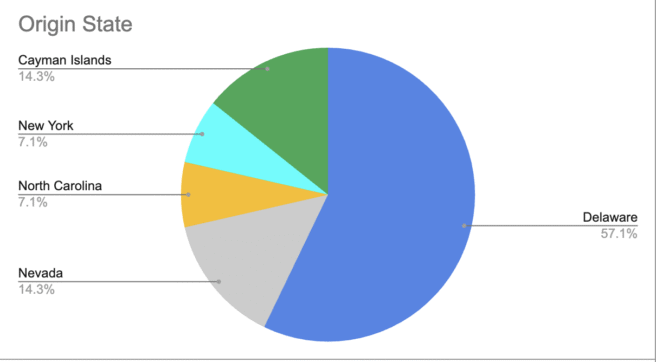
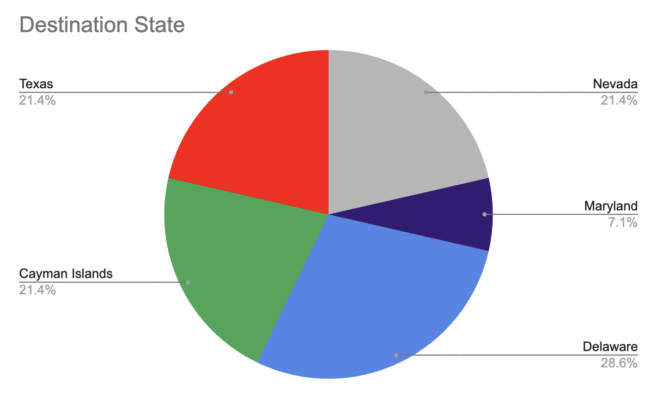
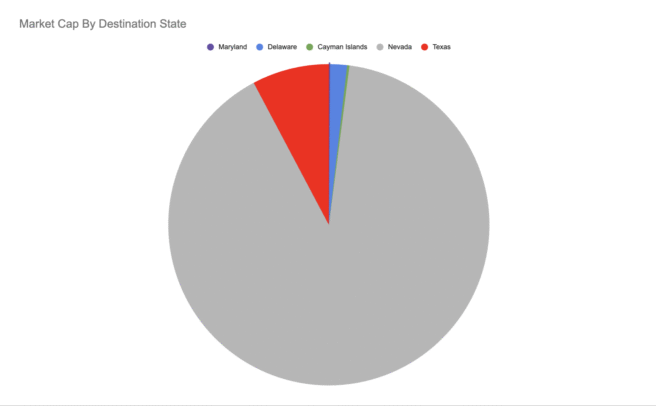
That said, the timing of this DGCL amendment is somewhat awkward because, at the moment, Delaware is locked a new fight for incorporations with Texas and Nevada.  And while I am not convinced the three states offer dramatic differences in terms of the battlefield over state law claims, securities claims are a different animal, and I could see allowing/disallowing arbitration agreements in charters/bylaws becoming a basis on which states credibly compete. (Until they all allow them, in which case, competition is over. Or until the FAA preempts all state law on this subject, which, again – let’s just say my arguments in this area have not proved persuasive.).

And another thing. New Shareholder Primacy podcast! Mike Levin and I talk, naturally, Tesla – the new proposed comp package for Musk, and the pending Delaware Supreme Court case regarding director compensation. Here at Apple; here at Spotify; and here at Youtube. (No new SH Primacy podcast next week, btw; but we’ll be back week after next).

Friend-of-the-BLPB Will Moon has notified us that the University of Maryland is hiring a tenure-track or tenured position for its small business clinic.

The advertisement is linked below:
Job Description – Tenure-Track Professor, Small Business Clinic (250000O9)

Will suggests that the best way to apply is through the Taleo link found in the advertisement. While the position mentions “tenure track,” Will confirms that the committee is reviewing applications from both pre-tenured and tenured faculty.

I received this hiring announcement from Daniel Crane at the University of Dayton. Areas of need include property, intellectual property, wills and trusts, contracts, secured transactions, business organizations, evidence, and criminal law. Daniel also noted the following in his message:

The University of Dayton’s mission, as a Catholic and Marianist institution, is to advance the common good, solidarity, and social justice. Rooted in human dignity and the recognition of our interdependence, this mission calls us to value diversity and to foster conditions that honor the aspirations of every group while embracing the human family as a whole.

The University of Dayton School of Law is part of a comprehensive and diverse university committed to educating the whole person and to linking learning and scholarship with leadership and service. Following this tradition, we are committed to providing a legal education that blends theory, practice, and service to promote the common good. If this sounds appealing, please apply today.

At the University of Dayton, we value our inclusive climate because we know that diversity in experiences and perspectives is vital to advancing innovation, critical thinking, solving complex problems, and creating an inclusive academic community. Because we seek a workforce with a wide range of perspectives and experiences, we encourage all candidates to apply.

The Lowell Milken Institute for Business Law and Policy at UCLA School of Law is pleased to announce its second annual Business and Tax Roundtable for Upcoming Professors (“BATRUP”). This in-person Roundtable will take place at UCLA from Monday evening June 1st through Wednesday afternoon June 3rd.  The program will feature commentary by invited senior scholars as well as an opportunity to meet fellow aspiring scholars while enjoying Los Angeles.  We warmly invite scholars preparing for the academic job market to participate.

Roundtable Purpose and Eligibility
The Roundtable is designed to offer mentorship and feedback to aspiring legal scholars who plan to pursue tenure-track positions at law schools. It is open to scholars who hold a JD, master’s degree, or PhD, who have not yet secured a tenure-track law faculty appointment, and who are not yet listed in this academic year’s Faculty Appointments Register. Selected authors must be able to attend the Roundtable in person at UCLA.

We welcome submissions on any topic within business law or tax law. Co-authored papers are eligible provided all authors meet the submission criteria. To ensure the Roundtable’s focus on evolving scholarship, we ask that submitted papers not be published or scheduled for publication by the Roundtable date, though papers accepted for publication that remain open to substantive revisions are eligible.

Selection Process and Roundtable Details
We anticipate selecting 6-7 papers from the submissions received. For each selected paper, the Lowell Milken Institute will cover reasonable travel, accommodation, and meal expenses for one author to attend the Roundtable. Participants will have the chance to engage in dynamic exchanges with UCLA faculty and invited guest scholars, as well as with their peers. Our aim is to foster a supportive community of early-career business and tax law scholars as they prepare for their careers in legal academia.

Submission Guidelines
Interested participants should submit either a complete draft or an extended summary of at least 5,000 words by email to lowellmilkeninstitute@law.ucla.edu by February 13, 2026. We expect to notify authors of their selection by March 31, 2026. For any questions, please reach out to the same email address or to one of our faculty co-directors, Professors Jason Oh or Andrew Verstein.

Please feel free to share this call for papers with anyone who may be interested in participating.

On October 9, the John L. Weinberg Center for Corporate Governance at the University of Delaware is celebrating its 25th anniversary with a symposium on “Boardroom Legacy.” A unique feature of the symposium is its substantial focus on corporate governance history, policy, law, craft, and practice through the lens of writings authored by Sidney J. and John L Weinberg, a father and son pair engaged in and with corporate governance. John L. Weinberg provided founding funding for the Weinberg Center, which bears his name. I am honored to be among the invited symposium presenters.

Presenters were invited to write book chapters on matters of boardroom legacy within their areas of interest and expertise. The chapters will be collected in a book entitled Boardroom Legacy: The Weinbergs of Goldman Sachs and the Evolution of Corporate Governance (to be published, as noted below, by the John L. Weinberg Center for Corporate Governance in 2026). I recently posted my contribution, Board Leadership, to SSRN. You can find it here. The abstract is pasted in below.

Corporate board leadership, though perhaps ill-defined, is grounded in the managerial authority and related duties and responsibilities of the board of directors under applicable state law.  However, an inspection of the board’s roles and structures relative to that authority—taken together with the practical reality that the board, as a collective decision-making body, is populated with directors who bring individualized attributes and approaches to their task—reveals that board leadership is about much more.  It is multifaceted, operating on different levels.  The directors lead the board, and the board leads the corporation in its complex relationships with internal and external constituents.  

This book chapter explores the board of directors and its members as leaders using law and the literature of leadership as generalized reference points.  The analysis is further supported by citations to John L. Weinberg’s thesis entitled: Status and Functions of Corporate Directors  (Princeton Thesis 1948) and related writings authored by his father, Sidney J. Weinberg,  The chapter is written for, and forthcoming in, Boardroom Legacy: The Weinbergs of Goldman Sachs and the Evolution of Corporate Governance (John L. Weinberg Center for Corporate Governance, forthcoming 2026).

Larry Cunningham, Director of the Weinberg Center, has posted the first part of John Weinberg’s thesis on SSRN here. It has been fun to read this work in light of John Weinberg’s later leadership of Goldman Sachs–a firm his father also led. Many of the issues addressed in the thesis still resonate today. You may find it of interest.

If you are on the region on October 9, you may want to attend the symposium, which is being held at the University of Delaware’s John M. Clayton Hall. You can register here. The schedule for the day is available at the same link.

Mortals plan and the gods laugh.

With the caveat that it’s 5 in the morning here and I may be misreading, in which case I will correct this post or delete it entirely to hide my shame…

Tesla’s new proxy asks shareholder approval for Musk compensation, which we expected. But there are two elements.

The first is a go-forward plan which pays out massive amounts of shares if Musk meets dramatic new targets. I don’t have a whole lot to say about this one, except that the targets are meaningfully different from the package awarded in 2018 (and rescinded in 2024 by Delaware) in that they don’t just include share price increases; they also include sales targets. The 2018 grant only included share price increases and revenue/EBITDA targets that were pretty much matched to the share price increases, leaving the price increases as the only meaningful hurdles. I will let others weigh in on whether it’s a similar situation with the new proposal, but the sales/subscription requirements are a new feature that was not present previously – and, dare I say it – could in fact accomplish the task of forcing Musk to focus on Tesla rather than his other companies.

But that’s not the only thing.

As Mike and I discussed in a Shareholder Primacy podcast, the Tesla board wanted to award Musk all of the shares he lost in Delaware, to be paid if the Delaware Supreme Court affirms Chancellor McCormick on appeal. But NASDAQ rules say that no new equity compensation awards can be paid to officers without a shareholder vote. And they didn’t want to hold one.

So, they dug up the equity comp plan from 2019, which – developed one year after the 2018 grant to Musk – was intended for all employees other than Musk. It said so right there in the plan (“in January 2018, we granted a performance-based stock option award to our Chief Executive Officer, Elon Musk … that was designed to be his exclusive compensation over its term, which is up to 10 years. … Consequently, we do not currently expect to grant any new equity awards to Mr. Musk under the 2019 Plan or otherwise until the completion, expiration or other termination of the 2018 CEO Performance Award.”) The 2019 plan was approved by shareholders at that time. Now, this August, the Board claimed they were permitted to use the 2019 plan for Musk, and because it had already been approved by shareholders, they didn’t need a new shareholder vote. They used that plan to award him about $29 billion worth of stock, contingent on losing in Delaware.

But that didn’t cover the full, lost 2018 grant. The Board was limited in what it could do, given the terms of the 2019 plan.

So, now the Board is asking shareholders to amend the 2019 plan, to allow them to – in their discretion – award Musk the remaining shares from the 2018 grant, if he loses the Delaware appeal.

And, because the sudden grant to Musk from this summer depleted the shares available to pay other employees (which was what the 2019 plan was intended to do), the Board is asking to amend the 2019 plan to add additional shares, to pay out to everyone else.

Also, please note that since this is a vote under NASDAQ rules and not for cleansing purposes, Elon Musk and Kimbal Musk get to vote. (“The Nasdaq rules do not restrict interested directors or officers who are also shareholders from participating in this vote. Therefore, the Board has determined that the required vote for each of Proposals Three and Four may include shares of Tesla stock owned, directly or indirectly, by Mr. Musk or Mr. Kimbal Musk.”) It’s not for cleansing purposes because Tesla took advantage of Texas law to adopt a bylaw barring derivative lawsuits by anyone with less than 3% of the stock.

Also, of note, the NYC and NYS Comptrollers are asking shareholders to vote to repeal the bylaw Tesla adopted under Texas law that bars derivative lawsuits by anyone with less than 3% of the stock.

And another thing. Mike Levin and I are back with a new Shareholder Primacy podcast. This week, we talk about Intel, and we answer a mailbag about constituency statutes. Here at Apple, here at Spotify, and here at YouTube.