
December 2013

All the information you need is on the registration page.  Here are some relevant excerpts:

The Society of Socio-Economists (SOS) is a society of law teachers, teachers of economics and other disciplines, and other professionals and interested people who approach economic issues in harmony with the principles articulated in the statement of principles entitled “What Is Socio-Economics.” [Please see excerpt below.]  SOS holds an annual meeting in conjunction with the Annual Meeting of the Association of American Law Schools (AALS) in coordination with the AALS Section on Socio-Economics….

Statement of Socio-Economics Principles

Socio-economics begins with the assumption that economic behavior and phenomena are not wholly governed or described by any one analytical discipline, but are embedded in society, polity, culture, and nature.  Drawing upon economics, sociology, political science, psychology, anthropology, biology and other social and natural sciences, philosophy, history, law, management, and other disciplines, socio-economics regards competitive behavior as a subset of human behavior within a societal and natural context that both enables and constrains competition and cooperation.  Rather than assume that the individual pursuit of self-interest automatically or generally tends toward an optimal allocation of resources, socio-economics assumes that societal sources of order are necessary for people and
The National Business Law Scholars Conference (NBLSC) will be held on Thursday, June 19th and Friday, June 20th at Loyola Law School, Los Angeles. This is the fifth annual meeting of the NBLSC, a conference which annually draws together dozens of legal scholars from across the United States and around the world. We welcome all scholarly submissions relating to business law. Presentations should focus on research appropriate for publication in academic journals, especially law reviews, and should make a contribution to the existing scholarly literature. We will attempt to provide the opportunity for everyone to actively participate. Junior scholars and those considering entering the legal academy are especially encouraged to participate.

To submit a presentation, email Professor Eric C. Chaffee at eric.chaffee@utoledo.edu with an abstract or paper by April 4, 2014. Please title the email “NBLSC Submission – {Name}”. If you would like to attend, but not present, email Professor Chaffee with an email entitled “NBLSC Attendance.” Please specify in your email whether you are willing to serve as a commentator or moderator. A conference schedule will be circulated in late May.  More information is available here:  http://lls.edu/resources/events/listofevents/eventtitle,81539,en/

Conference Organizers

Barbara Black (The University of Cincinnati College of Law)

Last week I attended the UN Forum on Business and Human Rights in Geneva.  The Forum was designed to discuss barriers and best practices related to the promotion and implementation of the non-binding UN Guiding Principles on Business and Human Rights, which discuss the state’s duty to protect human rights, the corporation’s duty to respect human rights, and the joint duty to provide access to judicial and non-judicial remedies for human rights abuses. This is the second year that nation states, NGOs, businesses, civil society organizations, academics and others have met to discuss multi-stakeholder initiatives, how businesses can better assess their human rights impact, and how to conduct due diligence in the supply chain.

Released in 2011 after unanimous endorsement by the UN Human Rights Council, the Guiding Principles are considered the first globally-accepted set of standards on the relationship between states and business as it relates to human rights. The US State Department and the Department of Labor have designed policies around the Principles, and a number of companies have adopted them in whole or in part, because they provide a relatively detailed framework as to expectations.  Some companies faced shareholder proposals seeking the adoption of the Principles

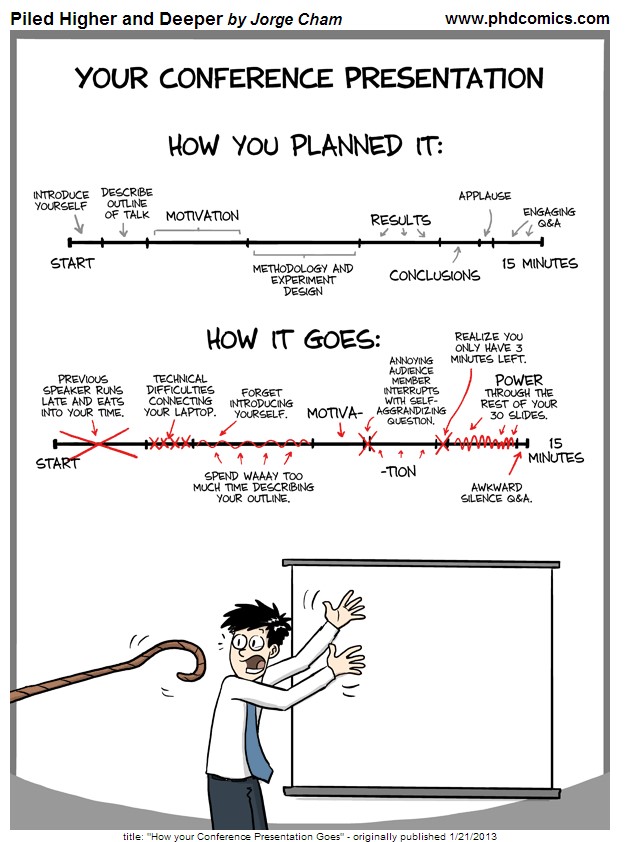
With winter break nearly upon us this means grading, writing projects, and possibly some conference travel with the upcoming AALS annual meeting.  I plan on putting together my AALS talk (on incorporating experiential exercises in teaching LLCs) next week, and have drawn inspiration from the following image:

Conference Image

The Business Law programs are on Saturday, January 4th and are listed below. If you would like to highlight other programs, please respond in the comments, and I will add to the list.

  • The program will explore:  The … topic of effectively teaching LLCs.  
  • 2:00 pm – 3:45 pm Business Associations
    The Value Proposition for Business Associations in Tomorrow’s Legal Education
  • The panel will be exploring: How does business associations teaching and scholarship contribute to the U.S. program of legal education?  How could or should it contribute?  What role does the basic law school course on business associations play in an optimized law school curriculum?  What course content, pedagogy, and teaching tools best support that role?  How does business associations scholarship inform and support that role?    
  • 4:00 pm –

When the SEC adopted the Rule 506(c) amendment allowing general solicitation in certain Regulation D offerings, it also proposed a number of changes to Regulation D. The Federal Regulation of Securities Committee of the American Bar Association’ s Business Law Section, recently submitted a very thoughtful comment letter on those proposed changes. It’s available here.

I have been a member of the Federal Regulation of Securities Committee and several of its subcommittees for over two decades. Almost all of the country’s top securities lawyers are members. (I’m not sure why they let me join.) I don’t always agree with the committee’s views, but its positions are always thoughtful and well-reasoned. This letter is no exception (and, in this case, I happen to agree with most of it). It’s worth reading.

A recent study, Who Owns West Virginia? (full report pdf), gives a glimpse into the land ownership in the state.  The report finds that much of the state’s private land is “owned by large, mainly absentee corporations, [but] the list of top owners – once dominated by energy, land holding and paper companies – now includes major timber management concerns.”  

As reported by Ken Ward Jr. in the Charleston Gazette, the report finds that “[n]one of the state’s top 10 private landowners is headquartered in West Virginia.”  Although it is accurate that the top ten owners are not indivdual owners,  I will note that not all of the top ten owners are “corporations.”  There is at least one master limited partnership and one limited liability company (LLC).  That may not mean much in the sense of absentee ownership, but it is a doctrinal distinction I maintain is still important.  

It’s not shocking that these entity owners would be out of state, especially because that was true back in 1974, too, when the last study was done.  There are relatively few large entities chartered or headquartered in West Virginia, and it appears that many of the

Thanks to Professor Brian Quinn (Boston College) for passing along the video posted below on “Material Adverse Change” in the M&A Context (Part 1) from law firm Weil Gotshal.  Weil Gotshal has posted a number of similar clips, which I have found useful in the past. 

This past Sunday, Robert B. Schumer (Paul Weiss) authored a related post over at the Harvard Law School Forum on Corporate Governance and Financial Regulation.  His post is entitled “Delaware Court: Missed Sales Forecasts Could be ‘Material Adverse Effect”‘ and opens with the following paragraph:

In Osram Sylvania Inc. v. Townsend Ventures, LLC, the Delaware Court of Chancery (VC Parsons) declined to dismiss claims by Osram Sylvania Inc. that, in connection with OSI’s purchase of stock of Encelium Holdings, Inc. from the company’s other stockholders (the “Sellers”), Encelium’s failure to meet sales forecasts and manipulation of financial results by the Sellers amounted to a material adverse effect (“MAE”). The decision was issued in the context of post-closing indemnity claims asserted by OSI against the Sellers and not a disputed closing condition.

Few, if any, Delaware cases have found a triggering of a MAC/MAE clause, but such cases obviously depend on the

If you have an interest in entrepreneurship and innovation, or if you just want to know more about the company whose boxes are currently appearing on porches across the nation, read Brad Stone’s new book, The Everything Store: Jeff Bezos and the Age of Amazon.

Stone is not a corporate shill; his portrait of Bezos is not always flattering. But the book is well written and entertaining, and a good study of what made Amazon successful. Budding entrepreneurs could derive a number of important lessons from Jeff Bezos.

The Goal of a Business is to Serve Customers

Entrepreneurs often chase the wrong rabbit. The goal of a business is not to create the fanciest technology. The goal of a business is not to get ready to make a public offering. The goal of a business, and the way it makes money, is to serve customers—to fulfill some customer need more effectively than any other company.

It’s clear that customers have been Bezos’ top priority from the beginning, and that’s what has made Amazon successful. The most obvious example of that philosophy? Putting both positive and negative customer reviews on the Amazon web site. We take that for granted now—many

Richard Schragger & Micah Schwartzman have posted “Some Realism about Corporate Rights” on SSRN.  Here is the abstract:

Can we meaningfully speak of a church’s right to conscience or a corporation’s right to religious liberty? One way to approach this question is by inquiring into the nature of churches and corporations, asking whether these are the kinds of entities that can or should have rights. We have recently seen this kind of reasoning in public debates over whether corporations have free speech rights, and, relatedly, in arguments about the religious free exercise rights of churches, non-profits, and for-profit corporations. Those in favor of such rights sometimes argue that corporations and churches are moral agents, capable of exercising rights separate and apart from the rights and interests of their members; whereas, those opposed tend to argue that churches, corporations or groups are mere aggregations of individuals, or else artificial persons created or recognized by the state to advance the interests of those who compose them.

In this paper, we argue that this form of argument is mistaken and that debates about the ontological status of group or corporate entities are largely irrelevant. One does not need a particular

Eric Chiappinelli has posted “The Underappreciated Importance of Personal Jurisdiction in Delaware’s Success” on SSRN.  Here is the abstract:

The judges of the Delaware Court of Chancery are aggressively trying to stop stockholder/plaintiffs from filing corporate law cases outside of Delaware. Delaware believes that its position as the center of corporate litigation is in danger because cases are no longer filed exclusively there. If litigation continues to flow away from Delaware, it would jeopardize Delaware’s prominence in corporate law and the large revenues Delaware receives from out of state businesses that are incorporated there.

I argue that scholars and the Delaware judges underappreciate the vital importance of personal jurisdiction over corporate directors in Delaware’s quest to become and remain the center of corporate litigation. I show that Delaware’s dominance in litigation in large part stemmed from, and is now dependent upon, its unique system of personal jurisdiction.

None of Delaware’s attempts to stop cases from flowing out of Delaware will be enduringly successful without addressing the weaknesses in its current personal jurisdiction statute. I argue that Delaware should adopt a new statute that both will remedy the current flaws and will be effective in encouraging stockholder/plaintiffs to