
July 2017

At the beach with my wife’s family, I read Parker J. Palmer’s Courage to Teach in a couple sittings. Palmer has a PHD in sociology from UC Berkeley, and has written extensively on education.

My mother-in-law was reading the book for her job at a private elementary school, and I brought a limited number of books (due to the weight of my hardcopy books), so I read this book too. Our teaching center at Belmont University has mentioned Palmer’s work a number of times, so I was interested in the book.

Simply stated, Palmer’s thesis is that “good teaching comes from the identity and integrity of the teacher.” He defines identity as “an evolving nexus where all the forces that constitute my life converge in the mystery of self,” and he defines integrity as “whatever wholeness I am able to find within that nexus as its vectors form and re-form the pattern of my life.” (13) Teaching, he argues, comes from the heart and soul of the teacher, and not primarily from chosen techniques. 

Palmer makes a solid point about paradox and pedagogical design. “The space should be bounded and open….hospitable and charged….invite the voice of the
Last year, I was asked to contribute to a symposium on law and entrepreneurship hosted at the University of North Carolina.  Although I had to Skype in for my presentation from Little Rock, Arkansas (where I had just given a separate, unrelated CLE presentation), the panel to which I was assigned was fabulous.  Great scholars, with great ideas.

For my contribution to the symposium, I chose to reflect on the unfulfilled promise of the potentially mutually beneficial relationship between an entrepreneur and a business finance lawyer.  I recently posted the published work memorializing my thoughts on the topic, featured this spring with several other articles from the symposium in a dedicated edition of the North Carolina Law Review.  The brief abstract for my article follows:

Entrepreneurs have the capacity to add value to the economy and the community. Business lawyers—including business finance lawyers—want to help entrepreneurs achieve their objectives. Despite incentives to a symbiotic relationship, however, entrepreneurs and business finance lawyers are not always the best of friends. This Article offers several approaches to bridging this gap between entrepreneurs and business finance lawyers.

My hope in writing this article was to infuse some energy into conversations about the role

The more I read about social enterprise entities, the less I like about them.  In 2014, my colleague Elaine Wilson and I wrote March of the Benefit Corporation: So Why Bother? Isn’t the Business Judgment Rule Alive and Well?  We observed:

Regardless of jurisdiction, there may be value in having an entity that plainly states the entity’s benefit purpose, but in most instances, it does not seem necessary (and is perhaps even redundant). Furthermore, the existence of the benefit corporation opens the door to further scrutiny of the decisions of corporate directors who take into account public benefit as part of their business planning, which erodes director primacy, which limits director options, which can, ultimately, harm businesses by stifling innovation and creativity.  In other words, this raises the question: does the existence of the benefit corporation as an alternative entity mean that traditional business corporations will be held to an even stricter, profit-maximization standard?

I am more firmly convinced this is the path we are on.  The emergence of social enterprise enabling statutes and the demise of director primacy threaten to greatly, and gravely, limit the scope of business decisions directors can make for traditional for-profit entities, threatening both

Save the Date!

The Yale Law School Center for Private Law will host a Private Equity Conference on November 17, 2017. The conference will bring leading theorists from law, economics, finance, and sociology into dialogue with people with experience at the highest levels of private equity, including from law practice, financial firms, and institutional investors.

Oliver Hart, winner of the 2016 Sveriges Riksbank Prize in Economic Sciences in Memory of Alfred Nobel, will give the keynote address.

Other speakers include:

Jon Ballis, Kirkland & Ellis
Rosemary Batt, Cornell University, ILR School
Neil Fligstein, UC Berkeley Sociology Department
Stephen Fraidin, Pershing Square Capital Management
Will Gaybrick, Stripe
Adam Goldstein, Princeton University Department of Sociology
Victoria Ivashina, Harvard Business School
Andrew Metrick, Yale School of Management
Meridee Moore, Watershed Asset Management
John Morley, Yale Law School
Alan Schwartz, Yale Law School
David Swensen, Chief Investment Officer, Yale University

Location: Yale Law School, 127 Wall St., New Haven, CT

Time: Approximately 9:45 a.m.-4:00 p.m.

Cost: There is no cost associated with this event, though pre-registration is required. Registration information will be available soon at this link

Could this be the beginning of the end for the event study in Section 10(b) class certification?

Yes, I’m probably overstating, but still, the Second Circuit’s opinion in In re Petrobras Securities, 2017 WL 2883874 (2d Cir. July 7, 2017), definitely takes a step in that direction.

As a recap, a private plaintiff alleging fraud claims under Section 10(b) of the Exchange Act must demonstrate that he or she “relied” on the defendant’s false statements.  In Basic Inc. v. Levinson, 485 U. S. 224 (1988), the Supreme Court held that reliance could be demonstrated via the fraud on the market doctrine – namely, the presumption that in an open and developed market, any material, public misstatement is likely to have impacted the market price of the security.  The fraud on the market doctrine is what allows Section 10(b) claims to be brought as class actions, since it eliminates the need for plaintiffs to demonstrate reliance on an individual basis.  Since Basic, then, battle has been joined between plaintiffs and defendants regarding what counts as an “open and developed” market for class certification purposes.

In recent years, it has become de rigueur for plaintiffs to use an event

WB

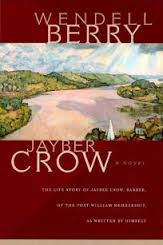
I highly recommend Jayber Crow by Wendell Berry

Set in rural Kentucky, Jayber Crow is a story about small town life, community, love/hate, sustainability, and industrialization. The main character, Jonah “Jayber” Crow loses both his parents and his Aunt and Uncle by the age of ten. He spends the next few years in an orphanage before obtaining a scholarship to a local college as a “pre-ministerial” student. Doubting his calling to the ministry, Jayber drops out and returns to his hometown. He serves as the town’s only barber, and he also picks up jobs as the local grave digger and church janitor. Jayber narrates, in vivid detail, the exodus from the small town by the younger generation and the invasion of large-scale, profit-focused, corporate farming.   

The author, Wendell Berry, warns that “persons attempting to explain, interpret, explicate, analyze, deconstruct, or otherwise ‘understand’ [this book] will be exiled to a desert island in the company only of other explainers” so I will simply end with a few of my favorite quotes below. I think one of the reasons I so liked this book is because it reminded me of my family’s property and of my maternal grandfather, who lived at a pace unknown

Prior to joining academia, I served as a compliance officer, deputy GC, and chief privacy officer for a Fortune 500 company. I had to learn everything on the job by attending webinars and conferences and reading client alerts. Back then, I would have paid a law school graduate a competitive salary to work in my compliance group, but I couldn’t find anyone who had any idea about what the field entailed.

The world has changed. Now many schools (including mine) offer relevant coursework for this JD-advantage position. I just finished teaching a summer skills course in compliance and corporate social responsibility, and I’m hoping that I have encouraged at least a few of the students to consider it as a viable career path. Compliance is one of the fastest growing corporate positions in the country, and the number of compliance personnel has doubled in the past 6 years. Still, many business-minded law students don’t consider it in the same vein as they consider jobs with Big Law.

This summer, my twelve students met twice a week for two hours at 7:30 pm. In the compressed six-week course, they did the following:

  • Heard from compliance officers and outside counsel for public