
April 2020

In my post last week, I mentioned the President’s invocation of the Defense Production Act during the current COVID-19 crisis.  I was immediately curious about this law when news of the President’s March 27 memorandum focused on General Motors and ventilator production hit my radar screen (a/k/a, my laptop, which has effectively become my lap these days).  Surely, it must be unusual for the U.S. government, I thought, to direct the nature, means, and timing of production and supply.  That seems antithetical to the spirit, if not the letter, of U.S. capitalism.  However, the more I read, the less curious and concerned I am, at least for the moment.  Perhaps some of the reporting in this area is more geared to generating a splashy news item than, well, alerting us to something truly unusual or troubling.  Nevertheless, I will make a few foundational points on the Act here.  I may have more to say later.

The Defense Production Act of 1950 can be found in Chapter 55 of Title 50 of the U.S. Code.  The Act recognizes that “the security of the United States is dependent on the ability of the domestic industrial base to supply materials and services
Whenever Haskell Murray writes a running post, I always want to write one too.  I think he’s written two (here, here) since my last one (here), so I’ve decided it’s time for another!

The tenuous link to business law is this…I was blessed to have a phenomenal first-year contracts professor.  Over the years, one of my closest friends (also in that course) and I have reminded each other of the professor’s pearls of wisdom about contracts and life. “Life is a marathon, not a sprint,” he would assure us. 

I would imagine that many of us feel in the midst of a marathon these days.  As another week in these unusual times begins, I was thinking about a few of the lessons I’ve learned in distance running that were helping me to run the course we’re all on these days.  First, the importance of paying attention to your breath (Joan Heminway has written about breath and mindfulness here).  Second, if you just keep putting one foot in front of the other, you’ll eventually reach the destination/be done.  Third, the need for pacing (likely the point my contracts prof was making).  Fourth, you’ve always got

One of the things that’s fascinated me about this strange time we’re living in is how it’s altered our buying habits.

For sure, some alterations were pretty predictable: more demand for work-from-home tools, computers, sanitizers, and protective gear (certainly, some people seem to have made very accurate forecasts.)

But some of the reports are less intuitive.  For example, lots of people have turned to home baking – either because they have more time or because they don’t/can’t buy in stores – leading to a yeast shortage. (Except, as this Twitterer explains, you can always make your own, a philosophy that many have apparently extended to eggs). 

Other people have figured now’s a good time to care for a pet, emptying out NYC’s shelters.  Or to pretend you’re still in college.

People seeking ways to amuse themselves have turned to jigsaw puzzles and, umm, other things.

On Zoom, nobody can tell if you’re drunk.  (Maybe.)  They definitely can’t tell what you’re wearing from the waist down, though (unless you show them). 

You’ve all heard about the toilet paper shortages, but I appreciated this explanation for them.

And

Please note the following regarding the postponement of the biennial conference at Emory law, previously posted and promoted on the BLPB here:

Due to the uncertain length of the COVID-19 global pandemic, and out of an abundance of caution, we have decided to cancel the Transactional Law and Skills Education Conference currently scheduled for June 5-6, 2020. 

We will re-schedule the Conference and revisit our theme – “Hindsight, Insight, and Foresight: Transactional Law and Skills Education in the 2020s” – when it is appropriate and safe to do so.

If you have already registered for the Conference, we will refund your money.  If you have submitted a proposal or a nomination for the Tina L. Stark Award for Teaching Excellence, you will have the opportunity to resubmit your proposal or nomination when we establish the new Conference date. 

If you have already reserved a room at the Emory Conference Center Hotel please call them at 800.933.6679 to cancel your reservation.  For other Conference-related questions, please contact our Conference Coordinator, Kelli Pittman at kelli.pittman@emory.edu.

During this period of “social distancing,” we are proud to be members of a community of transactional law and skills educators dedicated to excellence.  We look

If you have trouble viewing the embedded Tweets, please try a different browser (I recommend Internet Explorer).

It’s been three weeks since the WHO declared the coronavirus outbreak a pandemic, and the NBA cancelled games. As of this writing, the NY Post reports: Total cases globally: 857,487; Deaths: 42,107.

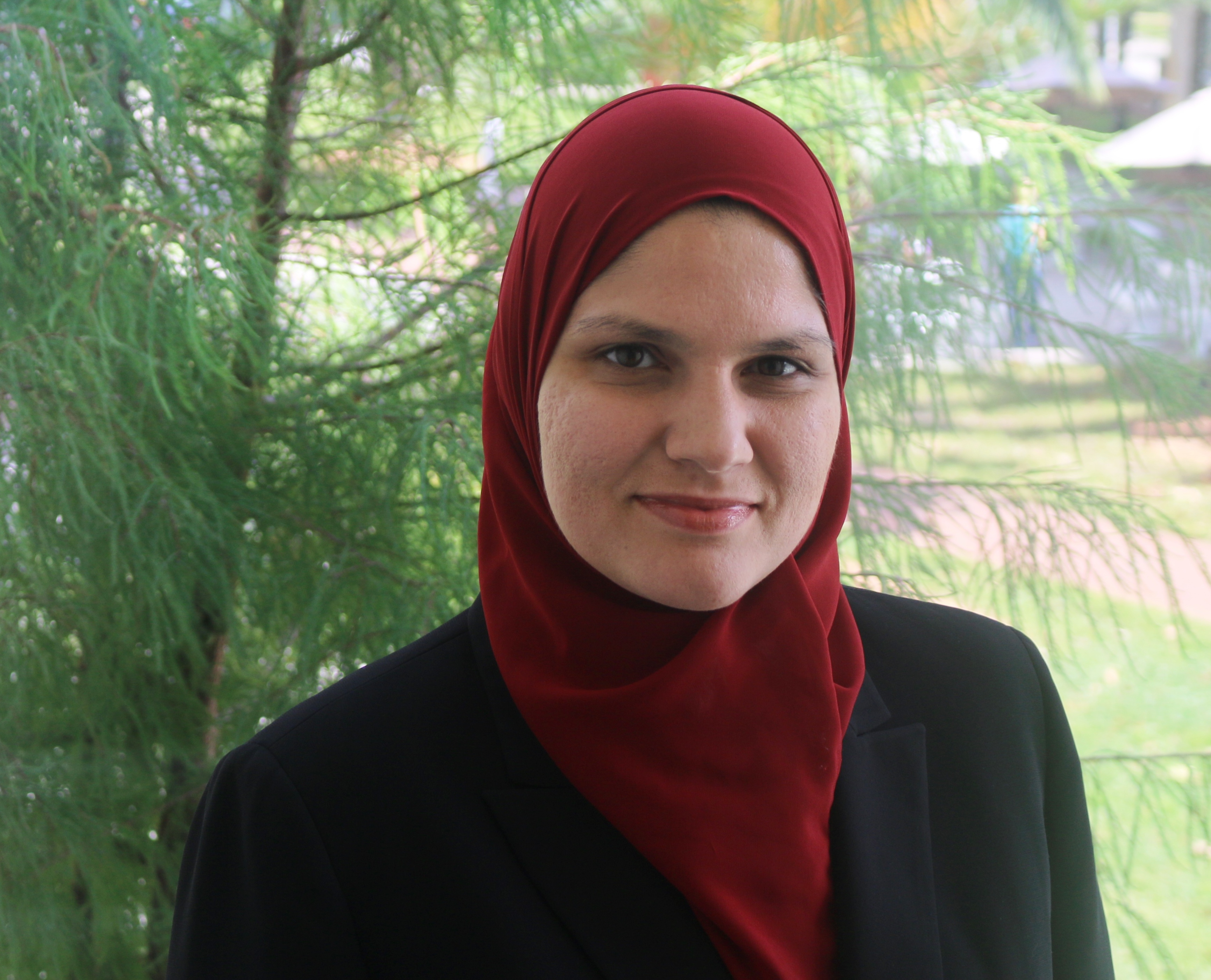
This post comes to us from friend-of-the BLPB Nadia B. Ahmad.  Many thanks to her for this contribution.  Her post follows nicely on the spirit of my “Teaching through the Pandemic” posts, which can be found here and here.  My favorite part may be the bit on “Troubleshooting Life and Expectations.”

image from cdnimages.barry.edu

As I begin this post on Sunday, March 29, 2020, there are currently 674,466 confirmed cases of coronavirus (COVID-19). Immunology and infectious disease researchers are working round the clock with their heads down for a cure and a vaccine, but we have nothing in the near term for an end to this situation. The markets have been a tumbling since January 2020 and spiraling downward since March 2020. Even Brexit and the deceleration of China’s economy could not have expected this downturn in the market.  

On March 12, 2020, I taught my last in person Business Organizations class for the semester. For the first half of the class, I had the students complete a practice essay in Canvas on the business judgment rule. The remainder of the time, I had them join via WebEx on their laptops. In that class, approximately 40 percent of the students