
Photo of Anne Tucker

Anne Tucker teaches and researches contracts, corporations, securities regulations, and investment funds.

Tucker’s research focuses on three areas of business law. The first is on the regulation and administration of funds (both public and private funds) and how pooled investments can achieve significant personal and social ends, such as retirement security and private funding for social entrepreneurship. Second, she focuses on impact investing and contract terms that reinforce impact objectives alongside financial returns. Third, she studies corporate governance, including the role of institutional investors as shareholders. Read More

Elizabeth Pollman at the Loyola Law School Los Angeles, recently posted her paper, A Corporate Right to Privacy, on SSRN (forthcoming in the Minnesota Law Review 2014).  This paper timely weighs in on the corporate personhood debate by addressing one aspect of that question:  privacy.

 Abstract: The debate over the scope of constitutional protections for corporations has exploded with commentary on recent or pending Supreme Court cases, but scholars have left unexplored some of the hardest questions for the future, and the ones that offer the greatest potential for better understanding the nature of corporate rights. This Article analyzes one of those questions — whether corporations have, or should have, a constitutional right to privacy. First, the Article examines the contours of the question in Supreme Court jurisprudence and provides the first scholarly treatment of the growing body of conflicting law in the lower courts on this unresolved issue. Second, the Article examines approaches to determining the scope of corporate constitutional rights and argues that corporate privacy rights should be evaluated not by reference to the corporate form itself or a notion of corporate personhood, but rather by reference to the privacy interests of the various people involved
 Bringing Numbers into Basic and Advanced Business Associations Courses: How and Why to Teach Accounting, Finance, and Tax

2015 AALS Annual Meeting–Agency, Patnerships, LLCs & Unincorporated Assoc. Section

Washington, DC

            Business planners and transactional lawyers know just how much the “number-crunching” disciplines overlap with business law.   Even when the law does not require unincorporated business associations and closely held corporations to adopt generally accepted accounting principles, lawyers frequently deal with tax implications in choice of entity, the allocation of ownership interests, and the myriad other planning and dispute resolution circumstances in which accounting comes into play.  In practice, unincorporated business association law (as contrasted with corporate law) has tended to be the domain of lawyers with tax and accounting orientation.  Yet many law professors still struggle with the reality that their students (and sometimes the professors themselves) are not “numerate” enough to make these important connections.  While recognizing the importance of numeracy, the basic course cannot in itself be devoted wholly to primers in accounting, tax, and finance.

             The Executive Committee will devote the 2015 annual Section meeting in Washington to the critically important, but much-neglected, topic

In an opinion released earlier today, the D.C. Circuit Court struck down the SEC’s Dodd-Frank Conflict Mineral Rule under the compelled speech doctrine for failing the least restrictive alternative prong.  

We therefore hold that 15 U.S.C. § 78m(p)(1)(A)(ii) & (E), and the Commission’s final rule, 56 Fed. Reg. at 56,362-65, violate the First Amendment to the extent the statute and rule require regulated entities to report to the Commission and to state on their website that any of their products have “not been found to be ‘DRC conflict free.’”

Not striking down the need for information about conflict minerals, but rather the required approach, the Court suggested that: 

[A] centralized list compiled by the Commission in one place may even be more convenient or trustworthy to investors and consumers. The Commission has failed to explain why (much less provide evidence that) the Association’s intuitive alternatives to regulating speech would be any less effective.

In August, 2012, the SEC released final Dodd-Frank rules for conflict minerals “requir[ing] companies to publicly disclose their use of conflict minerals that originated in the Democratic Republic of the Congo (DRC) or an adjoining country.”

-AT

Earlier this spring, I posted about transactional resources  (the current source list is available here: Download Transactional Law Resources).

Continuing with the theme, I want to highlight a new hybrid resource, JURIFY, which is a mostly-free, online transactional law resource. 

“Jurify provides instant access to high-credibility, high-relevance legal content, including forms and precedent in Microsoft Word® format written by the world’s best lawyers, white papers and webinars from top-tier law firms, articles in prestigious law journals, reliable blog posts and current versions of statutory, regulatory and case law, all organized by legal issue.”

Here are the stats:  Jurify, launched in 2012, covers 5 broad transactional areas:  General Corporate, Governance, Mergers & Acquisitions, Securities and Startup Companies.  The 11,000+ sources that the website currently contains have been verified by transactional attorneys and generated from free on-line platforms or submitted by private attorneys who are voluntarily sharing their work.  Documents are organized according to 586 tags.  Three transactional attorneys started this website (husband/wife duo and their former law-firm colleague); none take compensation from editors, publishers or law firms. 

Jurify is a unique transactional law resource for the following reasons: 

  • FREE (mostly). Website contents including primary law, secondary sources

On March 27th, SEC commissioner Daniel M. Gallagher’s delivered the keynote address at the 26th Annual Corporate Law Institute  at Tulane University Law School.  Addressing the intersection of governance and securities disclosure, Commissioner’s Gallagher’s remarks (available here) are summarized below:

Dodd Frank increased the federalization of corporate law.

“This mandated intrusion into corporate governance will impose substantial compliance costs on companies, along with a one-size-fits-all approach that will likely result in a one-size-fits-none model instead.”

Shareholder proposals are costly, problematic and used by only a small group of shareholders with particular interests and agendas that may not be alligned with other shareholders. Citing first to the 41% increase in shareholder proposals post Dodd-Frank, and the meager 7% passage rate, Commission Gallagher outlined which shareholders use the proposal process and the punch line is that only 1% are brought by ordinary institutional investors.

  • 34% are from organized labor;
  • 25% are from social, policy or religious institutions; and
  • 24% of the proposals were brought by just two individuals whom the Commissioner described as “corporate gadflies.”

The shareholder proposal process should be reformed by narrowing the scope of those eligible to bring proposals and the subject matter of the proposals.

Fellow BLPB contributor and friend, Haskell Murray, bravely posted his view of FOMA and Family yesterday.  I am contributing to the conversation with my own view of the issues he raised.  Both of our posts are born of conversations we have been having off line for the past several months.

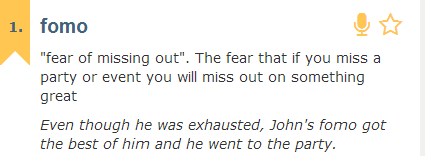
FOMA

We are approaching (if not there already) the point in the semester when I typically feel overloaded by remaining materials for class and year-end administrative responsibilities, fatigue from spring writing deadlines and travel, and a little puzzled by how a summer that isn’t even here yet, already feels “full”.   I know that I haven’t struck the right balance, especially not with an infant at home.  And yet, if the phone rang tomorrow with an opportunity that I couldn’t pass up, I would instantly add it into the mix subtracting from “free” time and further bloating the scheduled column.  I know that I am not alone. 

 I want to explore two ideas:  “opportunities that can’t be passed up” and “free time”.

The bottom line is that I am grateful to have a job that is rewarding, engaging, flexible, and ultimately fun.  I look at the pool of candidates we bring in

I had the distinct honor and privilege of attending oral argument in the Hobby Lobby/Conestoga case at the Supreme Court today. I will be writing a substantive post on the experience in the future, but for now I wanted to share with you the highlights of the corporate-focused arguments.  It will be quick because the issues of whether corporations are persons and therefore have standing under RFRA and whether corporations can have religious identies got relatively little attention during the 90 minute argument.

Justice Sotomayor lead the charge on the corporate issues challenging Paul Clement (arguing for Hobby Lobby/Conestoga) to identify where the law protects corporate religion and how can a corporation have religious beliefs.  Justice Sotomayor also asked how courts will decide the religion of the corporation– is it 51% of shareholders’ beliefs?  dependent upon officers? the board?  (This line of quesitoning tracks with an argument that I made here in an Op-ed).  Clements, pointing to the scienter doctrine, suggested that the law has already decided that corporations have beliefs and intent. Clement also suggested that the nature of a corporation’s belief could be judged by looking at corporate governance documents and that it would become a

The New York Times editorial board weighing in on, and against, corporate religious exemptions.

“The Supreme Court has consistently resisted claims for religious exemptions from laws that are neutral and apply broadly when the exemptions would significantly harm other people, as this one would. To approve it would flout the First Amendment, which forbids government from favoring one religion over another — or over nonbelievers.”

And they cite the corporate law professors’ brief, writing:

“as an amicus brief filed by corporate law scholars persuasively argues, granting the religious exemption to the owners would mean allowing shareholders to pass their religious values to the corporation. The fundamental principle of corporate law is a corporation’s existence as a legal entity with rights and obligations separate from those of its shareholders.”

Congratulations to the main brief writing team for a document that has generated a lot of debate and raised the profile of the corporate law issues in this case.

-Anne Tucker

My op-ed on the Hobby Lobby case, A Bad Investment: Recognizing Religous Rights of Corporations, is available on Huffington Post. 

The Hobby Lobby arguments are couched in terms of religious freedom, but it is hard to see the net gain for liberties when such a rule could require religious disclosures and could lead to restricting investments to religiously like-minded investors. Elevating private religious beliefs to a matter of market importance threatens to chill the marketplace and erodes the long-respected boundaries between private religious beliefs, the realm of the state and the role of the marketplace.

I will be attending the Hobby Lobby oral arguments at the Supreme Court.  I will be posting updates and analysis here and at twitter (@Anne_M_Tucker) on March 25th (day of argument) and the 26th.

-Anne Tucker

For those interested, here is an amicus brief in the Hershey section 220 case arguing that  violations of domestic or international law are ultra vires acts.   Download Hershey Section 220 Amicus Brief

[B]ecause Delaware corporations (including defendant The Hershey Company) are chartered only for “lawful” acts or activity, 8 Del. C. § 101(b), illegalities committed by the company are considered ultra vires and may be the proper source of both direct shareholder suits and injunctive actions by the state Attorney General.  Delaware law is explicit on this point. A “lack of capacity or power may be asserted . . .[i]n a proceeding by a stockholder against the corporation to enjoin the doing of any act or acts” or “[i]n a proceeding by the Attorney General to dissolve the corporation, or to enjoin the corporation from the transaction of unauthorized business.” 8 Del. C. § 124.
 

-Anne Tucker