Photo of Joan Heminway

Professor Heminway brought nearly 15 years of corporate practice experience to the University of Tennessee College of Law when she joined the faculty in 2000. She practiced transactional business law (working in the areas of public offerings, private placements, mergers, acquisitions, dispositions, and restructurings) in the Boston office of Skadden, Arps, Slate, Meagher & Flom LLP from 1985 through 2000.

She has served as an expert witness and consultant on business entity and finance and federal and state securities law matters and is a frequent academic and continuing legal education presenter on business law issues. Professor Heminway also has represented pro bono clients on political asylum applications, landlord/tenant appeals, social security/disability cases, and not-for-profit incorporations and related business law issues. Read More

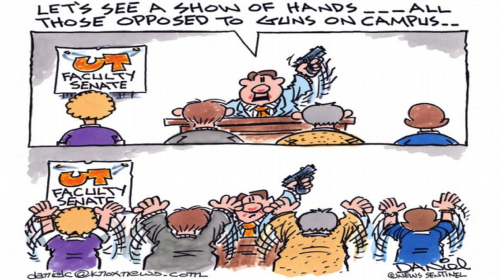
FS(CDanielCartoon)

*          *          *

“A lawyer, as a member of the legal profession, is a representative of clients, an officer of the legal system and a public citizen having special responsibility for the quality of justice.

Am. Bar Assoc., Model Rules of Prof. Conduct Preamble ¶ 1 (emphasis added)

Although we business lawyers do not talk about this much–at least not in forums like this–as licensed attorneys, we have an obligation to speak out publicly on matters of justice.  Paragraph 6 of the Preamble to the Model Rules of Professional Conduct offers details on this role.  Among my favorite parts of this paragraph from the Preamble are the following duties that most commonly impact my work:

  • “As a public citizen, a lawyer should seek improvement of the law, access to the legal system, the administration of justice and the quality of service rendered by the legal profession.”
  • “As a member of a learned profession, a lawyer should cultivate knowledge of the law beyond its use for clients, employ that knowledge in reform of the law and work to strengthen legal education.”
  • “In addition, a lawyer should further the public’s understanding of

Westlaw recently posted an interesting Massachusetts case at the intersection of criminal law and business law.  Massachusetts (the Commonwealth) sought to commit a defendant as a sexually dangerous person. Commonwealth v. Baxter, 94 Mass. App. Ct. 587, 116 N.E.3d 54, 56 (2018). The defendant was (at the time) an inmate because of a probation violation related to offenses of rape of a child and other crimes.  The Commonwealth retained Mark Schaefer, Ph.D., for an expert opinion, and Dr. Schaefer concluded that the defendant was, under state law, a sexually dangerous person. The hearing judge found probable cause to think the defendant was a sexually dangerous person and had him temporarily committed for examination by two qualified examiners, as required by law. Dr. Joss determined that the defendant was sexually dangerous, and Dr. Rouse Weir determined he was not.

Here’s where the business law part comes in: 

After the reports of the qualified examiners were submitted to the court, the defendant moved to exclude Dr. Joss from providing evidence at trial, or in the alternative, to appoint a new qualified examiner to evaluate the defendant. As grounds therefor, the defendant alleged that Dr. Joss and Dr. Schaefer were both among

Christopher G. Bradley at University of Kentucky College of Law has posted his paper, Business Entities as Skeleton Keys.  The paper was also selected for the 2019 AALS Section on Agency, Partnership, LLCs and Unincorporated Associations program, Respecting the Entity: The LLC Grows Up.  

Chris notes the use of business entities to accomplish goals not attainable previously and the use of entities “to accomplish customized transactions and evade legal restrictions that would otherwise prevent them.”  His observations and insights are good ones, and his paper is definitely worth the read.  I can’t help but think that some of this is occurring more because of an increasing comfort with entities and a willingness to engage in creative transactions. We’re seeing in beyond the use of entities, too, with the rise of derivatives over the last 20 or so years, not to mention cryptocurrencies.  Anyway,  it’s a good paper and I recommend it. 

Here’s the abstract:

This Article identifies the increasingly important phenomenon of what I term “skeleton key business entities” and discusses the ramifications of their rise. Modern business entities, such as LLCs, are increasingly created and deployed to accomplish customized transactions and evade legal restrictions that would otherwise prevent them. Rather

ARTIFICIAL INTELLIGENCE:

Thinking About Law, Law Practice, and Legal Education

Hosted by the Duquesne University School of Law

Pittsburgh, Pennsylvania

Friday & Saturday, April 26-27, 2019

Developments in artificial intelligence are changing virtually all aspects of our world, ranging from autonomous vehicles to robotic surgery, and from smartphones to smart speakers.  Lawyers, legal educators, and policymakers are already experiencing the effects of computers that aid and, in some cases, replace the often-tedious work done by lawyers and other members of society.  Law school graduates will need to understand how intelligent systems can enhance and streamline the work that they do, and how their careers may be changed in the future.  Furthermore, artificial intelligence technology will likely call for greater government oversight, result in new laws, and trigger litigation. 

This two-day conference will feature presentations by educators, practitioners, policymakers, and computer scientists that will demonstrate how the development of artificial intelligence is affecting society, the law, the legal profession, and legal education.   The Duquesne Law Review will dedicate space in its Winter 2019 symposium issue to publishing papers from this conference. 

Presenters & Agenda, Day One (Law and Law Practice):

  • Dean Alderucci (Carnegie Mellon Univ.): Customized Artificial Intelligence Techniques for the

Sometimes, LLC cases are a mess. It is often hard to tell whether the court is misstating something, whether the LLCs (and their counsel) are just sloppy, or both.  My money, most of the time is on “both.” 

Consider this recent Louisiana opinion (my comments inserted): 

The defendant, Riverside Drive Partners, LLC (“Riverside”) appeals the district court judgment denying its motion for a new trial related to its order of January 8, 2018, dismissing all pending claims against three parties in this multiparty litigation: (1) CCNO McDonough 16, LLC (“CCNO”); (2) R4 MCNO Acquisition LLC (“R4”); and (3) Joseph A. Stebbins, II. After review of the record in light of the applicable law and arguments of the parties, the district court judgment is affirmed. . . .

This litigation arises out of a dispute among partners in a real estate development related to the conversion of an existing historic building into an affordable housing complex. Pursuant to the Operating Agreement signed on September 30, 2013, McDonough 16, LLC, was formed to acquire, rehabilitate, and ultimately lease and operate a multi-family apartment project consisting of the historic building and a new construction building. In turn, McDonough 16, LLC had two members,

Tom Rutledge at Kentucky Business Entity Law Blog writes

As a general proposition, LLC operating agreements may change the default rules provided for in the LLC Act.  A recent decision from Pennsylvania found that a general provision as to decision making by majority vote did not alter the statutory default of unanimous approval to amend the operating agreement.  Saltzer v. Rolka, No. 702 MDA 2017, 2018 WL 5603050 (Pa. Super. Ct. Oct. 30, 2018).
 
     . . . .
     
Under the Pennsylvania LLC Act, the default rule for amendment of the operating agreement is unanimous approval of the members.  15 Pa.C.S.A § 8942(b).  That rule may be altered in a written operating agreement. Id. The LLC’s operating agreement provided that it could be amended by the members at a regular or special meeting, but in that section did not address the threshold for the required vote.  Another section of the agreement provided “Except as otherwise provided in the [LLCA], or this Agreement, whenever any action is to be taken by vote of the members, it shall be authorized upon receiving the affirmative vote of a majority of the votes cast by all Members entitle

Back in 2011, I wrote, in a Harvard Business Law Review Online article, that the default rule in analyzing all LLC questions should be one taken from CML V, LLC v. Bax, 6 A.3d 238 (Del. Ch. Nov. 3, 2010): “[T]here is nothing absurd about different legal principles applying to corporations and LLCs.” I still believe that. I further argued:

Where legislatures have decided that distinctly corporate concepts should apply to LLCs—such as allowing piercing the veil or derivative lawsuits—those wishes (obviously) should be honored by the courts. And where state LLC laws are silent, the court should carefully consider the legislative context and history, as well as the policy implications of the possible answers to the questions presented. Courts should put forth cogent reasons for their decisions, rather than blindly applying corporate law principles in what are seemingly analogous situations between LLCs and corporations. [footnotes omitted]

In 2014, I discussed a case West Virginia case in a post here at Business Law Prof Blog, More LLC Veil Piercing Forced into State Statutes. In that post, I was critical of a West Virginia Supreme Court of Appeals decision reading veil piercing into the state’s LLC statute.  My main

In Business Organizations, I am in the early part of teaching agency and partnership. In my last class, we discussed Cargill, which is a fairly typical case to open agency discussions.  I like Cargill, and I think it is a helpful teaching tool, but I think one needs to go beyond the case and facts to give a full picture of agency. 

Of note, the case deals only with “actual agency” — for whatever reason, the plaintiffs did not argue “apparent agency” or estoppel in the alternative.  A. Gay Jenson Farms Co. v. Cargill, Inc., 309 N.W.2d 285, 290 n.6 (Minn. 1981) (“At trial, plaintiffs sought to establish actual agency by Cargill’s course of dealing between 1973 and 1977 rather than ‘apparent’ agency or agency by estoppel, so that the only issue in this case is one of actual agency. ”). I think this explains a lot about how the case turns out.  That is, the court recognized that to find for the farmer, there had to be an actual agency relationship.  

I don’t love this outcome because one of the hallmarks of an agency relationship is its reciprocal nature. That is, once we find an agency relationship, the

I am wading back into a jurisdiction case because when it to LLCs (limited liability companies), I need to. A new case from the United States Court of Appeals for the Sixth Circuit showed up on Westlaw.  Here’s how the analysis section begins:

Jurisdiction in this case is found under the diversity statute 28 U.S.C. § 1332. John Kendle is a citizen of Ohio; defendant WHIG Enterprises, LLC is a Florida corporation with its principal place of business in Mississippi; defendant Rx Pro Mississippi is a Mississippi corporation with its principal place of business in Mississippi; defendant Mitchell Chad Barrett is a citizen of Mississippi; defendant Jason Rutland is a citizen of Mississippi. R. 114 (Second Am. Compl. at ¶¶ 3, 5) (Page ID #981–82). Kendle is seeking damages in excess of $75,000. Id. at ¶¶ 50, 54, 58, 64, 71 (Page ID #992–95). The district court issued an order under Rule 54(b) of the Federal Rules of Civil Procedure that granted final judgment in favor of Mitchell Chad Barrett, and so appellate jurisdiction is proper. R. 170 (Rule 54(b) Order) (Page ID #3021).

Kendle v. Whig Enterprises, LLC, No. 18-3574, 2019 WL 148420, at *3 (6th

Not for my purposes, anyway. Back in 2016, I made the argument that the IRS should “stop using state-law designations”: 

My proposal is not abolishing corporate tax – that’s a much longer post and one I am not sure I’d agree with.  Instead, the proposal is to have entities choose from options that are linked the Internal Revenue Code, and not to a particular entity. Thus, we would have (1) entity taxation, called C Tax, where an entity chooses to pay tax at the entity level, which would be typical C Corp taxation; (2) pass-through taxation, called K Tax, which is what we usually think of as partnership tax; and (3) we get rid of S corps, which can now be LLCs, anyway, which would allow an entity to choose S Tax

This post deals with the tax code, which means I am in over my head, and because this is tax related, it means the solution is a lot more complicated than this proposal.  But now that the code provisions are not really linked to the state law entity, I think we should try refer to state entities as state entities, and federal tax status with