Photo of Marcia Narine Weldon

Professor Narine Weldon is the director of the Transactional Skills Program, Faculty Coordinator of the Business Compliance & Sustainability Concentration, Transactional Law Concentration, and a Lecturer in Law.

She earned her law degree, cum laude, from Harvard Law School, and her undergraduate degree, cum laude, in political science and psychology from Columbia University. After graduating, she worked as a law clerk to former Justice Marie Garibaldi of the Supreme Court of New Jersey, a commercial litigator with Cleary, Gottlieb, Steen and Hamilton in New York, an employment lawyer with Morgan, Lewis and Bockius in Miami, and as a Deputy General Counsel, VP of Global Compliance and Business Standards, and Chief Privacy Officer of Ryder, a Fortune 500 Company. In addition to her academic position, she serves as the general counsel of a startup and a nonprofit.  Read More

Growing up in Baton Rouge, Louisiana, we often flew Southwest Airlines out of New Orleans’ Louis Armstrong International Airport.  Such trips usually also involved a visit to my maternal grandparents, lifelong NOLA residents.  My grandpa always referred to Southwest as the “cattle car.”  In reading this past week about the legendary Herb Kelleher, Southwest’s visionary co-founder who passed away on January 3rd, I learned that my grandpa’s moniker wasn’t original.  Nope, grandpa had apparently fallen into step with competitors purportedly responsible for the nickname.  Unfazed, Kelleher, with characteristic playfulness, had responded by offering Southwest customers a free bag to either cover their faces if embarrassed to fly with the airline or to hold all the money they’d save by doing so (clip starts at 1:08)!  With Kelleher, such stunts were commonplace.  He even participated in an arm-wrestling match rather than litigation to determine whether Southwest or Stevens Aviation would be entitled to use of the slogan “Just Plane Smart” (you can find this on YouTube too!). 

Like many readers of this blog, Kelleher was a lawyer (an NYU law school graduate).  In 1966, in a bar in San Antonio, Texas, he and a client, Rollin King, sketched

Earlier this week, the Bank for International Settlements – an international financial institution in Basel, Switzerland, created in 1930 and owned by 60 global central banks – released its Quarterly Review of international banking and financial market developments.  Several “special features” (articles) follow a sobering discussion of conditions in today’s global financial markets aptly titled: “Yet more bumps on the path to normal.”  In this post, I focus on the article, The growing footprint of EME banks in the international banking system (Growing Footprint), and comment upon its links to another, The geography of dollar funding of non-US banks (Dollar Funding) (note my admirable restraint in choosing not to discuss Clearing risks in OTC derivatives markets: the CCP-bank nexus).

Emerging market economy (EME) banks are much more on the move these days than advanced economy (AE) banks when it comes to growth in cross-border lending activity.  Indeed, the expanding footprint in the global banking system of banks headquartered in EMEs mirrors the increased contribution of EMEs to global GDP (now at 40%) and its growth (responsible for 2/3 in 2017).  Key takeaways from Growing Footprint are: 1) a greater amount of EME banks’ cross-border lending to EMEs transpires

Having just finished another semester of teaching a course required of all University of Oklahoma undergraduate business majors, the Legal Environment of Business (an introduction to business law), I wanted to share a few thoughts about why I have really enjoyed teaching business law in a business school.

When I taught Banking and Financial Institutions Law and Regulation in a law school, I loved when a student commented that my excitement for the topic had sparked their interest in the subject matter too.  Of course, such students were already generally attracted to the study of law!  I now occasionally have the joy of hearing that my enthusiasm for business law has sparked an undergraduate student’s interest in going to law school (they’d better take Banking!), and the excitement of knowing that I’ve potentially helped the student decide upon a professional direction. 

Like my students, I’ve found the Legal Environment of Business course to be challenging.  Teaching this course has definitely furthered my growth as a teacher.  In thinking of how best to engage students in the subject matter, I’m always searching for creative pedagogical approaches.  I’ve constructed in-class games such as “Procedural Trivia,” in which student teams compete

Has an airline ever told you it wasn’t responsible for costs you would incur because of a flight initially delayed for “mechanical reasons” that was now delayed due to weather?  In thinking about how potential losses resulting from both a clearing member default and non-default issues (such as operational, investment, or custody problems) are likely to be allocated among a clearinghouse and clearing members, I think of such past travel experiences.  From my perspective, the issue of ownership is key to both.   

Hence, I’d like there to be an increased amount of discussion about clearinghouse ownership.  The word “ownership” was barely mentioned (maybe once) during the December 4th meeting of the Market Risk Advisory Committee, sponsored by CFTC Commissioner Rostin Behnam,  which largely focused on issues related to clearinghouses.  In contrast, participants frequently mentioned clearinghouse capital (“skin in the game”), and extensively discussed (Panel 2) the allocation of default versus non-default losses (which could occur nearly simultaneously).  Surprisingly, there is scant legal guidance on the allocation of non-default losses in the U.S. 

Clearinghouses, financial market infrastructure utilities, tend to be owned by their members or by investors (I’ve written extensively about clearinghouses for readers interested in learning more

I’d like to thank the Business Law Prof Blog for the opportunity to be a guest blogger!  In this first post, I build on a subject of previous posts (here, here, and here): Theranos, a now defunct Silicon Valley health-care start-up.

I rely heavily on the Financial Times to follow developments in one of my main research areas: financial market clearing and settlement (I’ll plan to report next week on the upcoming December 4th meeting of the Market Risk Advisory Committee, sponsored by CFTC Commissioner Rostin Behnam).  The FT recently announced that Wall Street Journal investigative reporter John Carreyrou’s book, Bad Blood: Secrets and Lies in a Silicon Valley Startup, had been named the FT/McKinsey Business Book of the Year 2018.  Having immensely enjoyed reading past winners, I wasted no time in ensuring that Amazon Prime speedily delivered it to my doorstep. 

Bad Blood is a riveting tale of Theranos’ spectacular rise and fall, and well-worth the reader’s time.  A fun fact is that a pathologist blogger, Adam Clapper (founder of the former Pathology Blawg), tipped Carreyrou onto the Theranos story (Chapter 19).  Additionally, in the months after Bad Blood’s publication, its

The AALS Section on Taxation is pleased to announce the following Call for Papers. Selected papers will be presented at a works-in-progress session at the 2019 AALS Annual Meeting in New Orleans, LA from January 2-6, 2019. The works-in-progress session is tentatively scheduled for Saturday, January 5.
 
Eligibility: Scholars teaching at AALS member schools or non-member fee-paid schools with seven or fewer years of full-time teaching experience as of the submission deadline are eligible to submit papers. For co-authored papers, both authors must satisfy the eligibility criteria.
 
Due Date: 5 pm, Wednesday, August 8, 2018.
 
Form and Content of submission: We welcome drafts of academic articles in the areas of taxation, tax policy, public finance, and related fields. We will consider drafts that have not yet been submitted for publication consideration as well as drafts that have been submitted for publication consideration or that have secured publication offers. However, drafts may not have been published at the time of the 2019 AALS Annual Meeting (January 2019). We welcome legal scholarship across a wide variety of methodological approaches, including empirical, doctrinal, socio-legal, critical, comparative, economic, and other approaches.
 
Submission method: Papers should be submitted electronically as Microsoft Word documents to the

Indiana University legal studies professor Abbey Stemler sent along this description of an article she co-wrote with Harvard Business School Professor Ben Edelman. They recently posted the article to SSRN and would love any feedback you may have, in the comments or via e-mail. 

———

Perhaps the most beloved twenty-six words in tech law, Section 230 of the Communications Decency Act of 1996 has been heralded as a “masterpiece” and the “law that gave us the modern Internet.” While it was originally designed to protect online companies from defamation claims for third-party speech (think message boards and AOL chat rooms), over the years Section 230 has been used to protect online firms from all kinds of regulation—including civil rights and consumer protection laws.  As a result, it is now the first line of defense used by online marketplaces to shield them from state and local regulation.

In our article recently posted to SSRN, From the Digital to the Physical: Federal Limitations on Regulating Online Marketplaces, we challenge existing interpretations of Section 230 and highlight how it and other federal laws interfere with state and local government’s ability to regulate online marketplaces—particularly those that dramatically shape

On a previous post about Etsy dropping its B corp. certification, because of the B Lab requirement to convert to a public benefit corporation, I received the following comments:

  • “I simply believe that, in most ways, being a public benefit entity is more about a marketing strategy than a business plan.” (Tom N.)
  • “I had my students read the NY Times articles on Etsy as a part of their last class in my clinic this semester (thanks to my fellow Joe Pileri who alerted me to the article). We represent social enterprises in the clinic so this was a perfect wrap-up. The questions that I posed to my students: what social enterprise isn’t a soft target like Etsy? Won’t they all eventually cave to profit maximization?” (Alicia Plerhopes)
  • “I agree with To[m] N … Also, no theory of CSR actually requires an explicit weighting of the various stakeholders of a firm, so in reality, if the interests of shareholders are receiving the greatest weight, then Milton Friedman was right all along!” (Enrique)

I wanted to respond to these thoughtful comments, briefly, above the line.

Tom, I think the marketing benefits of becoming a PBC, currently, are weak. How many of

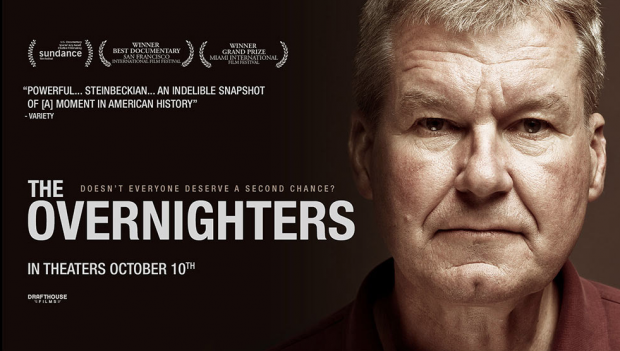
The-overnighters

Over the break, I watched the documentary Overnighters on Netflix. 

In short, the documentary chronicles the story of a pastor who opens the church to migrant workers in North Dakota during the energy boom in that state. The pastor faces pushback from his congregation, neighbors, and city officials who do not appreciate having these men – some with criminal records – housed so close. 

In my opinion, the pastor is right, and the congregants are wrong, about the purpose of a church. The church should be in a community to serve, especially its needy neighbors. That said, the logistics of how to serve may be up for debate. Also, it is at least arguable that by serving the migrant workers the church strayed from serving its congregation. It would have been helpful if the church had a clear statement on its purpose and priorities. Many social enterprises have extremely vague purpose statements, which I do not think are very helpful. Benefit corporations are often required by statue to “benefit society and the environment.” A purpose statement like that would not have helped the church in Overnighters much at all. A statement that showed that those in need would be prioritized