In last week’s post about the business of the World Cup, I indicated that I would review Christine Bader’s book, The Evolution of a Corporate Idealist: When Girl Meets Oil. I have changed my mind, largely because I don’t have much to add to the great reviews the book has already received. Instead I would like to talk about how lawyers, professors and students can use the advice, even if they have no desire to do corporate social responsibility work as Bader did, or worse, they think CSR and signing on to voluntary UN initiatives is really a form of “bluewashing.”

Bader earned an MBA and worked around the world on BP’s behalf on human rights initiatives. This role required her to work with indigenous peoples, government officials and her peers within BP convincing them of the merits of considering the human rights, social, and environmental impacts. She then worked with the UN and John Ruggie helping to develop the UN Guiding Principles on Business and Human Rights, a set of guidelines which outline the state duty to protect human rights, the corporate duty to respect human rights, and both the state and corporations’ duty to provide judicial

The blogosphere has been a-twitter with commentary on Jamie Dimon’s revelation earlier this week that he has throat cancer and will be undergoing treatments in the hope of eradicating it.  From the public news, his prognosis sounds good.  For that, I am sure all are grateful.

As some of you may know, my interest in issues relating to disclosures of facts from executives’ private lives stems from my fascination, starting about 12 years ago, with the Martha Stewart disclosure cases (about which I wrote in law journals and in several chapters of a book that I edited).  After co-writing the book about the basic concerns in Stewart’s insider trading, misstatements/omissions securities fraud, and derivative fiduciary duty actions, I focused in additional articles on some finer points relating to her case.  Two of these works covered the disclosure of private facts.  Among the types of private facts covered are those relating to executive health concerns.

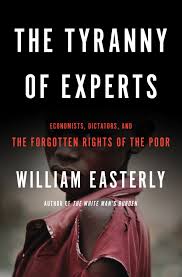
On Steve Bradford’s recommendation, I chose William Easterly’s (NYU) The Tyranny of Experts: Economists, Dictators, and the Forgotten Rights of the Poor (2014) as the book for my annual beach trip with the in-laws and cousins. (Last year was Daniel Kahneman’s (Princeton) Thinking, Fast and Slow – and yes, my wife’s side of the family makes fun of my beach reading material).  Easterly is an author I have wanted to read for a while now, and I still need to read some of his earlier books. 

Easterly

More after the break.

Before I went to law school, I worked in the video game industry, first for the industry trade association, the Interactive Digital Software Association (now known as the Entertainment Software Association). From there I moved to public relations for the public relations firm Golin/Harris in Los Angeles where my work was focused on product launches for Nintendo. (This was from 1998-2000.) In those jobs, I had the chance to work with some amazing people (and clients), and the experience has served me well, even as I went on to become a lawyer and professor. 

 One of those people was the managing director of the Los Angeles Golin/Harris office when I was hired, Fred Cook, who is now the CEO of Golin/Harris.  Fred recently wrote a book that has caught the attention of the business world and is a top-25 book for corporate customers according to 800-CEO-READ.   His book is Improvise: Unconventional Career Advice from an Unlikely CEO, and it’s worth a look.

Here’s an excerpt:

People entering the business world today are a commodity. They’ve gone to the same schools, taken the same courses, read the same books, and watched the same movies. Every summer they’ve

In the comments to one of Anne Tucker’s earlier posts, I mentioned that Chris Bruner’s book Corporate Governance in the Common-Law World (2013 Cambridge University Press) was on my summer reading list.

Looks like I am a little late to the party.  Over at PrawfsBlawg, there is already a book club on Bruner’s book with a number of excellent posts, including a few by the author.  Maybe the book club inspired demand is one of the reasons I got a letter from Cambridge University Press yesterday letting me know that my copy of Bruner’s book was going to take longer to deliver than expected.

Looking forward to reading the actual book, but for now, the posts make interesting reading.   

I am generating my summer reading list–both business and pleasure. At the top of my list is Other People’s Houses, by Jennifer Taub (Vermont Law School), which will be available from Yale Press on May 27th.   The official website for the book describes the project as:

Drawing on wide-ranging experience as a corporate lawyer, investment firm counsel, and scholar of business law and financial market regulation, Taub chronicles how government officials helped bankers inflate the toxic-mortgage-backed housing bubble, then after the bubble burst ignored the plight of millions of homeowners suddenly facing foreclosure.

Focusing new light on the similarities between the savings and loan debacle of the 1980s and the financial crisis in 2008, Taub reveals that in both cases the same reckless banks, operating under different names, received government bailouts, while the same lax regulators overlooked fraud and abuse. Furthermore, in 2013 the situation is essentially unchanged. The author asserts that the 2008 crisis was not just similar to the S&L scandal, it was a severe relapse of the same underlying disease. And despite modest regulatory reforms, the disease remains uncured: top banks remain too big to manage, too big to regulate, and too big to fail.

Or at least that appears to be the thesis of Wharton professor Adam Grant’s (relatively) new book Give and Take (2013).  (Disclosure: I received a free copy from the publisher).

According to Professor Grant, giving, matching, and taking “are three fundamental styles of social interaction.”  Givers give without thought of what they will get in return; givers are generous, other-focused, and give without keeping score.  Matchers give expecting quid pro quo; matchers “believe in tit for tat…and believe in an even exchange of favors.”  Takers give expecting a positive return; takers put “their own interests ahead of others’ needs.” (pgs. 4-5). 

Grant is quick to admit that, “the lines between [giving, taking, and matching] are not hard and fast.” (pg. 5)  Most of us fall somewhere in the middle, as more exacting or less exacting “matchers.”

In his book, Grant cites studies of medical students, engineers, salespeople, and others to support his thesis that the “worst performers and the best performers are givers; takers and matchers are more likely to land in the middle.” (pg. 7) (emphasis added).  (While Grant cites a number of academic studies, this book is written for a popular audience.)

If “givers” end up at

  Faculty Bib book cover

Two of the reference librarians at my school, Marcia Dority Baker and Stefanie Perlman, have compiled and published a bibliography of all the scholarship by Nebraska College of Law faculty going back to 1892: Marcia L. Dority Baker & Stefanie S. Perlman, A BIBLIOGRAPHY OF UNIVERSITY OF NEBRASKA COLLEGE OF LAW FACULTY SCHOLARSHIP 1892-2013 (2014).

I don’t know if others schools have done anything like this, but I think it’s a great idea. It’s really interesting to look at what people were writing one hundred years ago, and to consider the body of work of my current colleagues, only a couple of whom I believe were here a hundred years ago. I found the 14 pages of entries for the great legal scholar Roscoe Pound, including dozens of books, humbling.

On the domestic front, I’m happy to report that my listing is twice as long as my wife’s, although I’m not sure she will be happy to know that I reported that. I want to make it clear that she was not here a hundred years ago.