I am back in the classroom teaching Business Associations (year 23 of teaching) on Wednesday.  As I was reviewing my course objective for the course this year, I wondered how different my learning objectives for my students are from those of others.  So, I decided I would share mine here and ask for comments.  Here it is:

*          *          *

Course objective:  The doctrinal content of this course is calibrated to prepare you for the business associations portion of the bar exam.  More specifically, the course is designed to enable you to:

  • compare and contrast core legal rules relating to the existence, structure, governance, liability, and financing of basic forms of for-profit business entity (and distinguish these forms of entity from sole proprietorships governed by common law principles, including those found in agency law, as well as contract, tort, and property law) through the review and analysis of state statutory and decisional law;
  • become familiar with basic concepts addressed in U.S. federal securities regulation, including the definition of a security, the registration of securities offerings, public company registration and reporting, proxy regulation, and securities fraud;
  • understand the framework of business entity

BelmontU

We are hiring for an open Assistant Professor of Business Systems and Analytics position.

We will consider lawyers/law professors with data governance/privacy law experience/research.

I am on the hiring committee; feel free to reach out to me with any questions.

Position posting here.

Millions of law school graduates around the US just took the bar exam. Others are preparing to enter colleges and graduates schools in a few weeks. How will these respective groups do? While a lot depends on how much and how well they study, a large part of their success or failure may depend on how they’ve been taught. I recently posted about how adults learn and what the research says we should do differently. In this post, I’ll show how I used some of the best practices in the last ten days when I taught forty foreign lawyers from around the world  and thirty college students in separate summer courses offered by the University of Miami as well as nine Latin American lawyers who were taking courses in business law from a Panamanian school. I taught these disparate groups about ESG, disclosures, and human rights. With each of the cohorts, I conducted a simulation where I divided them into groups to prioritize issues based on whether they were a CEO, an investor, a consumer, the head of an NGO, and for the US college students, I added the roles of a member of Congress or influencer. In a

IMG_4568

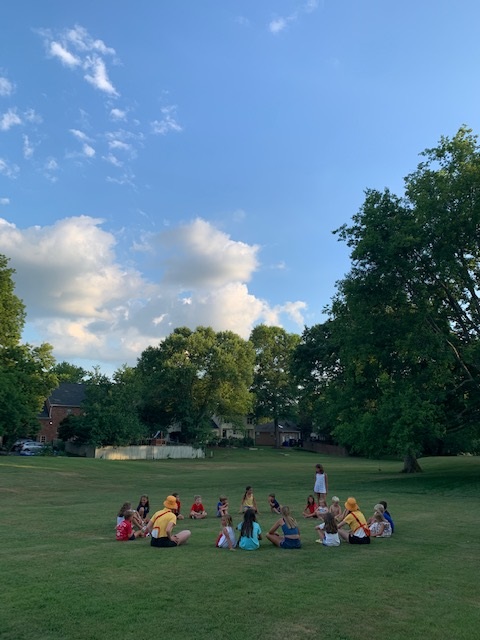
(Some neighborhood children playing duck-duck-goose in our common space on July 4th.)

Recently, I finished philosopher David McPherson’s book The Virtues of Limits published by Oxford University Press this year. While I disagree with McPherson in certain areas, I highly recommend his book. I was reacting to the book with friends and the author before I even completed it. Perhaps it would have been best to refrain from commenting until I had finished, but it was a sign that the book was quite thought-provoking. The book was well-written and accessible, even to a non-philosopher like me. 

Given that this post only has a loose connection to business law, I will place the remainder of my thoughts below the page break. 

Stefan’s Independence Day post is far more erudite than mine.  Kudos and thanks to him for the substantive legal content.  This post covers more of a teaching point–one that I often think about in the background but want to being to the fore here.

I am focused in writing this on things like family reunions, local holiday festivities, grilling out, and fireworks.  It has been a rocky road to the Fourth in these and other aspects this year.  Overlapping causes can easily be identified.  As if the continuing COVID-19 nightmare were not enough . . . .

I will start with COVID-19, however.  I have heard of many who are missing family and other events this weekend because of positive COVID-19 diagnoses, test results, or exposures.  I was sad to learn, for example, that Martina Navratilova had to miss the historic Wimbledon centennial celebration, including the Parade of Champions, yesterday.  But there is more.

The air travel debacles have been well publicized.  Weather, labor shortages, and other issues contribute to the flight changes and cancellations airlines need to make on this very popular travel weekend–expected to set records.  And gas prices have stymied the trips of some by land (again

Dear Section Members —

On behalf of the Executive Committee for the AALS section on Business Associations, I’m writing with details of our two sessions at the 2023 AALS Annual Meeting, which will be held in San Diego, CA from January 4-7, 2023.

First, our main program is entitled, “Corporate Governance in a Time of Global Uncertainty.” We anticipate selecting up to two papers from this call for papers. To submit, please submit an abstract or a draft of an unpublished paper to Professor Mira Ganor, mganor@law.utexas.edu, on or before Friday, August 19, 2022. Authors should include their name and contact information in their submission email but remove all identifying information from their submission. Please include the words “AALS – BA- Paper Submission” in the subject line of your submission email.

Second, we are excited to announce that we will again hold a “New Voices in Business Law” program, which will bring together junior and senior scholars in the field of business law for the purpose of providing junior scholars with feedback and guidance on their draft articles. Junior scholars who are interested in participating in the program should send a draft or summary of at least five

It’s been one week since I announced and started posting in this virtual symposium on the NextGen Bar Exam. Thanks to Josh, Ben, and John for joining me in commenting on the proposed content scope outline relating to Business Associations and Relationships.  You can find their posts here, here, and here, respectively. 

We have raised issues about terminology.  And there are a few areas that are lacking in clarity or specificity.  In addition, two important overarching points have emerged to date in our posts.  One is that it is important to indicate the source of the law being tested, since the default rules operative in various areas of LLC and corporate law are not the same in the dominant national statutory frameworks.  (I offer another example of how this may matter in the discussion of corporate director and officer fiduciary duties, below.)  The other is that the default rules in business associations law tell only part of the story.   Constitutional issues, authorized private ordering, and decisional law that both supplements and interprets state legislative enactments can all play roles.

In this post, I offer a few more points that illustrate or add to these observations.

Partnership Nomenclature

The following symposium post comes to us from John Rice at Duquesne Law.

*     *     *

I’m pleased to add my voice among those commenting as part of this virtual symposium on the recently-released Content Scope Outline for the “Business Associations & Relationships” for the NextGen Bar Exam. Despite my general skepticism of the efficacy of any bar examination, I tend to view the draft outlines as an improvement above the current exam outline. I join with my colleagues Joan, Joshua, and Benjamin in stressing how imperative it is that the NCBE specify the specific sources of law from which these topics are drawn.

In terms of substance, I favor separating LLCs into their own category rather than merely being a sub-set of corporation law. Additionally, the business litigator in me feels compelled to note that the draft outline’s description of “Shareholder and member litigation: direct and derivative litigation” is underdeveloped. I want my students to recognize litigation as a form of shareholder control over the corporation and to evaluate the standing prerequisites and demand requirement. Likewise, I would prefer more attention be paid to the specific remedies available in business disputes, including declaratory judgment, injunctive relief, and

Volume 14 of the William & Mary Business Law Review is currently accepting submissions for publication in 2022 and 2023. The Journal aims to publish cutting-edge legal scholarship and contribute to significant and exciting debates within the business community. Submissions for consideration can be sent via Scholastica, or if need be, via email to wm.blr.articlesubmission@gmail.com.

Thanks to Joan Heminway for kicking off our virtual symposium, here, where some of us will take a look at the recently released National Conference of Bar Examiners (NCBE) content summaries of the material planned for future bar exams in the Content Scope Outlines .  These comments relate to the “Business Associations & Relationships” portion. 

As a general matter, I have been growing increasingly skeptical of the bar exam and its role and purpose for the profession.  I very much believe we need to facilitate a process to help ensure clients are served by competent lawyers who have the skills necessary to serve clients.  However, I am more and more convinced that bar exam does an incomplete job of testing readiness for practice, potentially ingrains some bad practices, and continues to inappropriately limit access to the profession for women and minorities. Those issues, though, are for another time.   

Following are my initial thoughts on the Business Associations and Relationships portion of the Outlines:

In the area of “Partnerships,” under “Nature of general partnerships” and “Formation, the outline states: “This topic includes the de facto treatment of improperly created incorporated entities as general partnerships.”  Here, in place of