
Jeremy Kessler and David Pozen have posted a draft of their paper The Search for an Egalitarian First Amendment on SSRN (available here).  In skimming the paper, I came across a number of quotes, including a couple of citations, I thought readers of this blog might find of interest. So, here they are, in no particular order:

— One does not need to read Piketty … to guess that equating corporations’ rights to spend money, sell data, and trim benefits with citizens’ First Amendment rights might prove controversial in a world of bank bailouts and mortgage foreclosures.

— the question whether the Free Speech Clause permits a legislature to limit the election-related spending of corporations, unions, or wealthy individuals in the service of antiplutocratic goals. To help answer this question in the face of mixed precedent and negligible Founding-era evidence, the Justices have adverted to each of the three major normative theories of the First Amendment [pursuit of truth, the promotion of individual autonomy, and the facilitation of democratic self-government].

— Both the majority and the dissent in Citizens United thus plausibly invoked each and every one of the three major First Amendment theories, as well as the value of equality
Last week Dr. Denis Mukwege won the Nobel Peace Prize for his work on gender-based violence in the Democratic Republic of Congo (DRC). This short video interview describes what I saw when I went to DRC in 2011 to research the newly-enacted Dodd-Frank disclosure rule and to do the legwork for a non-profit that teaches midwives ways to deliver babies safely. For those unfamiliar with the legislation, U.S. issuers must disclose the efforts they have made to track and trace tin, tungsten, tantalum, and gold from the DRC and nine surrounding countries. Rebels and warlords control many of the mines by controlling the villages. DRC is one of the poorest nations in the world per capita but has an estimated $25 trillion in mineral reserves (including 65% of the world’s cobalt). Armed militia use rape and violence as a weapon of war in part so that they control the mineral wealth. 

The stated purpose of the Dodd-Frank rule was to help end the violence in DRC and to name and shame companies that do not disclose or that cannot certify that their goods are DRC-conflict free (although that labeling portion of the law was struck down on

BLPB reader Tom N. sent me a link to this article last week by email.  The article covers Elon Musk’s taunting of the U.S Securities and Exchange Commission (SEC) in a post on Twitter.  The post followed on the SEC’s settlement with Musk and Tesla, Inc. of a legal action relating to a prior Twitter post. The title of Tom N.’s message?  “Musk Pokes the Bear in the Eye.”  Exactly what I was thinking (and I told him so) when I had read the same article earlier that day!  This post is dedicated to Tom N. (and the rest of you who have been following the Musk affair).

Last week, I wrote about scienter issues in the securities fraud allegations against Elon Musk, following on Ann Lipton’s earlier post on materiality in the same context.  This week, I want to focus on state corporate law–specifically, fiduciary duty law.  The idea for this post arises from a quotation in the article Tom N. and I read last week.  The quotation relates to an order from the judge in the SEC’s action against Musk and Tesla, Alison Nathan, that the parties jointly explain and justify the fairness and reasonableness of their settlement

I was going to move on to other topics after two recent posts about Nike’s Kaepernick Ad, but I decided I had a little more to say on the topic.  My prior posts, Nike’s Kaepernick Ad Is the Most Business Judgmenty Thing Ever and Delegation of Board Authority: Nike’s Kaepernick Ad Remains the Most Business Judgmenty Thing Ever explain my view that Nike’s decision to run a controversial ad is the essence of the exercise of business judgment.  Some people seem to believe that by merely making a controversial decision, the board should subject to review and required to justify its actions.  I don’t agree. I need more.   

First, I came across a case (an unreported Delaware case) that had language that was simply too good for me to pass up in this context:

The plaintiffs have pleaded no facts to undermine the presumption that the outside directors of the board . . . failed to fully inform itself in deciding how best to proceed . . . . Instead, the complaint essentially states that the plaintiffs would have run things differently. The business judgment rule, however, is not rebutted by Monday morning quarterbacking. In the absence of well

I knew it would be impossible. There was no way to relay my excitement about the potential of blockchain technology in a concise way to lawyers and law students last Friday at the Connecting the Threads symposium at the University of Tennessee School of Law. I didn’t discuss cryptocurrency or Bitcoin other than to say that I wasn’t planning to discuss it. Still, there wasn’t nearly enough time for me to discuss all of the potential use cases. I did try to make it clear that it’s not a fad if IBM has 1500 people working on it, BITA has hundreds of logistics and freight companies signed up to explore possibilities, and the World Bank, OECD, and United Nations have studies and pilot programs devoted to it. As a former supply chain person, compliance officer, and chief privacy officer, I’m giddy with excitement about everything related to distributed ledger technology other than cryptocurrency. You can see why when you read my law review article in a few months in Transactions.

I’ve watched over 100 YouTube videos (many of them crappy) and read dozens of articles. I go to Meetups and actually understand what the coders and developers

Did I lose you with the title to this post? Do you have no idea what a DAO is? In its simplest terms, a DAO is a decentralized autonomous organization, whose decisions are made electronically by a written computer code or through the vote of its members. In theory, it eliminates the need for traditional documentation and people for governance. This post won’t explain any more about DAOs or the infamous hack of the Slock.it DAO in 2016. I chose this provocative title to inspire you to read an article entitled Legal Education in the Blockchain Revolution.

The authors Mark Fenwick, Wulf A. Kaal, and Erik P. M. Vermeulen discuss how technological innovations, including artificial intelligence and blockchain will change how we teach and practice law related to real property, IP, privacy, contracts, and employment law. If you’re a practicing lawyer, you have a duty of competence. You need to know what you don’t know so that you avoid advising on areas outside of your level of expertise. It may be exciting to advise a company on tax, IP, securities law or other legal issues related to cryptocurrency or blockchain, but you could subject yourself to discipline for doing so

Two weeks ago, I blogged about why lawyers, law professors, and judges should care about blockchain. I’ll be speaking about blockchain, corporate governance, and enterprise risk management on September 14th at our second annual BLPB symposium at UT. To prepare, I’m reading as many articles as I can on blockchain, but it can be a bit mind numbing with all of the complexity. After hearing Carla Reyes speak at SEALS, I knew I had to read hers, if only because of the title If Rockefeller Were A Coder.

I recommend this article in general, but especially for those who teach business organizations and want to find a way to enliven your entity selection discussions. The abstract is below. 

The Ethereum Decentralized Autonomous Organization (“The DAO”), a decentralized, smart contract-based, investment fund with assets of $168 million, spectacularly crashed when one of its members exploited a flaw in the computer code and stole $55 million. In the wake of the exploit, many argued that participants in the DAO could be jointly and severally liable for the loss as partners in a general partnership. Others claimed that the DAO evidenced an entirely new form of business entity, one that current laws

Senator Elizabeth Warren last week released her Accountable Capitalism Act. My co-blogger Haskell Murray wrote about that here, as have a number of others, including Professor Bainbridge, who has written at least seven posts on his blogCountless others have weighed in, as well.

There are fans of the idea, others who are agnostic, and still other who thinks it’s a terrible idea. I am not taking a position on any of that, because I am too busy working through all the flaws with regard to entity law itself to even think about the overall Act.

As a critic of how most people view entities, my expectations were low. On the plus side, the bill does not say “limited liability corporation” one time.  So that’s a win. Still, there are a number of entity law flaws that make the bill problematic before you even get to what it’s supposed to do.  The problem: the bill uses “corporation” too often where it means “entity” or “business.”

Let’s start with the Section 2. DEFINITIONS.  This section provides:

 (2) LARGE ENTITY.—

(A) IN GENERAL.—The term ‘‘large entity’’ means an entity that—

(i) is organized under the laws of a State as

We’re a month away from our second annual Business Law Professor Blog CLE, hosted at the University of Tennessee on Friday, September 14, 2018. We’ll discuss our latest research and receive comments from UT faculty and students. I’ve entitled my talk Beyond Bitcoin: Leveraging Blockchain for Corporate Governance, Corporate Social Responsibility, and Enterprise Risk Management, and will blog more about that after I finish the article. This is a really long post, but it’s chock full of helpful links for novices and experts alike and highlights some really interesting work from our colleagues at other law schools.

Two weeks ago, I posted some resources to help familiarize you with blockchain. Here’s a relatively simple definition from John Giordani at Forbes:

Blockchain is a public register in which transactions between two users belonging to the same network are stored in a secure, verifiable and permanent way. The data relating to the exchanges are saved inside cryptographic blocks, connected in a hierarchical manner to each other. This creates an endless chain of data blocks — hence the name blockchain — that allows you to trace and verify all the transactions you have ever made. The primary function of a

Hello to all from Tokyo, Japan (Honshu).  I have been in Japan for almost a week to present at and attend the 20th General Congress of the International Academy of Comparative Law (IACL), which was held last week in Fukuoka, Japan (Kyushu).  By the time you read this, I will be on my way home.

Fukuoka(Me+Sign)

As it turns out, I was at the Congress with old business law friends Hannah Buxbaum (Indiana Maurer Law), Felix Chang (Cincinnati Law), and Frank Gevurtz (McGeorge Law), as well as erstwhile SEALS buddy Eugene Mazo (Rutgers Law).  I also met super new academic friends from all over the world, including several from the United States.  I attended all of the business law programs after my arrival (I missed the first day due to my travel schedule) and a number of sessions on general comparative and cross-border legal matters.  All of that is too much to write about here, but I will give you a slice.

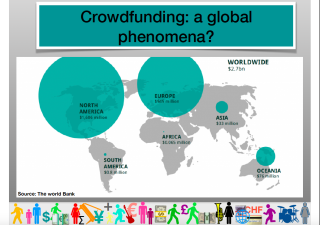
I spoke on the legal regulation of crowdfunding as the National Rapporteur for the United States.  My written contribution to the project, which I am told will be part of a published volume, is on SSRN here.  The entire project consists of eighteen papers from around the world, each of which responded to the same series of prompts conveyed to us by the General Rapporteur for the project (in our case, Caroline Kleiner from the University of Strasbourg).  The General Rapporteur is charged with consolidating the information and observations from the national reports and synthesizing key take-aways.  I do not envy her job!  The importance of the U.S. law and market to the global phenomenon is well illustrated by this slide from Caroline’s summary.

Fukuoka(GlobalCrowdfundingSlide)

The Congress was different from other international crowdfunding events at which I have presented my work.  The diversity of the audience–in terms of the number of countries and legal specialties represented–was significantly greater than in any other international academic forum at which I have presented.  Our panel of National Rapporteurs also was a bit more diverse and different than what I have experienced elsewhere, including panelists hailing from from Argentina, Brazil, Canada, France, Germany, Poland, and Singapore (in addition to me).  At international conferences focusing on the microfinance aspects of crowdfunding, participants from India and Africa are more prominent.  I expect to say more about the individual national reports on crowdfunding in later posts, as the need or desire arises.

A few outtakes on other sessions follow.