
Indiana University legal studies professor Abbey Stemler sent along this description of an article she co-wrote with Harvard Business School Professor Ben Edelman. They recently posted the article to SSRN and would love any feedback you may have, in the comments or via e-mail. 

———

Perhaps the most beloved twenty-six words in tech law, Section 230 of the Communications Decency Act of 1996 has been heralded as a “masterpiece” and the “law that gave us the modern Internet.” While it was originally designed to protect online companies from defamation claims for third-party speech (think message boards and AOL chat rooms), over the years Section 230 has been used to protect online firms from all kinds of regulation—including civil rights and consumer protection laws.  As a result, it is now the first line of defense used by online marketplaces to shield them from state and local regulation.

In our article recently posted to SSRN, From the Digital to the Physical: Federal Limitations on Regulating Online Marketplaces, we challenge existing interpretations of Section 230 and highlight how it and other federal laws interfere with state and local government’s ability to regulate online marketplaces—particularly those that dramatically shape
On Wednesday, I spoke with Kimberly Adams, a reporter for NPR Marketplace regarding CSX’s decision to require its CEO to disclose health information to the board. I don’t have a link to post, sorry. As you may know, CSX suffered a significant stock drop in December when its former CEO died shortly after taking a medical leave of absence and after refusing to disclose information about his health issues. CSX has chosen the drastic step of requiring an annual CEO physical in response to a shareholder proposal filed on December 21st stating, “RESOLVED, that the CEO of the CSX Corporation will be required to have an annual comprehensive physical, performed by a medical provider chosen by the CSX Board, and that results of said physical(s) will be provided to the Board of Directors of the CSX Corporation by the medical provider.” Adams asked my thoughts about a Wall Street Journal article that outlined the company’s plans. 

I’m not aware of any other company that asks a CEO to provide the results of an annual physical to the board. As I informed Adams, I hope the board has good counsel to avoid running afoul of the Americans with Disabilities Act, HIPAA, the Genetic Information

Article-h-m2-0108

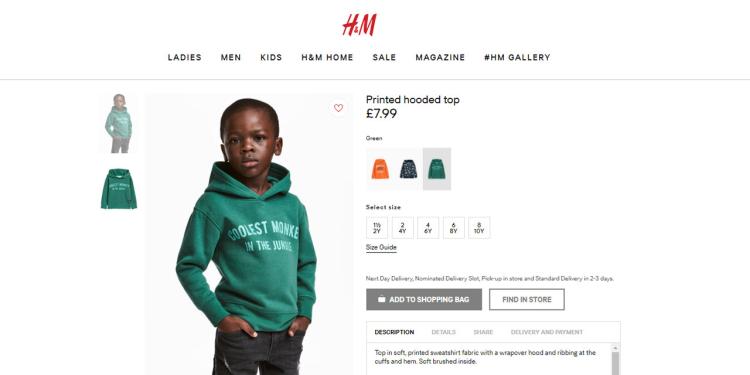
Swedish clothing giant H & M caused a huge stir this week with an ad campaign depicting a young black boy in a sweatshirt that proclaimed him the “Coolest Monkey In the Jungle.”  The company’s misstep is surprising given the public condemnations of the use of the word “monkey” in Europe over the past few years when soccer fans have used it as a slur against black players. Notwithstanding H & M’s many apologies, several megastars have denounced the company and some have even pulled their fashion collaborations. As usual, several have called for boycotts of the retailer. But will all of this really matter? The sweatshirt was still for sale in the UK days for days after the controversy erupted, and the Weeknd, one of the megastars who vowed to never work with H & M, still has his 18-piece H & M collection available online and available for purchase on the store’s  U.S. portal.

I’m headed out of the country tomorrow and in my quest for a new sweater, I glanced in the H & M store in my local mall earlier today. The store was packed and likely with fans of the artists who called for a boycott.

The new semester is upon us, and AALS (as it tends to) ran right into the new semester.  Joan Heminway provided a nice overview of some of her activities, including her recognition as an outstanding mentor by the Section on Business Associations, and it was a pleasure to see her recognized for her tireless and consistent efforts to make all of us better.  Congratulations, Joan, and thank you! 

I, too, had a busy conference, with most of it condensed to Friday and Saturday. (As a side note, it was pretty great to run along the water in 55-65 degree weather. As much as I love New York and appreciate San Francisco and DC, I’d be quite content with AALS moving between San Diego and New Orleans.)  I spoke on a panel with my co-bloggers, as Joan noted, about shareholder proposals, and I spoke on a panel about the green economy and sustainability, which was also fun.  It’s nice when I am able to spend some time with a focus on my two main areas of research. 

As to our panel on shareholder proposals, I thought I’d share a few of my thoughts.  First, as I have explained in the past

At a time when many boards may be thinking of tax planning and possible M & A deals, they may have to start focusing more on the unseemly topic of their executives’ sex lives because the flood of terminations and resignations due to sexual misconduct shows no signs of slowing down. One of the most shocking but underreported terminations in 2017 related to VISA. The CEO, one year into the role, chose to terminate one of his most valuable executives after an anonymous tip about sexual misconduct.  He wanted his employees to know that the corporate culture and values mattered. Board members should look closely at the VISA example.

We will continue to see the rise of the #MeToo movement spurred on in part by the messaging from a star-studded task force  formed to address Hollywood issues and the establishment of a multimillion-dollar legal defense fund to help blue-collar workers. Even Supreme Court Chief Justice Roberts addressed sexual harassment in the court system in his Year-End Report on the Federal Judiciary.  More people than ever may now choose to come forward with claims of harassment or assault. Whether companies choose to terminate wrongdoers or the accused choose to

No one will  be shocked that my last post of the year is about a court referring to a limited liability company (LLC) as a “limited liability corporation.”  It’s wrong to do so, and it’s my thing to point out when it happens.  This case is especially striking (and perhaps upsetting) because of the context of the reference.  In this 2015 case that just showed up on Westlaw (or at least, in my alerts), “Plaintiff argues that because Defendants are all limited liability corporations they must identify and prove the citizenship of their various members and that they have failed to do so.” Skywark v. Healthbridge Mgmt., LLC, No. 15-00058-BJR, 2015 WL 13621058, at *1 (W.D. Pa. July 22, 2015).  They mean LLCs, not corporations.  Okay, so far this is a pretty typical mistake.  But wait! 

In this case, the defendants did not allege the citizenship of the members of the defendants’ LLCs in their initial Notice of Removal, so the plaintiffs claimed that a filed  amendment was more than “technically defective.” In claiming the amendment was “minor, the defendants rely cited  O’Boyle v. Braverman, No. 08-553, 2008 U.S. Dist. LEXIS 62180 (D.N.J. Aug. 12, 2008), which found

A recent case in Washington state introduced me to some interesting facets of Washington’s recreational marijuana law.  The case came to my attention because it is part of my daily search for cases (incorrectly) referring to limited liability companies (LLCs) as “limited liability corporations.”  The case opens: 

In 2012, Washington voters approved Initiative Measure 502. LAWS OF 2013, ch. 3, codified as part of chapter 69.50 RCW. Initiative 502 legalizes the possession and sale of marijuana and creates a system for the distribution and sale of recreational marijuana. Under RCW 69.50.325(3)(a), a retail marijuana license shall be issued only in the name of the applicant. No retail marijuana license shall be issued to a limited liability corporation unless all members are qualified to obtain a license. RCW 69.50.331(1)(b)(iii). The true party of interest of a limited liability company is “[a]ll members and their spouses.”1 Under RCW 69.50.331(1)(a), the Washington State Liquor and Cannabis Board (WSLCB) considers prior criminal conduct of the applicant.2

LIBBY HAINES-MARCHEL & ROCK ISLAND CHRONICS, LLC, Dba CHRONICS, Appellants, v. WASHINGTON STATE LIQUOR & CANNABIS BOARD, an Agency of the State of Washington, Respondent., No. 75669-9-I, 2017 WL 6427358, at *1 (Wash. Ct. App.

I have written about Etsy in at least three past posts: (1) Etsy becoming a certified B Corp, (2) Etsy going public, and (3) Delaware amending it’s public benefit corporation laws (likely, in part, to help Etsy convert to a PBC, which Etsy would need to do to maintain its certification because it incorporated in a non-constituency statute state that does have a benefit corporation statute (Delaware)).

In May, some questioned whether Etsy would keep its social focus after a “management shakeup.” In September, B Lab granted Etsy an extension on converting to a PBC. That article claims that B Lab would reset the deadline for conversion to 2019, if Etsy re-certified as a B Corp by the end of 2017 and would commit to converting to a PBC.

The 2019 date was 4 years from the 2015 Delaware PBC amendments (instead of 4 years from Etsy’s first certification). One of B Lab’s co-founder reportedly said that the statutory amendments were needed because the original 2013 version of the Delaware PBC law was “perfectly fine for private companies and unworkable for public companies.”

Just a few days ago, however, Etsy announced that it would abandon its B

A recent Pennsylvania opinion makes all sorts of mistakes with regard to a single-member limited liability company (LLC), but in dissent, at least some of the key issues are correctly framed. In an unreported opinion, the court considered whether a company (WIT Strategy) that required an individual to form an LLC as a predicate to payment was an employee eligible for unemployment compensation. WIT Strategy v. Unemployment Compensation Board of Review, 2017 WL 5661148, at *1 (Pa. Cmwlth. 2017).  The majority explained the test for whether the worker was an employee as follows:

The burden to overcome the ‘strong presumption’ that a worker is an employee rests with the employer. To prevail, an employer must prove: (i) the worker performed his job free from the employer’s control and direction, and (ii) the worker, operating as an independent tradesman, professional or businessman, did or could perform the work for others, not just the employer.

Id. at *3. (quoting Quality Care Options v. Unemployment Comp. Bd. of Review, 57 A.3d 655, 659-60 (Pa. Cmwlth. 2012) (citations omitted; emphasis added)).

As to the first prong, the Unemployment Compensation Board of Review (UCBR) determined, and the court confirmed, that WIT Strategy had retained

A new Maryland case deals with claims against a limited liability company that the plaintiff claimed was “registered as a limited liability corporation (‘LLC‘).” Farm Fresh Direct Direct By a Cut Above LLC v. Downey, 2017 WL 4865481, at *2 (D. Md., 2017).  The court repeats the mistake, but the complaint is the original source, as it incorrectly identifies the LLC as a “corporation” and not a company.  The court then explains some of the allegations as follows: 
Plaintiff alleges that Sinsky violated 15 U.S.C. § 1125(a)(1)(A) and engaged in unfair and deceptive trade practices, in violation of Maryland common law. ECF 1, ¶¶ 17-22, 23-26. At its core, plaintiff’s contention is that “Sinsky is the resident agent and incorporator” of Farm Fresh Home (ECF 1, ¶¶ 12-13), and in that capacity she “filed” the articles of organization for Farm Fresh Home, creating a name for the “competing company” that is “intentionally confusing” because of its similarity to Farm Fresh Direct. ECF 1, ¶ 12.
. . . .
*4 Farm Fresh Home is a limited liability company. As a threshold matter, I must determine whether Sinsky is subject to suit in light of Farm Fresh Home’s