
Hello to all from Tokyo, Japan (Honshu).  I have been in Japan for almost a week to present at and attend the 20th General Congress of the International Academy of Comparative Law (IACL), which was held last week in Fukuoka, Japan (Kyushu).  By the time you read this, I will be on my way home.

Fukuoka(Me+Sign)

As it turns out, I was at the Congress with old business law friends Hannah Buxbaum (Indiana Maurer Law), Felix Chang (Cincinnati Law), and Frank Gevurtz (McGeorge Law), as well as erstwhile SEALS buddy Eugene Mazo (Rutgers Law).  I also met super new academic friends from all over the world, including several from the United States.  I attended all of the business law programs after my arrival (I missed the first day due to my travel schedule) and a number of sessions on general comparative and cross-border legal matters.  All of that is too much to write about here, but I will give you a slice.

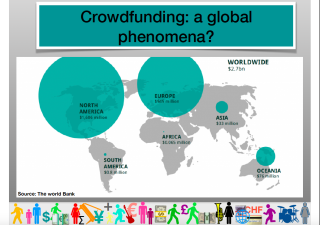
I spoke on the legal regulation of crowdfunding as the National Rapporteur for the United States.  My written contribution to the project, which I am told will be part of a published volume, is on SSRN here.  The entire project consists of eighteen papers from around the world, each of which responded to the same series of prompts conveyed to us by the General Rapporteur for the project (in our case, Caroline Kleiner from the University of Strasbourg).  The General Rapporteur is charged with consolidating the information and observations from the national reports and synthesizing key take-aways.  I do not envy her job!  The importance of the U.S. law and market to the global phenomenon is well illustrated by this slide from Caroline’s summary.
Fukuoka(GlobalCrowdfundingSlide)

The Congress was different from other international crowdfunding events at which I have presented my work.  The diversity of the audience–in terms of the number of countries and legal specialties represented–was significantly greater than in any other international academic forum at which I have presented.  Our panel of National Rapporteurs also was a bit more diverse and different than what I have experienced elsewhere, including panelists hailing from from Argentina, Brazil, Canada, France, Germany, Poland, and Singapore (in addition to me).  At international conferences focusing on the microfinance aspects of crowdfunding, participants from India and Africa are more prominent.  I expect to say more about the individual national reports on crowdfunding in later posts, as the need or desire arises.

A few outtakes on other sessions follow.

I am committed to introducing my business law students to business law doctrine and policy both domestically and internationally.  The Business Associations text that I coauthored has comparative legal observations in most chapters.  I have taught Cross-Border Mergers & Acquisitions with a group of colleagues and will soon be publishing a book we have coauthored.  And I taught comparative business law courses for four years in study abroad programs in Brazil and the UK.  

In the study abroad programs, I struggled in finding suitable texts, cobbling together several relatively small paperbacks and adding some web-available materials.  The result was suboptimal.  I yearned for a single suitable text.  In my view, texts for study abroad courses should be paperback and cover all of the basics in the field in a succinct fashion, allowing for easy portability and both healthy discussion to fill gaps and customization, as needed, to suit the instructor’s teaching and learning objectives.

And so it was with some excitement–but also some healthy natural skepticism–that I requested a review copy of Corporations: A Comparative Perspective (International Edition), coauthored by my long-time friend Marco Ventoruzzo (Bocconi and Penn State) and five others (all scholars from outside

Earlier this week, President Trump gave his annual speech on national security. As in the past, he failed to stress human rights (unlike his predecessors) but did allude to cooperation, even with China and Russia, when warranted by geopolitical interests. Over the last several months, he has touted bilateral trade agreements. Coincidentally, my latest law review article on a potential bilateral investment treaty with Cuba came out the same day. As you may recall, Trump recently reversed some Obama-era policies on Cuba over human rights. My article may help his administration reconcile some of the apparent contradictions in his policies. The abstract is below. 

You Say Embargo, I Say Bloqueo—A Policy Recommendation for Promoting Foreign Direct Investment and Safeguarding Human Rights In Cuba

The United States is the only major industrialized nation that restricts
trade with Cuba. Although President Obama issued several executive orders
that have facilitated limited trade (and President Trump has scaled some
back), an embargo remains in place, and by law, Congress cannot lift it until,
among other things, the Cuban government commits to democratization and
human rights reform. Unfortunately, the Cuban and U.S. governments
fundamentally disagree on the definition of “human rights,” and neither side

My friend and colleague at West Virginia University, Jena Martin, has posted her new paper, Hiding in the Light: The Misuse of Disclosure to Advance a Business and Human Rights Agenda. The paper is forthcoming in the Columbia Journal of Transnational Law and can be accessed at https://papers.ssrn.com/sol3/papers.cfm?abstract_id=3028826 

It’s worth a read. Here’s the abstract:

In June 2017, Waitrose, a top UK supermarket, pulled its cans of corned beef off the shelves after an investigation revealed that the meat might have been produced with slave labor. At the time of the recall, Waitrose was in compliance with the UK Modern Slavery Act (MSA), a 2015 law enacted to prevent human trafficking and modern-day slavery. Under the MSA, corporations are required to file annual reports disclosing what action they had taken to eradicate slavery and human trafficking in their supply chains. The Modern Slavery Act, in turn, was a much-lauded law that is part of the growing trend of States to move the international business and human rights agenda forward. A key component of that agenda involves disseminating the UN’s Protect, Respect and Remedy Framework and implementing the UN Guiding Principles, which have been praised by States around the

Every year, the United Nations holds a symbolic but important vote on a resolution condemning the U.S. embargo against Cuba and every year the United States and Israel are the only two countries to vote against it. Last year, the United States abstained in accordance with the rapprochement that the Obama administration began in 2014. A few hours ago, the U.S. and Israel stood alone and voted once again against the UN resolution, while 192 other nations voted for it. Ambassador Haley explained that the vote demonstrated, “continued solidarity with the Cuban people and in the hope that they will one day be free to choose their own destiny.” Prior to the vote she announced to the General Assembly that “today, the crime is the Cuban government’s continued repression of its people and failure to meet even the minimum requirements of a free and just society… The United States does not fear isolation in this chamber or anywhere else. Our principles are not up for a vote … We will stand for respect for human rights and fundamental freedoms that the member states of this body have pledged to protect, even if we have to stand alone.” The United States

If you’re a fan of wine (I am) and international business if of interest (it is), this Faculty Development might be for you.  It overlaps with the AALS Annual Meeting, so it won’t work for me this year, but it looks like a good program.  Have a look: 

Temple University’s Center for International Business Education and Research (CIBER) presents

Faculty Development in International Business: Santiago, Chile (January 5-11, 2018)

Business Innovation in Chile: A Case Study of the Wine Export Sector

Leave winter behind this January and join us for a summer experience in Chilean wine country. As an innovation-driven economy, the United States prides itself on developing and delivering innovative goods and services domestically and globally through high-tech exports, creative branding, and in-demand services. Among those exports is our growing wine sector, led by Napa Valley but recently expanding into other parts of California, Oregon, Virginia, and other lesser-known wine producing regions of the United States. Despite this expansion, the United States remains behind old world wine producers in Europe. Chile and Australia also outpace the United States in terms of wine exports and have been leading the way in innovative production and marketing techniques.

On this faculty/professional-oriented immersion

From an e-mail I received this week:

———-

The UNIVERSITY OF NEBRASKA COLLEGE OF LAW invites applications for lateral candidates for a tenured faculty position to hold the Clayton K. Yeutter Chair at the College of Law. This chaired faculty position will be one of four faculty members to form the core of the newly-formed, interdisciplinary Clayton K. Yeutter Institute for International Trade and Finance. The Institute also will include the Duane Acklie Chair at the College of Business, the Michael Yanney Chair at the College of Agriculture and Natural Resources, and the Haggart/Works Professorship for International Trade at the College of Law. The Yeutter Chair, along with the other three professors, will be expected to support the work and objectives and ensure the success of the Yeutter Institute. The Yeutter Chair will teach courses at the College of Law, including International Finance. Other courses may include Corporate Finance and/or other classes related to business and finance. More on the Yeutter Institute can be found at http://news.unl.edu/free-tags/clayton-k-yeutter-institute-of-international-trade-and-finance/.

Minimum Required Qualifications: J.D Degree or Equivalent; Superior Academic Record; Outstanding Record of Scholarship in International Finance and/or other areas related to international business; and Receipt of Tenure at an Accredited Law School.

The following comes from the University of Akron School of Law:

The University of Akron School of Law anticipates hiring a tenure-track or tenured faculty member with a focus in the area of international and comparative law to begin teaching in Fall 2018.  We seek a candidate demonstrating general international law expertise with a preference for private international law, including but not limited to international business transactions, international trade, and/or international commercial arbitration.  Both entry-level and lateral candidates are encouraged to apply.  The appointment may include opportunities for administrative leadership overseeing study abroad programs, programs for foreign lawyers, and other international programs.  The committee is interested in candidates with scholarly distinction or great promise as demonstrated by strong early scholarship and a thoughtful agenda for future work, as well as a commitment to excellence in teaching.

The University of Akron School of Law is a public, mid-size law school of approximately 500 students located in the Akron/Cleveland metropolitan area.  With a new building, a new dean, and strong enrollments, Akron Law provides an energized community and faculty environment.  The School of Law has a strong tradition of teaching and offers students low tuition, a commitment to student success, strong job placement, award-winning clinical programs, a national trial team program, and unique mentorship with the local and regional bars.  It has research centers in Intellectual Property, Constitutional Law, and Professional Responsibility.  Akron Law has recently enhanced its international initiatives including new collaborative relationships with universities in Asia, an accelerated juris doctor program for international students, visiting international scholars, and a four-week, three-city, two-country study abroad program in Japan and South Korea.  In addition, the larger University has been expanding international initiatives and programming.  The University of Akron is a public research university of 25,000 students, with a national reputation in polymer science, engineering, and business in addition to law.  It is centered in Akron, Ohio, a city with a population of 200,000, known for its low cost of living and high quality of life, its surrounding natural beauty including the Cuyahoga Valley National Park, its history of industrial innovation, and its multitude of cultural, artistic, athletic, and recreational opportunities.

Shortly after the election in November, I blogged about Eleven Corporate Governance and Compliance Questions for the President-Elect. Those questions (in italics) and my updates are below:

  1. What will happen to Dodd-Frank? There are already a number of house bills pending to repeal parts of Dodd-Frank, but will President Trump actually try to repeal all of it, particularly the Dodd-Frank whistleblower rule? How would that look optically? Former SEC Commissioner Paul Atkins, a prominent critic of Dodd-Frank and the whistleblower program in particular, is part of Trump’s transition team on economic issues, so perhaps a revision, at a minimum, may not be out of the question.

Last week, via Executive Order, President Trump made it clear (without naming the law) that portions of Dodd-Frank are on the chopping block and asked for a 120-day review. Prior to signing the order, the President explained, “We expect to be cutting a lot out of Dodd-Frank…I have so many people, friends of mine, with nice businesses, they can’t borrow money, because the banks just won’t let them borrow because of the rules and regulations and Dodd-Frank.” An executive order cannot repeal Dodd-Frank, however. That would require a vote of 60

On Friday, I will present as part of the American Society of International Law’s two-day conference entitled Controlling Corruption: Possibilities, Practical Suggestions & Best Practices. The ASIL Conference is co-sponsored by the University of Miami School of Business Administration, the Business Ethics Program of the University of Miami School of Business Administration, UM Ethics Programs & the Arsht Initiatives, the Zicklin Center for Business Ethics Research, Wharton, University of Pennsylvania, Bentley University, and University of Richmond School of Law.

I am particularly excited for this conference because it brings law, business, and ethics professors together with practitioners from around the world. My panel includes:

Marcia Narine Weldon, St. Thomas University School of Law, “The Conflicted Gatekeeper: The Changing Role of In-House Counsel and Compliance Officers in the Age of Whistle Blowing and Anticorruption Compliance”

Todd Haugh, Kelley School of Business, Indiana University, “The Ethics of Intercorporate Behavioral Ethics”

Shirleen Chin, Institute for Environmental Security, Netherlands, “Reducing the Size of the Loopholes Caused by the Veil of Incorporation May lead to Better Transparency”

Edwin Broecker, Quarles &Brady LLP, Indiana,& Fernanda Beraldi Cummins, Inc, Indiana, “No Good Deed Goes Unpunished: Possible Unintended Consequences of Enforcing Supply Chain Transparency”

Stuart Deming, Deming PLLC