If you are looking for podcasts over the break, I recommend Professor Brian Frye’s Ipse Dixit. I have only listened to a handful of the 75 episodes, but I learned something new in each one.

A big thanks to Brian for putting all of these podcasts on legal scholarship together. The podcasts cover a wide range of legal topics, mostly in an interview format with other professors. 

Colleen Baker

Colleen Baker is joining us as a guest blogger at Business Law Prof Blog for the next month. Colleen Baker is an Assistant Professor at the Price College of Business at the University of Oklahoma. She is also affiliate faculty at the University of Oklahoma College of Law. Her research interests primarily lie in the banking and financial institutions law and regulation space. Additional information about her education, practice, and publications can be found at her bio, linked to above. We are looking forward to Professor Colleen Baker’s posts and hope our readers will engage with her work.

The Cambridge Handbook of Social Enterprise Law, edited by Ben Means (South Carolina) and Joe Yockey (Iowa) is at the printers and should be ready for orders in early 2019. 

My fellow BLPB editor Joan Heminway and I both have chapters in the book, along with many others. 

The introduction is posted on SSRN, for those who are interested. Also, editor Ben Means has many talents, as he did the cover artwork below as well.

The Cambridge Handbook of Social Enterprise Law_Cover

Last Friday, I had the honor of being the keynote speaker for the 64th annual conference of the Southeastern Academy of Legal Studies in Business (SEALSB).  The invitation for this appearance was extended to me months ago by BLPB contributing editor Haskell Murray.  It was a treat to have the opportunity to mingle and talk shop with the attendees (some of whom I already knew).

The participants in SEALSB are largely business law faculty members teaching at business schools.  Having never before attended one of their meetings and as a bit of a “foreigner” in their midst, I wondered for quite a bit about what I should talk about.  Should I take the conservative route and present some of my work, hoping to dazzle the group with my legal knowledge (lol), or should I take a riskier approach and tell them what was really on my heart when I accepted Haskell’s kind invitation?

I chose the latter.  I spoke for 15-20 minutes on “Valuing and Visioning Collaboration” between business law faculties in business and law schools and then took about 10 minutes of questions.  I started with the stories of two of my students–who could have been the students

5th Conference of the French Academy of Legal Studies in Business (Association Française Droit et Management)

June 20 and 21, 2019 – emlyon – Paris Campus

CALL FOR PAPERS 2019 Social Issues in Firms

Social issues and fundamental rights occupy an increasingly important space in the governance of today’s companies. Private enterprises assume an increasingly active role not only in a given economy but also in society as a whole. Firms become themselves citizens. They recognize and support civic engagement by the men and women who work for them. Historically, the role of the modern firm that resulted from the Industrial Revolution has been torn between two opposing viewpoints.

[More information under the break.]

Following is an announcement for an upcoming symposium that will tackle some challenging topics, including those related to the role corporate law plays in addressing poverty.  I, of course, would probably talk about the role of “entity law,” rather than “corporate law,” but that’s just me.  Regardless, this should be an interesting and enlightening discussion, and I look forward to seeing the papers that come from it.  

On Thursday, October 25, 2018, The University of Tennessee Law School and the Tennessee Journal of Race, Gender, & Social Justice will be hosting a Symposium titled The Urgency of Poverty. The Symposium reflects on the Poor People’s Campaign of 1968 and the continued injustices which have led to the current revival. The Symposium further explores the important role transactional lawyers and scholars must play in advocating for economic justice in modern America.

The Symposium will include panels on (1) Environmental Justice, (2) Intersection of Civil Rights and Economic Justice, (3) Solidarity Economies, and (4) Reforming Corporate Law. Professor Philip Alston, the U.N. Special Rapporteur on Extreme Poverty, and Human Rights, will deliver the keynote. The Symposium is accompanied by a dedicated publication featuring essays and articles from Transactional Professors of Color.

Two weeks ago, I blogged about why lawyers, law professors, and judges should care about blockchain. I’ll be speaking about blockchain, corporate governance, and enterprise risk management on September 14th at our second annual BLPB symposium at UT. To prepare, I’m reading as many articles as I can on blockchain, but it can be a bit mind numbing with all of the complexity. After hearing Carla Reyes speak at SEALS, I knew I had to read hers, if only because of the title If Rockefeller Were A Coder.

I recommend this article in general, but especially for those who teach business organizations and want to find a way to enliven your entity selection discussions. The abstract is below. 

The Ethereum Decentralized Autonomous Organization (“The DAO”), a decentralized, smart contract-based, investment fund with assets of $168 million, spectacularly crashed when one of its members exploited a flaw in the computer code and stole $55 million. In the wake of the exploit, many argued that participants in the DAO could be jointly and severally liable for the loss as partners in a general partnership. Others claimed that the DAO evidenced an entirely new form of business entity, one that current laws

The following comes to us from Sergio Alberto Gramitto Ricci, Visiting Assistant Professor of Law and Assistant Director, Clarke Program on Corporations & Society, Cornell Law School.  I had the pleasure of listening to Sergio discuss this project at our recent SEALS discussion group on Masterpiece Cakeshop, and I found particularly interesting his conclusion that “Roman slaves could not own property, but ius naturale provided them with the right to exercise religion. To the contrary, Roman corporations could contract, own assets and bear liabilities, but they had no exercise rights as religion liberties were typical of personae—physically sound humans.”  The concept of robo-directors is also fascinating, and adds another layer to my ongoing dystopian (utopian?) novel plot wherein corporations are allowed to run for seats in Congress directly (as opposed to what some would argue is the current system wherein we get: “The Senator from [X], sponsored by Big Pharma Corp.”). You can download the full draft via SSRN here: https://papers.ssrn.com/sol3/papers.cfm?abstract_id=3232816.

In an era where legal persons hold wealth and power comparable to those of nation states, shedding light on the nature of the corporate form and on the rights of business corporations is crucial for defining the

We’re a month away from our second annual Business Law Professor Blog CLE, hosted at the University of Tennessee on Friday, September 14, 2018. We’ll discuss our latest research and receive comments from UT faculty and students. I’ve entitled my talk Beyond Bitcoin: Leveraging Blockchain for Corporate Governance, Corporate Social Responsibility, and Enterprise Risk Management, and will blog more about that after I finish the article. This is a really long post, but it’s chock full of helpful links for novices and experts alike and highlights some really interesting work from our colleagues at other law schools.

Two weeks ago, I posted some resources to help familiarize you with blockchain. Here’s a relatively simple definition from John Giordani at Forbes:

Blockchain is a public register in which transactions between two users belonging to the same network are stored in a secure, verifiable and permanent way. The data relating to the exchanges are saved inside cryptographic blocks, connected in a hierarchical manner to each other. This creates an endless chain of data blocks — hence the name blockchain — that allows you to trace and verify all the transactions you have ever made. The primary function of a

Hello to all from Tokyo, Japan (Honshu).  I have been in Japan for almost a week to present at and attend the 20th General Congress of the International Academy of Comparative Law (IACL), which was held last week in Fukuoka, Japan (Kyushu).  By the time you read this, I will be on my way home.

Fukuoka(Me+Sign)

As it turns out, I was at the Congress with old business law friends Hannah Buxbaum (Indiana Maurer Law), Felix Chang (Cincinnati Law), and Frank Gevurtz (McGeorge Law), as well as erstwhile SEALS buddy Eugene Mazo (Rutgers Law).  I also met super new academic friends from all over the world, including several from the United States.  I attended all of the business law programs after my arrival (I missed the first day due to my travel schedule) and a number of sessions on general comparative and cross-border legal matters.  All of that is too much to write about here, but I will give you a slice.

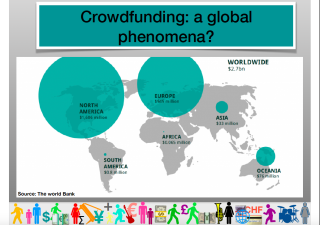
I spoke on the legal regulation of crowdfunding as the National Rapporteur for the United States.  My written contribution to the project, which I am told will be part of a published volume, is on SSRN here.  The entire project consists of eighteen papers from around the world, each of which responded to the same series of prompts conveyed to us by the General Rapporteur for the project (in our case, Caroline Kleiner from the University of Strasbourg).  The General Rapporteur is charged with consolidating the information and observations from the national reports and synthesizing key take-aways.  I do not envy her job!  The importance of the U.S. law and market to the global phenomenon is well illustrated by this slide from Caroline’s summary.

Fukuoka(GlobalCrowdfundingSlide)

The Congress was different from other international crowdfunding events at which I have presented my work.  The diversity of the audience–in terms of the number of countries and legal specialties represented–was significantly greater than in any other international academic forum at which I have presented.  Our panel of National Rapporteurs also was a bit more diverse and different than what I have experienced elsewhere, including panelists hailing from from Argentina, Brazil, Canada, France, Germany, Poland, and Singapore (in addition to me).  At international conferences focusing on the microfinance aspects of crowdfunding, participants from India and Africa are more prominent.  I expect to say more about the individual national reports on crowdfunding in later posts, as the need or desire arises.

A few outtakes on other sessions follow.