
The Cambridge Handbook of Social Enterprise Law, edited by Ben Means (South Carolina) and Joe Yockey (Iowa) is at the printers and should be ready for orders in early 2019. 

My fellow BLPB editor Joan Heminway and I both have chapters in the book, along with many others. 

The introduction is posted on SSRN, for those who are interested. Also, editor Ben Means has many talents, as he did the cover artwork below as well.
The Cambridge Handbook of Social Enterprise Law_Cover

Following is an announcement for an upcoming symposium that will tackle some challenging topics, including those related to the role corporate law plays in addressing poverty.  I, of course, would probably talk about the role of “entity law,” rather than “corporate law,” but that’s just me.  Regardless, this should be an interesting and enlightening discussion, and I look forward to seeing the papers that come from it.  

On Thursday, October 25, 2018, The University of Tennessee Law School and the Tennessee Journal of Race, Gender, & Social Justice will be hosting a Symposium titled The Urgency of Poverty. The Symposium reflects on the Poor People’s Campaign of 1968 and the continued injustices which have led to the current revival. The Symposium further explores the important role transactional lawyers and scholars must play in advocating for economic justice in modern America.

The Symposium will include panels on (1) Environmental Justice, (2) Intersection of Civil Rights and Economic Justice, (3) Solidarity Economies, and (4) Reforming Corporate Law. Professor Philip Alston, the U.N. Special Rapporteur on Extreme Poverty, and Human Rights, will deliver the keynote. The Symposium is accompanied by a dedicated publication featuring essays and articles from Transactional Professors of Color.

I am still basking in the warm glow of having hosted a number of my fellow Business Law Prof Blog editors in Knoxville last week for our second annual “Connecting the Threads” event.  What a great day we had on Friday.  I could listen to these folks talk about business law until the cows come home (so to speak–no actual cows here!).

As BLPB readers may recall, the title of my paper for the 2018 “Connecting the Threads II” symposium is Lawyering for Social Enterprise.  I am sure that I will blog more on that topic in this space later–when my paper from the symposium has been published–but I want to offer here the three paragraphs of conclusion to the handout I prepared for the continuing legal education materials for the program, which focus on the need of judgment, discretion, and even wisdom.

Advising entrepreneurs, founders, promoters, and directors of social enterprises can be both satisfying and frustrating. The satisfaction most often comes from helping these businesses achieve financial success while also serving the public good. The frustration comes from the difficulty of the task in providing the necessary counsel—both in selecting the optimal legal form for the

Did I lose you with the title to this post? Do you have no idea what a DAO is? In its simplest terms, a DAO is a decentralized autonomous organization, whose decisions are made electronically by a written computer code or through the vote of its members. In theory, it eliminates the need for traditional documentation and people for governance. This post won’t explain any more about DAOs or the infamous hack of the Slock.it DAO in 2016. I chose this provocative title to inspire you to read an article entitled Legal Education in the Blockchain Revolution.

The authors Mark Fenwick, Wulf A. Kaal, and Erik P. M. Vermeulen discuss how technological innovations, including artificial intelligence and blockchain will change how we teach and practice law related to real property, IP, privacy, contracts, and employment law. If you’re a practicing lawyer, you have a duty of competence. You need to know what you don’t know so that you avoid advising on areas outside of your level of expertise. It may be exciting to advise a company on tax, IP, securities law or other legal issues related to cryptocurrency or blockchain, but you could subject yourself to discipline for doing so

On Tuesday, Elizabeth Warren penned an article in The Wall Street Journal entitled Companies Shouldn’t Be Accountable Only to Shareholders: My new bill would require corporations to answer to employees and other stakeholders as well.

The article announced and promoted her Accountable Capitalism Act. With Republicans in control of Congress and the White House, Warren’s bill almost certainly doesn’t stand a chance of passing in the short-term.

Yet, because the bill draws on benefit corporation governance, a main scholarly interest of mine, and because it may foreshadow moves by a Democrat-controlled Congress in the future, I decided to read the 28-page bill and report here briefly.

Portions of the bill summarized:

  • As has been widely reported, the bill only applies to companies with more than $1 billion in revenue.
  • The bill seeks to establish an “Office of United States Corporations” within the Department of Commerce, which will review, grant, and rescind charters for the large companies covered by the bill.
  • The bill takes language from benefit corporation law and requires that U.S. Corporations must have a purpose to serve a “general public benefit” – “a material positive impact on society resulting from the business and operations of

Hello to all from Tokyo, Japan (Honshu).  I have been in Japan for almost a week to present at and attend the 20th General Congress of the International Academy of Comparative Law (IACL), which was held last week in Fukuoka, Japan (Kyushu).  By the time you read this, I will be on my way home.

Fukuoka(Me+Sign)

As it turns out, I was at the Congress with old business law friends Hannah Buxbaum (Indiana Maurer Law), Felix Chang (Cincinnati Law), and Frank Gevurtz (McGeorge Law), as well as erstwhile SEALS buddy Eugene Mazo (Rutgers Law).  I also met super new academic friends from all over the world, including several from the United States.  I attended all of the business law programs after my arrival (I missed the first day due to my travel schedule) and a number of sessions on general comparative and cross-border legal matters.  All of that is too much to write about here, but I will give you a slice.

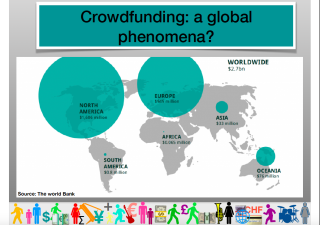
I spoke on the legal regulation of crowdfunding as the National Rapporteur for the United States.  My written contribution to the project, which I am told will be part of a published volume, is on SSRN here.  The entire project consists of eighteen papers from around the world, each of which responded to the same series of prompts conveyed to us by the General Rapporteur for the project (in our case, Caroline Kleiner from the University of Strasbourg).  The General Rapporteur is charged with consolidating the information and observations from the national reports and synthesizing key take-aways.  I do not envy her job!  The importance of the U.S. law and market to the global phenomenon is well illustrated by this slide from Caroline’s summary.

Fukuoka(GlobalCrowdfundingSlide)

The Congress was different from other international crowdfunding events at which I have presented my work.  The diversity of the audience–in terms of the number of countries and legal specialties represented–was significantly greater than in any other international academic forum at which I have presented.  Our panel of National Rapporteurs also was a bit more diverse and different than what I have experienced elsewhere, including panelists hailing from from Argentina, Brazil, Canada, France, Germany, Poland, and Singapore (in addition to me).  At international conferences focusing on the microfinance aspects of crowdfunding, participants from India and Africa are more prominent.  I expect to say more about the individual national reports on crowdfunding in later posts, as the need or desire arises.

A few outtakes on other sessions follow.

My essay on the use of traditional for-profit corporations as a choice of entity for sustainable social enterprise firms was recently published in volume 86 of the UMKC Law Review.  I spoke on this topic at The Bryan Cave/Edward A. Smith Symposium: The Green Economy held at the UMKC School of Law back in October.  The essay is entitled “Let’s Not Give Up on Traditional For-Profit Corporations for Sustainable Social Enterprise,” and the SSRN abstract is included below:

The past ten years have witnessed the birth of (among other legal business forms) the low-profit limited liability company (commonly known as the L3C), the social purpose corporation, and the benefit corporation. The benefit corporation has become a legal form of entity in over 30 states. The significant number of state legislative adoptions of new social enterprise forms of entity indicates that policy makers believe these alternative forms of entity serve a purpose (whether legal or extra legal).

The rise of specialty forms of entity for social enterprise, however, calls into question, for many, the continuing role of the traditional for-profit corporation (for the sake of brevity and convenience, denominated “TFPC” in this essay) in social enterprises, including green economy ventures.

Mark your calendars!

March 1, 2018 is the deadline for nominations for the inaugural award of the Grunin Prize.

The Grunin Prize has been created to recognize the variety and impact of lawyers’ participation in the ways in which business, whether for-profit or not-for-profit, is increasingly advancing the goals of sustainability and human development.

Lawyers, legal educators, policymakers, in-house counsel, or legal teams that recently have developed innovative, scalable, and social entrepreneurial solutions using existing law, legal education, or the development of new legal structures or metrics are eligible for nomination. And self-nominations are encouraged!

The Grunin Prize will be presented on June 5, 2018 at the IILWG/Grunin Center conference. To learn more about the Grunin Prize and the nomination process, go to http://www.law.nyu.edu/centers/grunin-social-entrepreneurship/grunin-prize.

June 5-6, 2018 are the dates of the Impact Investing Legal Working Group (IILWG)/Grunin Center for Law and Social Entrepreneurship’s 2018 Conference on “Legal Issues in Social Entrepreneurship and Impact Investing – in the US and Beyond.” This year’s IILWG/Grunin Center’s annual conference will take place at NYU School of Law in New York City.

The themes of this year’s conference include:

· Embedding Impact into Deal Structures and Terms
· Policy and

I suspect click-bait headline tactics don’t work for business law topics, but I guess now we will see. This post is really just to announce that I have a new paper out in Transactions: The Tennessee Journal of Business Law related to our First Annual (I hope) Business Law Prof Blog Conference co-blogger Joan Heminway discussed here. The paper, The End of Responsible Growth and Governance?: The Risks Posed by Social Enterprise Enabling Statutes and the Demise of Director Primacy, is now available here.

To be clear, my argument is not that I don’t like social enterprise. My argument is that as well-intentioned as social enterprise entity types are, they are not likely to facilitate social enterprise, and they may actually get in the way of social-enterprise goals.  I have been blogging about this specifically since at least 2014 (and more generally before that), and last year I made this very argument on a much smaller scale.  Anyway, I hope you’ll forgive the self-promotion and give the paper a look.  Here’s the abstract: 

Social benefit entities, such as benefit corporations and low-profit limited liability companies (or L3Cs) were designed to support and encourage socially responsible business. Unfortunately, instead

Just a quick post today about a teaching technique I have been using that offers significant opportunities for exploration, especially in small class environments.

I am again teaching Advanced Business Associations this semester.  The course allows students to review and expand their knowledge of business firm management and control issues in various contexts (public corporations, closely held corporations, benefit corporations, and unincorporated business entities), mergers and acquisitions, and corporate and securities litigation.  I have reported on this course in the past, including in this post and this one.

At the conclusion of each unit, I have students locate (go off on a treasure hunt, of sorts) and post on the course management website (I use TWEN) a practice document related to the matters covered in that unit.  Today we concluded our unit on benefit corporations.  Each student (I only have five this semester) was required to, among other things, post the actual corporate charter (not a template or form) of a benefit corporation.  Although the Advanced Business Associations course features training presentations by representatives of Lexis/Nexis, Westlaw, and Bloomberg that include locating precedent documents of various kinds, the students have not yet had this training.

In our discussions about