The Supreme Court just granted cert in Lorenzo v. Securities & Exchange Commission to decide the scope of primary liability/scheme liability under the federal securities laws.  It’s an important issue and I’m glad that the Court seeks to clarify the law, but I have to say that procedurally speaking, this strikes me as an odd grant.

Below is way too long a post; it’s so much easier to write long than take the time to edit down, so forgive the extended backstory.  (Also, for the record, I pulled a lot of the citations from my  – very first! – real law review article, Slouching Towards Monell: The Disappearance of Vicarious Liability Under Section 10(b), which contains a long discussion of Janus, primary liability, and secondary liability, so, you know, enjoy if you’re into that).

[More under the jump]

Continue Reading These days, a knotty Janus problem almost seems like a comfort
Call for Papers: Midwestern Law & Economics Association Annual Meeting
The University of Alabama School of Law
September 14-15, 2018


Dear colleagues,

Please note that the deadline for submitting papers to the Midwestern Law & Economics Association has been extended to July 20, 2018. 

The University of Alabama School of Law (UASL) is pleased to host the Eighteenth Annual Meeting of the Midwestern Law & Economics Association (MLEA) September 14-15, 2018 in Tuscaloosa, Alabama. This year’s meeting will be co-sponsored by the UASL and the UASL¹s Cross Disciplinary Legal Studies Program.

We invite participants from across the nation (not just the Midwest) and abroad. There are no registration or membership fees. Participants will finance their own travel and hotel costs.

Papers can be on any topic that touches on law and economics. This includes, for example, papers with empirical analysis and economic modeling, as well as papers that address legal doctrine or theory that have been informed by economic thought.

To apply, submit a paper or abstract to Shahar Dillbary (sdillbary@law.ua.edu) and Yonathan Arbel (yarbel@law.ua.edu ) no later than Friday, July 20th. 

A block of rooms at Hotel Indigo has been reserved for conference participants at a rate of $119 (excluding tax). You can book by calling the hotel directly at 205.469.1660 or via the website at Hotel Indigo Reservations. Use Group ID Bama Law to receive the special conference rate.  You will need to reserve your room by September 3, 2017 to receive this conference rate.

Contact Shahar Dillbary (sdillbary@law.ua.edu) and Yonathan Arbel (yarbel@law.ua.edu) with any questions.

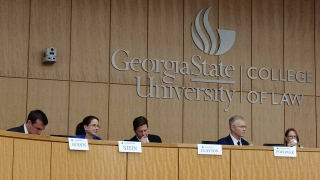
A few days ago, the SEC’s Investor Advisory Committee convened at Georgia State University’s law school.  They took testimony from the AARP about how to structure disclosures about financial professionals for use with retail customers.  Retirement security will be a bigger and bigger issue as more and more Baby Boomers enter retirement.

The AARP pointed out that effective disclosure needs to be short, simple, and clear:

We believe that the current four page relationship is too long, technical, and therefore too onerous for the average investor and household to process. The text of the relationship summary should be simply written and should avoid technical terms like “fiduciary” and “asset‐based fee” unless such complex terms are clearly defined. Behavioral science has shown that when faced with a complicated choice, people often simplify by focusing on only two or three aspects of the decision. The less they are able to frame the decision in narrow terms, the more likely they will end up overwhelmed, undecided or procrastinating. As with other disclosure statements, it is best if key information can be included on one page – additional secondary information can be attached as supplemental information. A good disclosure statement will highlight the information most important to the consumer.

As the SEC thinks about how to make disclosure actually useful, it should probably test to see how different disclosures actually perform.  My framework for thinking about this is heavily informed by Lauren Willis’s work.  She laid out the need for consumer disclosures to be informed by research about how consumers actually behave instead of some fantasy of a calm, well-educated person with the time to read and carefully consider pages of boilerplate.  The SEC has a chance to get these disclosures right.  Hopefully it crafts disclosures that actually help consumers.

An interesting new article appears in the Chronicle of Higher Education:  What Happened When the Dean’s Office Stopped Sending Emails After-Hours, by Andrew D. Martin, dean of the College of Literature, Science, and the Arts at the University of Michigan and a professor of political science and statistics, and Anne Curzan associate dean for humanities and a professor of English. Interesting concept, and an idea worth considering.  Here’s what they tried: 

What if we experimented with a policy that set some limits in the dean’s office? Here’s what we came up with:

  • Limit email traffic to working hours. Except for emergencies, work emails are to be sent between the hours of 7 a.m. and 6 p.m., Monday through Friday. Use the delayed-send function to ensure that emails to and from people working in the dean’s office arrive only within that window.

  • Try to communicate in person. Whenever possible, associate and assistant deans should communicate with one another and with other professional staff employees in person or by telephone during the business day. Our administrative assistants can help us find quick drop-in times.

  • Avoid email forwarding. Refrain from forwarding an email to chairs and directors and asking them to forward it to others. When possible, send it yourself directly to the audience you want to communicate with.

  • Respect working hours. The dean and the associate and assistant deans should not expect — or request — support from professional staff employees outside of the 7 a.m. to 6 p.m. window. An exception is for emergencies, and then only from salaried staff members.

The authors say the rules became part of the dean’s office’s culture, and although it was not enforced, it is largely followed and has led to more efficient and effective work.  

I have to admit, I think it would be hard, and I am notoriously bad for being almost tethered to my email. But I can also see why it would help.  I feel absolutely compelled to reply to inquiries and requests. Sometimes I resist the urge to do so, but even then, my mental space has been taken up by obligations.  It’s not ideal. More important, it means that when I am sending emails after hours, I am getting into other people’s space when it is not necessary.  Emergencies are one thing, and they happen, but I can definitely do a better job of staying out of people’s personal time, and I am going to give it a try. 

June has been a busy month for me.  I look forward to catching my breath after the National Business Law Scholars Conference this coming Thursday and Friday at the University of Georgia School of Law.  Today, having already written about the biennial transactional law and skills conference at Emory Law a few weeks ago, I will briefly outline three of my more recent forays: (1) a conference on Legal Issues in Social Entrepreneurship and Impact Investing—in the US and Beyond organized by the Impact Investing Legal Working Group and NYU Law’s Grunin Center for Law and Social Entrepreneurship; (2) the Law and Society Association Annual Meeting and Conference, Law at the Crossroads: Le Droit à la Croisée des Chemins; and (3) a town hall meeting of the U.S. Securities and Exchange Commission at the Georgia State University College of Law.

Grunin2018

I had a super opportunity to speak at the Grunin Center conference this year, helping to construct and guide a discussion on whether definitions matter to the developing fields of impact investing and social entrepreneurship.  Sadly, my travel got bolloxed up by a plane with mechanical difficulties, and I missed the first half of the panel discussion at the conference.  But I was glad (and truly lucky under the circumstances) to get the chance to participate for the last half.  My co-panelists and I are featured in the photo above.  What a great group, featuring varied perspectives.  The entire conference program was fabulous.  A highlight for me was a panel on social enterprise acquisitions featuring an NYU Law alum who is retiring from the board of directors of Ben & Jerry’s Homemade Holdings Inc this year having seen the firm through from independent private ownership to its acquisition by Unilever.

LSA2018(moderating)
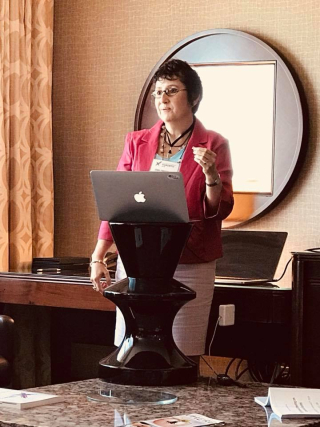
At the Law and Society Association conference, I used up almost every ounce of my remaining energy for the week participating in two author-meets-reader panels, delivering a talk on a paper panel, and serving as a moderator/discussant on a fourth panel (pictured here–note the jerry-rigged “podium” since we were stuck in a hotel room for this panel).  But it was all great work!  Our Collaborative Research Network (CRN) featured ten programs on corporate and securities law this year, spread over a three-day period.  Kudos to our program coordinator, Darren Rosenblum, for getting and keeping us organized.

  SECTownHall2018

The SEC town hall meeting was a real treat.  All five commissioners were in attendance and spoke, both as part of a public plenary session and as featured panelists on various subjects ranging from cryptocurrencies to small business finance.  Several hundred members of the public were in attendance.  I had the privilege and honor of visiting with four of the five commissioners after the town hall meeting at a private reception.  I had met Commissioner Stein at UT Law two years ago and Commissioner Jackson a number of years ago, but I had not personally met the others–although I follow Commissioner Peirce on Twitter (@HesterPeirce).  Each of them offered time and attention to so many people that day.  Three of them have academic experience of one kind or another in law or economics and offered special time and attention to those of us in the academy that day as well.  Hats off to them all.  They are working hard to resolve some tough issues and deserve our support.  Thanks to BLPB Contributing Editor Anne Tucker, her dean, and her colleagues for their hospitality at Georgia State Law that day.

That’s it for my report for the past two weeks.  Working as a business law professor is truly my calling and my privilege.  I feel that when I have the opportunity to walk among the likes of our industrious colleagues in academia and government, as I did these past two weeks.

Two law scholar/teacher friends have recently published books that deserve attention.  The first is a labor of scholarly love from my Association of American Law Schools and Southeastern Association of Law Schools co-conspirator John Anderson.  The second represents the hard work of Antonio Gidi, who visited at Tennessee Law a number of years ago.  I have read neither book, but I know the quality of the work that went into both of them.

Here is the summary of John’s book, Insider Trading: Law, Ethics, and Reform:

As long as insider trading has existed, people have been fixated on it. Newspapers give it front page coverage. Cult movies romanticize it. Politicians make or break careers by pillorying, enforcing, and sometimes engaging in it. But, oddly, no one seems to know what’s really wrong with insider trading, or – because Congress has never defined it – exactly what it is. This confluence of vehemence and confusion has led to a dysfunctional enforcement regime in the United States that runs counter to its stated goals of efficiency and fairness. In this illuminating book, John P. Anderson summarizes the current state of insider trading law in the US and around the globe. After engaging in a thorough analysis of the practice of insider trading from the normative standpoints of economic efficiency, moral right and wrong, and virtue theory, he offers concrete proposals for much-needed reform.

It comes with advance praise from many of our business and criminal law colleagues–Jill Fisch, Don Langevoort, Ellen Podgor, Kelly Strader, and Andrew Vollmer.  If you order from Cambridge University Press before May 1, 2019, you can get a 20% discount using code JPANDERSON2018 at checkout.  I just ordered my copy.

Gidi’s book (coauthored with Henry Weihofen), Legal Writing Style (Third Edition), is described as follows:

Legal Writing Style promotes the art of good writing by teaching students and practitioners the tools to make their prose clear, precise, simple, and forceful. With examples of what works and what doesn’t, this short but comprehensive treatise provides an invaluable resource for recasting writing for maximum impact and ultimate success.

It is classified as a hornbook, so you may not think it is a page-turner worthy of summer reading.  And it is a third edition.  But this topic is so crucial to what we do, and this edition is, I understand, a substantial re-write.  So, I draw attention to it here.

Happy Father’s Day to all who are celebrating as or with fathers today.  Put the summer reading list aside to honor those important folks in our lives–something we should do every day.

Last week, a district court in California denied a motion to dismiss a securities fraud lawsuit brought by Snap shareholders.  See In re Snap Inc. Secs. Litig., 2018 U.S. Dist. LEXIS 97704 (C.D. Cal. June 7, 2018).  The shareholders alleged that the Snap IPO prospectus omitted certain critical information in violation of Sections 10(b) and 11, namely, information about the effect of competition from Instagram, and information about the risks posed by a lawsuit filed by an ex-employee – a lawsuit that I previously blogged about here (prior to the IPO, it should be noted).  There was also an additional claim regarding post-IPO statements, brought only under Section 10(b).

Among other things, the defendants argued that there was sufficient information in the public domain about both the Instagram risk, and the lawsuit risk, to render any nondisclosure immaterial as a matter of law.  The district court rejected that argument because Snap’s own prospectus contained the following language:

You should rely only on statements made in this prospectus in determining whether to purchase our shares, not on information in public media that is published by third parties.

Thus, in the district court’s view, Snap’s own statements “counteracted” any contrary information made publicly available.

This is an issue that comes up with surprising frequency.  For example, when shareholders sued Facebook in the wake of its IPO, Facebook argued that information allegedly omitted from its prospectus had in fact been heavily publicized in the media.  At that point, the court hoist Facebook on its own petard, highlighting prospectus language that said, “In making your investment decision, you should not rely on information in public media that is published by third parties.  You should rely only on statements made in this prospectus in determining whether to purchase our shares.”  In re Facebook, Inc. IPO Sec. & Derivative Litig., 986 F. Supp. 2d 487 (S.D.N.Y. 2013).  This point also tripped up the defendants in Fresno Cty. Emples. Ret. Ass’n v. comScore, Inc., 268 F. Supp. 3d 526 (S.D.N.Y. 2017), and S.E.C. v. Bank of Am. Corp., 677 F. Supp. 2d 717 (S.D.N.Y. 2010).

What’s interesting in the Snap example, though, is that all of the prior cases involved claims that did not require proof of relianceFacebook involved Section 11 alone; comScore decided the issue in the context of Section 14; and Bank of America was a government enforcement action.  Snap represents the first time (that I’m aware) that this argument has prevailed even in the fraud-on-the market context – i.e., the context where you could imagine that disclaimer or no, some investors would price the extraneous information into the stock, thereby correcting any artificial inflation in the market price and defeating any allegation of reliance by most public purchasers. 

In any event, I gather that at least some companies have gotten wise and omitted or altered these kinds of non-reliance instructions.  I couldn’t find comparable language in the prospectuses for Roku and Dropbox at all (did I miss it?), and the Twitter prospectus – issued before the Facebook opinion, but in the midst of the Facebook briefing – says:

In making your investment decision, you should understand that we and the underwriters have not authorized any other party to provide you with information concerning us or this offering.

You should carefully evaluate all of the information in this prospectus. We have in the past received, and may continue to receive, a high degree of media coverage, including coverage that is not directly attributable to statements made by our officers and employees, that incorrectly reports on statements made by our officers or employees, or that is misleading as a result of omitting information provided by us, our officers or employees. We and the underwriters have not authorized any other party to provide you with information concerning us or this offering.

Note the distinction: It’s not telling investors not to rely on extraneous information, or even that all such information is false; it’s just saying some might be false, and none of it was authorized by Twitter.

Point being, I assume that whatever law firms haven’t gotten the message will soon enough.

A few weeks ago, President Trump tweeted that he was “looking forward” to seeing the Labor Department’s employment report.  I put together an op-ed for The Hill arguing that this type of executive action forces the market to closely watch his Twitter feed because it sets a precedent that it may reveal significant clues about economic information before the official release.  The sudden change may impact overall confidence.  If the President selectively discloses economic information through Twitter, it raises concern that there might be selective disclosures through other channels:

Trump’s leaky administration and sudden decision to disseminate market-moving information through Twitter may cause many to fear that confidential economic information may be selectively released by the administration.

If investors fear that the president’s favored few have more information, they may hesitate to take the other side of trades or discount the amount they are willing to pay to account for the risk. Ordinary investors may not get fair value for their savings when they need to sell.

Some may discount these concerns as mere hand-wringing by pointing to numbers indicating strong job growth. Although those numbers matter, they cannot capture the value of investor confidence in our system’s integrity and the rule of law. 

When we think about how to set policy and disclose economic information, it’s worth thinking about the long-term consequences of changing practices.  Although the market might rally at an early release of positive numbers, these types of changes create new risks.  Consider the folks on the West Coast that set their alarm clocks to be up at the scheduled release time.  If their frustration causes them to step back from the market, it might reduce trading activity and liquidity for investors.

We’re not at a point now where that seems to be any real risk.  But the important thing is to always think about the long-term and how to maintain a solid foundation for a market that will continue to generate prosperity for generations to come.