
Save the Date!

The Yale Law School Center for Private Law will host a Private Equity Conference on November 17, 2017. The conference will bring leading theorists from law, economics, finance, and sociology into dialogue with people with experience at the highest levels of private equity, including from law practice, financial firms, and institutional investors.

Oliver Hart, winner of the 2016 Sveriges Riksbank Prize in Economic Sciences in Memory of Alfred Nobel, will give the keynote address.

Other speakers include:

Jon Ballis, Kirkland & Ellis
Rosemary Batt, Cornell University, ILR School
Neil Fligstein, UC Berkeley Sociology Department
Stephen Fraidin, Pershing Square Capital Management
Will Gaybrick, Stripe
Adam Goldstein, Princeton University Department of Sociology
Victoria Ivashina, Harvard Business School
Andrew Metrick, Yale School of Management
Meridee Moore, Watershed Asset Management
John Morley, Yale Law School
Alan Schwartz, Yale Law School
David Swensen, Chief Investment Officer, Yale University

Location: Yale Law School, 127 Wall St., New Haven, CT

Time: Approximately 9:45 a.m.-4:00 p.m.

Cost: There is no cost associated with this event, though pre-registration is required. Registration information will be available soon at this link.

The conference is sponsored by the Kirkland & Ellis Fund for the Study of Private Law.
Could this be the beginning of the end for the event study in Section 10(b) class certification?

Yes, I’m probably overstating, but still, the Second Circuit’s opinion in In re Petrobras Securities, 2017 WL 2883874 (2d Cir. July 7, 2017), definitely takes a step in that direction.

As a recap, a private plaintiff alleging fraud claims under Section 10(b) of the Exchange Act must demonstrate that he or she “relied” on the defendant’s false statements.  In Basic Inc. v. Levinson, 485 U. S. 224 (1988), the Supreme Court held that reliance could be demonstrated via the fraud on the market doctrine – namely, the presumption that in an open and developed market, any material, public misstatement is likely to have impacted the market price of the security.  The fraud on the market doctrine is what allows Section 10(b) claims to be brought as class actions, since it eliminates the need for plaintiffs to demonstrate reliance on an individual basis.  Since Basic, then, battle has been joined between plaintiffs and defendants regarding what counts as an “open and developed” market for class certification purposes.

In recent years, it has become de rigueur for plaintiffs to use an event study to establish the necessary market conditions.  An event study is a statistical analysis comparing the change in a security’s price with an event, such as the release of new company-specific information.

The event study methodology, however, has come under heavy academic criticism, the thrust of which is that while it is a useful tool for studying markets generally, its utility is greatly diminished when deployed to examine a single company.  See, e.g., Alon Brav & J.B. Heaton, Event Studies in Securities Litigation: Low Power, Confounding Effects, and Bias, 93 Wash. U. L. Rev. 583 (2015).

In Halliburton Co. v. Erica P. John Fund, Inc., 134 S. Ct. 2398 (2014), the Supreme Court held that the Basic presumption represents merely a “modest premise” that public information affects prices.  Commenters (including your humble blogger) interpreted Halliburton to mean that courts should loosen their criteria for identifying an “open and developed” market for Basic purposes.

Judge Scheindlin was one of the first judges to take up Halliburton’s invitation.  Acknowledging the criticism of event studies, she held that plaintiffs need not submit an event study to prove the existence of an open and developed market, so long as they submit other types of evidence.

In Petrobras, the Second Circuit appeared to follow her lead.  Though the Second Circuit stopped just shy of holding class certification does not require an event study – the court claimed that the issue was not squarely presented – it did acknowledge the academic critiques of event studies, and (quoting its earlier caselaw) “explicitly declined to adopt any particular test for the market efficiency of stocks or bonds.”  As the court put it, “Event studies offer the seductive promise of hard numbers and dispassionate truth, but methodological constraints limit their utility in the context of single-firm analyses.”  The court also noted that the various factors that go into a finding of an open and developed market – analyst coverage, trading volume, and so forth – would be of little use if in fact event studies were required in all instances.

Petrobras could have an enormous impact on securities litigation.  If event studies are not required, it may be easier for plaintiffs to win certification in cases involving securities other than exchange listed stocks – such as the notes at issue in Petrobras, as well as preferred stock, over the counter stocks, and so forth.  Beyond that, event studies have been critical to proving damages and loss causation; if they are suddenly deemed unreliable, it may open the door to a much wider variety of evidence on these elements, as well.

WB

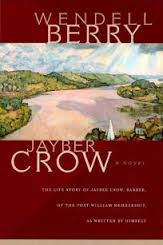
I highly recommend Jayber Crow by Wendell Berry

Set in rural Kentucky, Jayber Crow is a story about small town life, community, love/hate, sustainability, and industrialization. The main character, Jonah “Jayber” Crow loses both his parents and his Aunt and Uncle by the age of ten. He spends the next few years in an orphanage before obtaining a scholarship to a local college as a “pre-ministerial” student. Doubting his calling to the ministry, Jayber drops out and returns to his hometown. He serves as the town’s only barber, and he also picks up jobs as the local grave digger and church janitor. Jayber narrates, in vivid detail, the exodus from the small town by the younger generation and the invasion of large-scale, profit-focused, corporate farming.   

The author, Wendell Berry, warns that “persons attempting to explain, interpret, explicate, analyze, deconstruct, or otherwise ‘understand’ [this book] will be exiled to a desert island in the company only of other explainers” so I will simply end with a few of my favorite quotes below. I think one of the reasons I so liked this book is because it reminded me of my family’s property and of my maternal grandfather, who lived at a pace unknown to most of us and who worked the land with his hands and simple tools. 

“You have been given questions to which you cannot be given answers. You will have to live them out–perhaps a little at a time.” (54)

“The university thought of itself as a place of freedom for thought and study and experimentation, and maybe it was, in a way. But it was an island too, a floating or a flying island. It was preparing people from the world of the past for the world of the future, and what was missing was the world of the present, where every body was living its small, short, surprising, miserable, wonderful, blessed, damaged, only life.” (71) 

“Instead of sitting out and talking from porch to porch on the summer evenings, the people sat inside rooms filled with the flickering blue light of the greater world.” (258)

“We were, as we said again, making war in order to make peace We were destroying little towns in order to save them. We were killing children in order that children might sleep peacefully in their beds without fear.” (294)

“On those weekends, the river is disquieted from morning to night by people resting from their work. This resting involves traveling at great speed, first on the roads and then on the river. The people are in an emergency to relax.” (331)

“The Economy does not take people’s freedom by force, which would be against its principles, for it is very humane. It buys their freedom, pays for it, and then persuades its money back again with shoddy goods and the promise of freedom.” (332)

Update: Here is a trailer for a new film on Wendell Berry, Look & See. Powerful, especially if you grew up in a rural place that is now being “developed,” or if have seen beautiful landscapes that you love ruined. “Those who had wanted to go home could never get there now….”

Prior to joining academia, I served as a compliance officer, deputy GC, and chief privacy officer for a Fortune 500 company. I had to learn everything on the job by attending webinars and conferences and reading client alerts. Back then, I would have paid a law school graduate a competitive salary to work in my compliance group, but I couldn’t find anyone who had any idea about what the field entailed.

The world has changed. Now many schools (including mine) offer relevant coursework for this JD-advantage position. I just finished teaching a summer skills course in compliance and corporate social responsibility, and I’m hoping that I have encouraged at least a few of the students to consider it as a viable career path. Compliance is one of the fastest growing corporate positions in the country, and the number of compliance personnel has doubled in the past 6 years. Still, many business-minded law students don’t consider it in the same vein as they consider jobs with Big Law.

This summer, my twelve students met twice a week for two hours at 7:30 pm. In the compressed six-week course, they did the following:

  • Heard from compliance officers and outside counsel for public companies and government entities
  • Read the same kinds of primary source material that compliance officers and counsel read in practice (such as the Federal Sentencing Guidelines, the Yates Memo, deferred prosecution agreements, and materials from the EU on the upcoming changes to data protection regulation)
  • Compared and contrasted CSR reports from WalMart and Target, and reviewed the standards for the Global Reporting Initiative and the UN Global Compact
  • Advocated before a board as a worker safety NGO for a company doing business in Bangladesh
  • Served as a board member during a meeting (using actual board profiles)
  • Wrote a reflection paper on the ideal role and reporting structure of compliance officers
  • Considered top employment law and data protection risks for fictional companies to which they were assigned
  • Looked at the 10-Ks and CDP report for climate change disclosures after examining the role of socially responsible investors and shareholder resolutions
  • Drafted industry-specific risk assessment questionnaires
  • Drafted three code of conduct policies
  • Wrote a short memo to the GC on health care compliance and the DOJ Yates memo
  • Did a role play during a crisis management simulation acting as either a board member, SEC or DOJ lawyer, the CEO, compliance officer or GC and
  • Conducted a 20-minute board presentation or employee compliance training (worth the biggest part of the grade).

Perhaps the most gratifying part of the semester came during tonight’s final presentations. The students could pick any topic relevant to the fictional company that they were assigned. They chose to discuss child labor in the supply chain for a clothing company, off-label marketing in the pharmaceutical industry, anti-money laundering compliance in a large bank, and environmental and employment law issues for a consumer product conglomerate. Even though I was not their BA professor, I was thrilled to hear them talk about the Caremark duty, the duty of care, and the business judgment rule in their presentations. Most important, the students have left with a portfolio of marketable skills and real-world knowledge in a fast growing field.

If you have your own ideas on how to teach compliance and CSR, please leave them below or email me at mweldon@law.miami.edu.

Clinical Faculty Position
The Ohio State University, Michael E. Moritz College of Law

*          *          *

Description: The Moritz College of Law invites applications for the position of Assistant Clinical Professor of Law in its Entrepreneurial Business Law Clinic (EBLC), to start in late 2017. The EBLC professor has primary responsibility for directing and teaching the Entrepreneurial Business Law Clinic, which provides third-year law students with the opportunity to learn lawyering skills by representing entrepreneurs and their start-up businesses. EBLC students typically work with clients on all phases of starting a business, including client intake, entity formation, legal business planning, and contract drafting (including employment and independent contractor contracts). When relevant for the client, students also learn how to protect the intellectual property of a business. The EBLC’s clinical professor will have several areas of responsibility, including 1) supervising law students who represent clients under the Ohio Supreme Court’s student practice rule 2) classroom teaching of lawyering skills, 3) engaging with the local and regional entrepreneurial community, and 4) participating in the life and governance of the College of Law.

We will consider all applicants; however, we prefer candidates with significant experience in representing entrepreneurs and early-stage companies. Candidates also should have an excellent academic record that demonstrates potential for clinical teaching and preparation of clinical educational materials. Candidates should be admitted to the Ohio Bar or eligible for admission in Ohio. The starting salary range will be $78,000 – $81,000 for a 12-month contract; full University fringe benefits are provided as well. The ideal starting date will be November 15, or as soon thereafter as possible. The successful candidate will begin teaching in January 2018.

Application Instructions: A resume, references, and cover letter should be submitted to Professor Paul Rose, Associate Dean for Academic Affairs, The Ohio State University Moritz College of Law, 55 West 12th Avenue, Columbus, Ohio 43210. Send e-mail applications to rose.933@osu.edu. Applications will be reviewed immediately and will be accepted until the position is filled; preference will be given to applications received before September 1st.

The Ohio State University is committed to establishing a culturally and intellectually diverse environment, encouraging all members of our learning community to reach their full potential. The Ohio State University is an equal opportunity employer. All qualified applicants will receive consideration for employment without regard to race, color, religion, sex, sexual orientation, gender identity, national origin, disability status, or protected veteran status.

About Columbus: The Ohio State University campus is located in Columbus, the capital city of Ohio. Columbus is the center of a rapidly growing and diverse metropolitan area with a population of over 1.5 million. The area offers a wide range of very affordable housing, many cultural and recreational opportunities, excellent schools, and a strong economy based on government as well as service, transportation, and technology industries (see http://columbusregion.com/). Columbus and its many suburbs have consistently been rated as one of the Top U.S. places for quality of life. Additional information about the Columbus area is available at http://www.columbus.org.

I received this morning an announcement for the Central States Law Schools Association (CSLSA) 2017 Scholarship Conference, and I wanted to pass it along.  When I started teaching, I participated in this CSLSA conference, and I found it to be incredibly useful. It was helpful both in sharing my work in a supportive, yet rigorous, setting, and it also allowed me to meet some great people. I think the program is useful people at all levels, but I would especially encourage newer scholars to participate.  Get to know people at other schools and get used to sharing your work.  A good scholarly community outside of your law school is a valuable asset.  
 
Registration is Open for the CSLSA 2017 Conference
 
Registration is now open for the Central States Law Schools Association 2017 Scholarship Conference, which will be held on Friday, October 6 and Saturday, October 7 at Southern Illinois University School of Law in Carbondale, Illinois. We invite law faculty from across the country to submit proposals to present papers or works in progress.

CSLSA is an organization of law schools dedicated to providing a forum for conversation and collaboration among law school academics. The CSLSA Annual Conference is an opportunity for legal scholars, especially more junior scholars, to present working papers or finished articles on any law-related topic in a relaxed and supportive setting where junior and senior scholars from various disciplines are available to comment. More mature scholars have an opportunity to test new ideas in a less formal setting than is generally available for their work. Scholars from member and nonmember schools are invited to attend. 

Please click here to register. The deadline for registration is September 2, 2017.  

Hotel rooms are now available for pre-booking.  The conference hotel is the Holiday Inn Conference Center in Carbondale.  To reserve a room, call 618-549-2600 and ask for the SIU School of Law rate ($109/night) or book online and use block code SOL.  SIU School of Law will provide shuttle service to and from the Holiday Inn & Conference Center for conference events.  Other hotel options (without shuttle service) are listed on our website.  Please note that conference participants are responsible for all of their own travel expenses including hotel accommodations.

For more information about CSLSA and the 2017 Annual Conference please subscribe to our blog.

     Most LLC statutes provide an exclusive charging order remedy that creditors can use against a member’s interest.  A charging order is effectively a lien on the member’s transferable interest (i.e., the member’s financial rights) in the LLC.  If a court imposes a charging order, the judgment creditor is entitled to any distributions made by the LLC that would otherwise have gone to the debtor-member.  The entitlement to distributions continues until the judgment creditor has received enough proceeds to pay off the judgment.  The creditor is not permitted, however, to execute on a member’s interest in the same way that a creditor could normally execute on the debtor-member’s non-exempt personal property.  If the LLC does not make sufficient distributions, some statutes allow a court to order foreclosure of the charging lien, which effectively results in a sale of the debtor-member’s transferable interest.  Significantly, even with foreclosure, the purchaser at the foreclosure sale will only become a transferee and will not have the status of a member (nor the rights of a member).  This charging order scheme protects the rights of the non-debtor members to control the admission of new members to the LLC.

     In Olmstead v. Federal Trade Commission, 44 So. 3d 76 (Fla. 2010), the Supreme Court of Florida held that, in a single-member LLC, the statutory charging order procedure did not preclude a creditor from executing on an ownership interest.  The court acknowledged that a charging order provision is generally designed to preserve a non-debtor member’s right to block the admission of a new member (and the exercise of accompanying management rights), but it implied that this right was not implicated when the debtor was the sole member of the LLC.  The court was particularly influenced by the fact that the Florida LLC statute at the time did not indicate that a charging order was a creditor’s exclusive remedy, while the Florida general partnership and limited partnership statutes did so provide.  Although the court appeared to limit its holding to disputes involving a single-member LLC, the dissent noted that the court’s emphasis on the lack of exclusivity language in the statute would seem to extend its holding to multiple-member LLCs. 

     In response to Olmstead, the Florida legislature amended its charging order statute to make it clear that multiple-member LLCs were not affected by the decision.  With respect to single-member LLCs, however, the Florida statute provides that a court may order a foreclosure sale of the member’s interest.  The purchaser at the sale “obtains the member’s entire [LLC] interest, not merely the rights of a transferee”; consequently, “[t]he purchaser at the sale becomes the member of the [LLC].” Fla. Stat. § 605.0503.

     The 2013 Revised Uniform LLC Act also provides that a charging order (with the possibility of foreclosure) is a creditor’s exclusive remedy, see RULLCA (2013) § 503(h), but it carves out a separate Olmstead-like treatment for single-member LLCs.  If a court orders foreclosure of a charging order in a single-member LLC, “the purchaser at the sale obtains the member’s entire interest, not only the member’s transferable interest,” and “the purchaser thereby becomes a member.”  Id. § 503(f).  In discussing this procedure, the comment to § 503 states the following:

The charging order remedy—and, more particularly, the exclusiveness of the remedy—protect the “pick your partner” principle. That principle is inapposite when a limited liability company has only one member. The exclusivity of the charging order remedy was never intended to protect a judgment debtor, but rather only to protect the interests of the judgment debtor’s co-owners.

Put another way, the charging order remedy was never intended as an “asset protection” device for judgment debtors.  Accordingly, when a charging order against an LLC’s sole member is foreclosed, the member’s entire ownership interest is sold and the buyer replaces the judgment debtor as the LLC’s sole member.

     What do you think?  Did the Revised Uniform LLC Act make the right decision in following Olmstead for single-member LLCs?

Conference Announcement and Call for Papers
2017 Junior Scholars #FutureLaw Workshop 2.0 at Duquesne

The conference is organized by Seth Oranburg, Assistant Professor, Duquesne University School of Law. Funding is provided in part by the Federalist Society. All papers are selected based on scholarly merit, with an emphasis on scholarly impact, topical relevance, and viewpoint diversity.

September 7-8, 2017

By invitation only

OVERVIEW: The conference aims to foster legal and economic research on “FutureLaw” (as defined below) topics particularly by junior and emerging scholars by bringing together a diverse group of academics early in their career focusing on cutting-edge issues.

TOPICS: The conference organizers encourage the submission of papers about all aspects of FutureLaw, which includes open-data policy, machine learning, computational law, legal informatics, smart contracts, crypto-currency, block-chain technology, big data, algorithmic research, LegalTech, FinTech, MedTech, eCommerce, eGovernment, electronic discovery, computers & the law, teaching innovations, and related subjects. FutureLaw is an inter-disciplinary field with cross-opportunities in crowd science, behavioral economics, computer science, mathematics, statistics, learning theory, and related fields. Papers may be theoretical, archival or experimental in nature. Topics of interest include, but are not limited to:

– Innovation in legal instruments (e.g., new securities, new corporate forms, new litigation procedures, etc.)
– Innovation in legal technology (e.g., new law firm governance, legal automatic, democratizing access to legal services, legal chatbots, etc.)
– Innovation in legal teaching (e.g., new classroom techniques, distance learning studies, experiential learning, transactional clinics, etc.)

Papers regarding the effect of these innovations (e.g., diversity, inclusion, equity, equality, fairness, return on investment, productivity, security, etc.) are also welcome.

DUAL SUBMISSION PROCESS: For the 2017 conference, the FutureLaw Workshop and the Duquesne Law Review (DLR) announce a new, non-exclusive, combined submission process. At your discretion, a paper submitted to the 2017 FutureLaw Workshop 2.0 may also be considered for publication by DLR free of charge. The rules for this dual submission process are as follows:

(1) You must apply online at http://law.duq.edu/events/junior-scholars-futurelaw-workshop-20. Submitted papers will be considered for publication by the DLR free of charge. A reply to your submission in acceptance to the Workshop or invitation to publish in the DLR is your option, not your obligation.

(2) If you do not wish to be considered by the DLR while submitting for the FutureLaw Workshop, please indicate this in the comments field provided.

(3) Papers submitted for dual consideration must not already be accepted by another journal.

(4) While under consideration as a dual submission for the 2017 FutureLaw Workshop and invitation by the DLR, a paper may be submitted to another journal (or JAR).

PAPER SUBMISSION PROCEDURE: Please upload a PDF version of your working paper, by August 4, 2017 via the online submission form at http://law.duq.edu/events/junior-scholars-futurelaw-workshop-20. When you select the radio button for “Attendance Category: Participant,” you will see an option to upload a paper.

The FutureLaw Workshop may reimburse presenters and discussants reasonable travel expenses and accommodations. Please let us know if your academic institution does not provide you with travel and accommodation expenses.

CONFERENCE ATTENDANCE: Attendance is free and by invitation only. Academics interested in receiving an invitation to attend but who do not wish to submit a paper may apply online as “observers” at http://law.duq.edu/events/junior-scholars-futurelaw-workshop-20.