
Recent news brings us two reminders that crowdfunding is an amoral fundraising tool. It can be used for evil as well as for good.

Crowdfunding War

First, the New York Times reports that Russian nationalists are using crowdfunding to fund the rebellion/invasion in eastern Ukraine. One website even allows donors to direct contributions to specific militia units. The Russian separatists claim to have raised millions of dollars. (Of course, they have also claimed there’s no Russian government involvement in the rebellion, so take these claims with a grain of salt.)

Not much can be done about the groups themselves, which are located in Russia. But, as the Times points out, the payment intermediaries who help facilitate these payments are at legal risk.

Crowdfunding Fraud

Second, Inc. magazine reports that the Federal Trade Commission has taken action against a man who raised $122,000 on Kickstarter to produce a board game, then used the money to pay his rent and move. The man, Erick Chevalier, agreed to a settlement that orders him to repay the money, but the judgment has been suspended because he no longer has any money.

A copy of the FTC’s complaint is here. The agreed order is here. The FTC press release discussing the case is available here.

Considering the amount of money being raised through crowdfunding, it’s surprising that there hasn’t been more fraud. But this story is a reminder that fraud is a serious risk.
I’ve just moved down to New Orleans to join the faculty at Tulane Law School (my bio will be updated  … um, eventually), where I’ll be teaching Business Enterprises and Securities Regulation to start.  As you can imagine, Louisiana is quite a change from both North Carolina and, before that, NYC.  One thing I noticed right off the bat is that most of the banks in Louisiana are local/regional institutions – not many national banks have branches here.  Which means that, as a former plaintiffs’ attorney, for the first time in my adult memory I have a bank account with a financial institution I haven’t sued.

(Sidenote: That was actually kind of an issue when I worked for the law firm then-known as Milberg Weiss.  I was told we had trouble getting firmwide health insurance because we’d sued all the carriers and they didn’t want to do business with us.)

Anyway, as I procrastinate from unpacking….

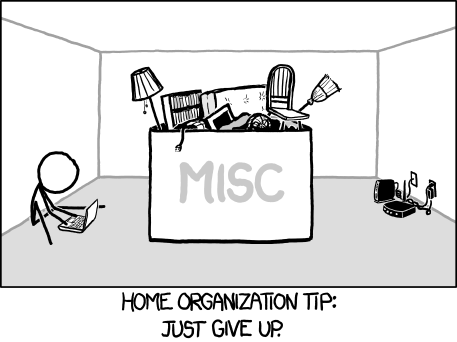
*actual representation of my apartment

….the big news that has my attention is the AIG verdict.  There have already been conflicting views on what it portends for future bailouts, but what fascinates me is how much of the opinion is devoted to the judge’s moral condemnation of the Fed’s actions, and his moral absolution of AIG, even though the relative good or evil of either player was really not relevant to his ultimate holding.

[More under the jump]

Continue Reading Greetings from New Orleans – and also Musings on the AIG Verdict

Conscious

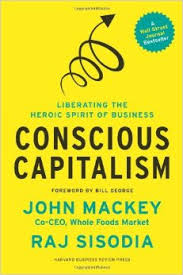
Recently, I finished reading Conscious Capitalism, written by Whole Foods Market co-CEO John Mackey and Babson College professor Raj Sisodia.

The book is much more “popular press” than academic, as should be clear from the splashy subtitle “liberating the heroic spirit of business.” There is a bit of academic influence in the appendix and notes, but it is mostly social business advocacy and story telling. In fact, the authors state that the primary purpose of the book “is to inspire the creation of more conscious businesses: businesses galvanized by higher purposes that serve and align the interests of all their major stakeholders.” (pg. 8). The book is interesting, passionate, and may accomplish its primary purpose.

The authors paint a compelling picture of Whole Foods Market and similar companies like Trader Joe’s, The Container Store, Costco, and Southwest Airlines. These companies appear to take a long-term view and consider what is best for all their stakeholders. I would have appreciated, however, more attention to the struggles the companies must have faced in attempting to satisfy all of their stakeholders. After finishing the book, I was left wishing the authors would have spent more time discussing how to make decisions in situations where certain stakeholder interests irreconcilably conflict. 

I may have more to say about this book in future posts, but as someone who has been researching in the social business area for a few years, I continue to be amazed at the proliferation of terms. The authors describe four tenants of their term “conscious capitalism”: (1) Higher Purpose (beyond just generating profits); (2) Stakeholder Integration (“optimizing value creation for all of them”); (3) Conscious Leadership (leaders “motivated primarily by service to the firm’s higher purpose and creating and creating value for all stakeholders.”); (4) Conscious Culture and Management (culture and management centering around traits like “trust, accountability, transparency, integrity, loyalty, egalitarianism, fairness, personal growth, and love and care.)  (pg. 32-35)

The authors try to differentiate their term of “conscious capitalism” from similar terms, as discussed below. While some of the distinctions make sense, I wish that these various social business movements would agree on a common vocabulary and work together more consistently. Unfortunately and ironically, many associated with the social business movements seem especially territorial. Perhaps, the lack of focus on financial returns causes some to seek personal returns in the form of recognition and influence. Quotes in the bullet points below come from pages 38, 291-97 in the book.  

  • Corporate social responsibility. The authors note that CSR is often “grafted onto traditional business model, usually as a separate department or part of public relations,” but for Conscious Capitalism “[s]ocial responsibility is at the core of the business.” The authors are not the first to note this difference between CSR and the more recent social business movements, and I think it is a fair distinction, at least in some cases.
  • Natural Capitalism. According to the authors, “Conscious Capitalism included the valuable insights that natural capitalism offers about the environment and transcends them with a more comprehensive view of the entire business and economic system.” The authors seem to suggest that their term is more holistic, not merely focused on the environment, and more focused on human ingenuity than simply preserving the environment.
  • Triple Bottom Line. The authors seem to think that Conscious Capitalism has a more inclusive view of stakeholders than TBL’s “people, profit, planet.” I don’t think the authors make their case for this distinction, failing to note stakeholders that don’t fall in one of TBL’s three buckets. The authors then note that their theory pays more attention to “purpose, leadership, management, and culture.” I also think this is stretching for distinctions; most of the TBL proponents I know recognize the importance of “purpose, leadership, management, and culture.” The authors admit that the TBL movement is “a fellow traveler,” but I think TBL and Conscious Capitalism are roughly synonymous. 
  • Shared-Value Capitalism. SVC, championed by Michael Porter and Mark Kramer, focuses on creating economic value for shareholders and all of society. Conscious Capitalism, the authors claim, does not only focus on economic value like SVC, but expands to human values and includes “emotional and spiritual motivators” lacking with SVC. 
  • Creative Capitalism. Bill Gates popularized this term in 2008 at the World Economic Forum, claiming that certain companies can use variable pricing to make products affordable to those at the “base of the pyramid” and still make a profit. The authors claim Creative Capitalism seems like an “add on” similar to CSR, only applies certain companies, and over-focuses on the reputational benefits, rather than changing the core business purpose. 
  • B Corporations. The authors do not seem optimistic about “[certified] B corporations” which they unfortunately use interchangeably with “benefit corporations,” even though the two terms are distinct. The main reason the authors offer for their pessimism toward B corporations is that “B corporations appear to violate the important principle that owners [shareholders] should ultimately control the corporation.” Most legal readers will notice problems with that statement. First, shareholders don’t control corporations, boards of directors do (see, e.g., DGCL 141(a)). Second, to the extent the authors are talking about aspects of corporate governance like the shareholders’ ability to elect the directors and bring derivative suits, those powers remain for shareholders of both certified B corporations and benefit corporations. Giving the authors (neither of whom are legally trained) the benefit of the doubt – perhaps they are talking about the deprioritization of shareholders in the benefit corporation statutes (shareholders are simply one of many stakeholders that the board must consider in its decision making). The authors seem concerned that shareholders, the most vulnerable of the stakeholders (according to them), will be relatively unprotected. This is a fairly common concern, but the Conscious Capitalism model seems to deprioritize shareholders as well, and even in traditional corporate law, the business judgment rule provides significant protection to the board of directors. Delaware law does give shareholders more power in the M&A context, but benefit corporations and corporations committed to Conscious Capitalism that are incorporated in a constituency statute state seem like they would operate similarly, even in the M&A context. In short, the authors do not clearly express a strong grasp of the benefit corporation statutes, and throughout the book the authors actually seem to advocate operating corporations in line with the benefit corporation statutes (considering all stakeholders in decisions). 

While I am a bit critical in some of my comments above, I did appreciate learning more about Whole Foods Market and similar companies. The companies discussed are some of my favorite companies and are certainly making the world better for many of their stakeholders. The book also made a number of claims that spurred additional thinking, for which I am grateful, and which made reading the book worthwhile.   

Last week I posted the first of three posts regarding doing business in Cuba. In my initial post I discussed some concerns that observers have regarding Cuba’s readiness for investors, the lack of infrastructure, and the rule of law issues, particularly as it relates to Cuba’s respect for contracts and debts. Indeed today, Congress heard testimony on the future of property rights in Cuba and the claims for US parties who have had billions in property confiscated by the Castro government- a sticking point for lifting the embargo. (In 1959, Americans and US businesses owned or controlled an estimated 75-80% of Cuban land and resources). Clearly there is quite a bit to be done before US businesses can rush back in, even if the embargo were lifted tomorrow. This evening, PBS speculated about what life would be like post-embargo for both countries. Today I will briefly discuss the Cuban legal system and then focus the potential compliance and ethical challenges for companies considering doing business on the island.

Cuba, like many countries, does not have a jury system. Cuba’s court system has a number of levels but they have both professional judges with legal training, and non-professional judges who are lay people nominated by trade unions and others. Cubans have compulsory service to the country, including military service for males. Many law graduates serve part of their compulsory service as judges (or prosecutors) and then step down when they are able. The lay judges serve for five years and receive a full month off from their employer to serve at full pay. Although there is a commercial court, only businesses may litigate there and are then they are at the mercy of the lay judges, who have equal power to the professional jurists. This lay judge system exists even at the appellate level. Most lawyers and law firms are controlled by the Cuban government, unless they work for a non agcricultural cooperative. More important, although I have received differing opinions from counsel, it is possible that hiring and paying a local lawyer there could violate US law related to doing business in Cuba. Notwithstanding these obstacles, many companies are trying to get an OFAC license to do business in Cuba right away or are planning for the eventual life of the embargo. In my view, getting there is the easy part. The hard part will be complying with US law, not because Cuba is in a nascent state of legal and economic development, but because of the sheer complexity of doing business with a foreign government.

The first challenge that immediately comes to mind is compliance with the Foreign Corrupt Practices Act, which makes it illegal for a person or company to make “corrupt payments” or provide “anything of value” to a foreign official in order to obtain or retain business. Since almost everything is a state-owned enterprise or a joint venture with a state owned enterprise, US firms take a real risk entering into contracts or trying to get permits. There is no de minimis exception and facilitation payments- otherwise known as grease payments to speed things along- while customary in many countries- are illegal too. Legal fees and fines for FCPA violations are prohibitively expensive, and those companies doing business in Cuba will surely be targets.

Another concern for publicly-traded US companies is compliance with the Sarbanes-Oxley and Dodd-Frank whistleblower rules. Unless the law changes, most US companies will have to follow the model of Canadian and EU companies and enter into joint ventures or some contractual relationship with the Cuban government or a Cuban company (which may be controlled by the government). Most US employees are afraid to report on their own private employers in the US. How comfortable will a Cuban employee be using a hotline or some other mechanism to report wrongdoing when his employer is in some measure controlled by or affiliated with the Cuban government? As I will discuss next week, the biggest criticism of Cuba is its human rights record related to those who dissent. I have personally dealt with the challenge establishing and working with hotlines in China and in other countries where speaking out and reporting wrongdoing is not the cultural norm. I can imagine that in Cuba this could be a herculean task.

The last concern I will raise in this post relates to compliance with a company’s own code of conduct. If a company has a supplier code of conduct that mirrors its own, and those codes discuss freedom of association and workers’ rights that may be out of step with the Cuban law or culture, should the US firm conform to local rules? Even if that is legal, is it ethical? Google’s code is famous for its “don’t be evil”credo and it has received criticism in the past from NGOs who question how it can do business in China. But Google was in Cuba last week testing the waters. Perhaps if Google is able to broaden access to the internet and the outside world, this will be a huge step for Cubans. (Of note, Cubans do not see the same TV as the tourists in their hotels and there are no TV commercials or billboards for advertisements).

There are a number of other compliance and ethics challenges but I will save that for my law review article. Next week’s post will deal with the role of foreign direct investment in spurring human rights reform or perpetuating the status quo in Cuba.

In response to one of my posts last week, co-blogger Josh Fershee raised concern about making minor changes to securities regulation–in that case, in the context of the tender offer rules.  Specifically, after raising some good questions about the teaser questions in a marketing flyer regarding a program I am moderating, he adds:

This reflects my ever-growing sense that maybe we should just take a break from tweaking securities laws and focus on enforcing rules and sniffing out fraud. A constantly changing securities regime is increasingly costly, complex, and potentially counterproductive. 

Admittedly, I am not that close to this, so perhaps I am missing something big, but I’m thinking maybe we should just get out of the way (or, probably better stated, keep the obstacles we have in place, because at least everyone knows the course).

Although I pushed back a bit, I generally agree with his premise (and I told him so).  I will leave the niceties regarding the tender offer rule at issue for another day–perhaps blogging on this after the moderated program takes place.  But in the mean time, I want to think a bit more out loud here about Josh’s idea that, e.g., mandatory disclosure and substantive regulation should be minimal and fraud regulation should be paramount.  Not, of course, a new idea, but a consideration that all of us who are honest securities policy-makers and scholars must address.

Continue Reading Tinkering With Securities Regulation: When Is Leaving “Good Enough” Alone?

SEC Commissioner Kara M. Stein provided remarks at the Brookings Institute’s 75th Anniversary of the Investment Company Act on Monday, June 15th.  Now if that isn’t an exciting introduction to a post, I just don’t know what is.  She addressed a topic that is of great interest to me and a focus of my research:  retail/retirement investors.  I tend to call them Citizen Shareholders in my writing, and it is sentiment shared by Commissioner Stein:

“By retail investor, I mean the everyday citizen or household that is investing – not institutional investors or pension funds.  Eighty-nine percent of mutual fund assets are attributable to retail investors.” (emphasis added).

In her remarks she detailed several troubling aspects of the mutual fund industry–a primary investment source for retail investors– liquidity, leverage and disclosure.  She also highlighted future SEC rule making initiatives related to these issues.   For example, the Commission recently proposed new rules to enhance data reported to the Commission by registered funds. The proposed rule is available  here (Download SEC proposed disclosure rules) and received comments can be tracked on the SEC’s website here.

Noting that a major function of the 1940 Investment Act was transparency and accuracy through disclosures, she lamented the mission drift in the mutual fund industry which she described as:


“[T]he liquidity of registered funds is one area where it seems that regulation has drifted into “buyer beware.”  A retail investor looks at a mutual fund and expects that he or she will be able to get money out of a fund very quickly if needed.   A retail investor is generally not performing cash flow analyses on mutual funds to test their true liquidity.”

SEC rules require redemption within 7 days and only 15% of mutual fund assets can be invested in illiquid funds. Bank loans and ETF funds, increasingly dramatically in popularity since 2009 (by over 400%) take over one month to settle and thus threaten the redemption rights and liquidity of funds in times of financial stress.

Additional “drift” comes from interpretation that the 15% threshold is at the time of purchase, not at the time of settlement so there is no true 15% threshold.

Promising high liquidity, which all mutual funds must do, on illiquid assets, that have not traditionally been a part of mutual funds, does not seem in keeping with the intent of the Investment Company Act.

Commissioner Stein identified a second problem: leverage.  Another cornerstone principle in mutual fund regulation has been the requirement for relatively low leverage, as mandated by Section 18 of the Investment Company Act.  Section 18 of the Investment Company Act requires low leverage with senior securities mandating a coverage ratio of 3:1 (300% asset coverage for senior securities).  Commissioner Stein described the SEC’s enforcement on leverage restrictions as “ad hoc” beginning in 1970 through the 30 subsequent no-action letters issued by the Commission.  

Additionally Commissioner Stein addressed the rapid evolution and popularity of alternative mutual funds that attempt to mimic hedge fund returns based on mutual fund liquidity:  propositions that she finds troubling.

Assets under management in alternative mutual funds have exploded in recent years.  In 2008, there were approximately $46 billion in assets under management for these funds.  By the end of 2014, the number had surged to over $311 billion in assets under management. This is an increase of over 575%.

****

[T]oday, alternative mutual funds promising the upside of hedge fund investments with the liquidity of traditional mutual funds are all the rage.  I think that this trend should give everyone pause, and regulators and the public need to be asking questions about this development.  …..  Should we consider regulating these funds differently than plain vanilla, traditional mutual funds?

Commissioner Stein’s remarks highlight several areas in the mutual fund industry that are being reevaluated by the SEC and should be interested developments to watch if you are an attorney representing mutual fund companies and investment advisers, an academic or simply an average “retail” investor.

-Anne Tucker

Public opinion polls often make news, but they don’t necessarily improve discourse or policy decisions.  This is true in business and politics, at least where the polls are created primarily for news purposes. Not all polls are bad, of course, and groups like Pew and some others can offer useful starting points for policy discussions. Still we should be skeptical of public opinion polls. 

A new poll released today provides a good example of how unhelpful polls can be. Robert Morris University (RMU) today issued a press release (about a new poll) that says Pennsylvanians “expressed both overwhelming support and strong environmental misgivings, about” hydraulic fracturing (fracking). This framing of the poll does not seem to reveal any inherent inconsistencies. It would be entirely reasonable for people to recognize the potential value fracking for oil and gas can have, while at the same time being worried about the environmental risks that come with fracking (or any other industrial process).  

In fact, I have argued that this is the proper way to consider risks and benefits to help ensure oil and gas operations are as environmentally sound as possible to ensure sustainable development. Unfortunately, the poll indicates some internal inconsistencies among those polled that suggest people don’t really understand either: (1) the questions or (2) how the world works.   Here are some of the results of the poll: 

  • Support fracking: 57.1% (PA) & 56% (U.S.)
  • Think fracking will help the U.S. economy: 74.2% (PA) & 73% (U.S.)
  • Say fracking will move U.S. toward Energy Independence: 69.9% (PA)

These numbers suggest reasonable-to-strong support for the drilling process. Okay so far, but here’s the kicker: 60.1%  strongly or somewhat agree with this: “The environmental impact of gas drilling outweighs any resulting reduced energy costs or energy independence.

How can one agree with this statement at all and still support fracking, as it at appears at least 17% of those polled did?1 If you think that the environmental impacts outweigh “any” of those benefits, why would you support any drilling process? I’m confused. (Editor’s note: a reader suggested that perhaps some people think that jobs or royalties might make the environmental impacts worth it, but not lower energy costs or energy independence.  Maybe, though I find that hard to believe, and if true, it doesn’t make me feel any better about what the poll suggests.) 

Again, it makes sense to me that someone might support the drilling process, and still express reservations or concerns about it. It just doesn’t make sense to me that, in the same poll, presumably within a few moments of answering the question about supporting fracking, that someone would turn around and say, essentially, “I support fracking, but some key potential benefits don’t outweigh the risks.”  This is seems like a John Kerry moment for those being polled: “I was for it, before I was against it.” 

As I have noted before, there are studies that suggest polls like this make us dumb. As a Joe Carter article explained about a 2011 public opinion poll relating to President Obama’s performance: 

On the vast majority of the items tested (8 of 11) the public expresses disapproval of Obama’s job performance and yet the overall result implies that they approve of the job he is doing. How does that make any sense? It doesn’t. By the alchemical process of applied statistics, the pollsters have turned our disapproval into approval. Unfortunately, such distortions are a common failing of opinion polls.

I’m not sure if the fracking poll makes us dumber, or just shows we tend to be dumb. Probably both, and it’s not very encouraging. As Mr. Carter explains, public opinion polls “are nothing more than public perceptions produced by pollsters, mere aggregations of our ignorance. And we all become dumber by treating them seriously.” The results of the RMU poll suggest he’s right.  

1 From the release, the most sensible explanation of the data presented is as follows: if 60.1% of people agreed to some degree with the statement, then 39.9% did not agree. Those 39.9% of people are presumably pro-fracking relative to the 60.1%. At the same time, 57.1% of those polled stated that they support fracking, and 57.1% minus 39.9% is 17.2%, suggesting that 17.2% of of those polled said they support fracking but don’t think the risks outweigh the benefits.  Admittedly, the poll answers would not likely break down this cleanly, but in that case the data makes even less sense.  


It looks like fee-shifting bylaws are going to have a very short life, at least in Delaware.
About a year ago, the Delaware Supreme Court upheld a loser-pays bylaw that required the unsuccessful party in any intracorporate litigation to pay the costs and attorneys’ fees of the prevailing party. The case, ATP Tour, Inc. v. Deutscher Tennis Bund, involved a non-stock corporation, but nothing in the case indicates the result would not apply to ordinary corporations, and the relevant statutory rules make no distinction between non-stock and stock corporations.

However, the Delaware General Assembly has passed, and the Governor is almost certain to sign, a bill that rejects loser-pay provisions in either the bylaws or the certificate of incorporation.

The bill, SB 75, amends Del. § 102 to provide:

(f) The certificate of incorporation may not contain any provision that would impose liability on a stockholder for the attorneys’ fees or expenses of the corporation or any other party in connection with an internal corporate claim, as defined in § 115 of this title.

It adds the following language to Del. § 109(b):

The bylaws may not contain any provision that would impose liability on a stockholder for the attorneys’ fees or expenses of the corporation or any other party in connection with an internal corporate claim, as defined in § 115 of this title.

Section 115 defines “internal corporate claims” as “claims, including claims in the right of the corporation, (i) that are based upon a violation of a duty by a current or former director or officer or stockholder in such capacity, or (ii) as to which this title confers jurisdiction upon the Court of Chancery.”

The full text of SB 75 is available here.

On June 11, 2015, the Delaware House of Representatives joined the Delaware Senate in passing a bill that would prohibit fee-shifting bylaws by Delaware stock corporations. The bill awaits signature by Delaware Governor Jack Markell. Nonetheless, the panel provides a nice debate, between practicing attorneys, and is available here. The information from the Chancery Daily is below. 

Fordham Law School hosted a panel on Fee Shifting in Shareholder Litigation, featuring three members of the corporate law council of the Delaware State Bar Association, which submitted proposed amendments to the Delaware General Corporation Law that would preclude the adoption of fee-shifting provisions in corporate instruments, on Thursday, March 26, 2015.  A webcast video of the panel is now available online here.
 
Moderated by:

Professor Sean J. Griffith – Fordham Law School

Panelists:

Frederick Alexander – Morris Nichols Arsht & Tunnell
Chris Cernich – Institutional Shareholder Services
Kurt Heyman – Proctor Heyman Enerio
Mark Lebovitch – Bernstein Litowitz Berger & Grossman
Norman Monhait – Rosenthal Monhait & Goddess
Andrew Pincus – Mayer Brown