In my first post of this series, I asked whether business leaders had unknowingly provided the legal industry with a long-term solution to declining interest in the legal profession and potential waning influence.  I suggested that business leaders may be the driving force that ends up saving the legal profession.  In my second and third posts, I discussed the current state of in-house attorneys and law firms.  Today is my birthday, so it is a great present to be able to share my view on the future of the legal profession, and how shifts may occur. 

Eventually, corporations can (and most probably will, in my view) evolve their thinking about “legal strategies” (as Professors Bird and Orozco suggest) to the point that lawyers are essential resources in developing sophisticated corporate planning. In order for this evolution to take place throughout the business world to any great degree, it will take time, experience, and success with the legal strategy concepts.  In other words, lawyers must become valuable not only for their legal skills, but also because they have inherent business talent resulting from advanced training. 


If this conversion is to occur, companies will initially be forced to buy senior legal talent they will need to begin this transformation.  This means attorneys with specific experience, usually from private firms or perhaps governmental entities, should begin moving towards corporate employment.  Companies will likely change their legal strategies from a rigid general counsel structure to include “Chief Legal Strategists,” as Bird and Orozco have posited, in order to accommodate this movement.  If accepted by business leaders, this should increase in-house counsels’ opportunities for engagement with the business units.  If so, corporate budgets likely will be increased to entice very talented firm lawyers to transition more regularly to companies. 


Because of their skill and expertise, and with the increasing trust of corporate leaders, these very same senior lawyers can then begin the legacy process of hiring established mid-career lawyers and use their growing corporate influence to replicate the success of their own tenure. If corporations begin to fill their ranks with qualified and active counsel, business leaders will be more able to recognize real legal talent, both in hiring and promotion.* Eventually, this environment may allow newly minted graduates to be directly hired into the company. Because these new hires should  have mentorship and support from more senior lawyers, their chances for individual acceptance and success in the corporate setting should increase.  As this occurs, corporations may be able to build legal departments that rival firms in social and economic attractiveness, as well as career opportunity.**


Assuming companies increase their endorsement of legal strategy, with the attendant hiring of more attorneys in-house, difficulties in communication between corporations and their outside law firms should diminish substantially.  With in-house attorneys having the confidence of their senior leadership and the knowledge of their businesses, they can foster enhanced dialogue with external counsel that might not have been possible in the past.  This can alleviate corporate trust concerns about law firm billing and perceived value (since in-house lawyers can act as an interpretive engine), allowing firms closer ties with their clients through greater understanding.  This in turn may actually increase work for the private law firms that survive the initial diminishment of legal work and lead to more private practice opportunities for new graduates, along with some firm positions that open due to lawyers moving to corporations.


As the legal landscape changes, the legal profession will, with the help of business leaders, become a broader, more inclusive, and more “respectable” profession—one that becomes pervasive and accepted throughout the business world, and not as insulated in private firms.  This familiarity will not breed contempt, but respect and appreciation, and it should benefit all. When this will happen, I cannot tell you.  But sooner, rather than later, it is bound to happen.


So, what can law schools and current lawyers do to help in this transition?  Well, I have some thoughts on that as well.  More here anon, same “Bat-Channel”…


–Marcos Antonio Mendoza


*Whether the business leaders will be able to hone and execute on this increased ability to recognize and incorporate this legal talent, no one can say for sure.  It will be a necessary factor in the success of this transformation of the legal environment, and one that should occur.  If not, the corporations will simply go through endless cycles of in-house counsel that will likely be underutilized.   


**I recognize that many companies have already built large legal divisions, and some companies have extremely talented lawyers.  But, for most businesses, in-house departments have yet to rival the talent, the opportunities for skill building, the ability to train, and the financial rewards, that most private law firms have.

This week I have found myself reading the co-authored, empirical piece by C.N.V. Krishnan, Frank Partnoy, and Randall Thomas titled, Top Hedge Funds and Shareholder Activism.  Through their sample they observe that top hedge funds have repetitional capital in that the market responds more positively to announcements by certain hedge funds with certain features, like a longer track record, larger assets under management and management participation through board of director seats.  Its an interesting and insightful article on the role, and value, of hedge funds. The authors conclude that 

The market appears to anticipate the superior performance of these top hedge funds even before announcement of intervention. Moreover, post-intervention target-firm operating performance associated with these top hedge funds is significantly superior to that of other hedge fund activists.

The focus on reputation reminded of Elisabeth de Fontenay’s good work on reputation in private equity.  Her article, Private Equity Firms as Gatekeepers, 33 Review of Banking & Financial Law 115-189 (2014).  de Fontenay argues in her piece that: 

private equity firms act as gatekeepers in the debt markets. As repeat players, private equity firms use their reputations with creditors to mitigate the problems of borrower adverse selection and moral hazard in the companies that they manage, thereby reducing creditors’ costs of lending to these companies. Private equity-owned companies are thus able to borrow money on more favorable terms than standalone companies, all else being equal. By acting as gatekeepers, private equity firms render the debt markets more efficient and provide their portfolio companies with an increasingly valuable borrowing advantage.

Updated to add:  Frank Partnoy informed me that he and Elisabeth presented these 2 papers collaboratively to the Duke law faculty with each commenting on the other.  This either proves once again that I have no original ideas OR this validates my insights about the overlapping observations in these papers.

-Anne Tucker 

CRN: #46  Corporate and Securities Law in Society

 LSA 2015 Schedule


THURSDAY, MAY 28


2:45 PM – 4:30 PM

3319—Roundtable: Shareholders, Stewardship & Accountability

Room: Mercer 


FRIDAY, MAY 29


9:30 AM – 11:15 AM

3321—Corporations and Their Constituencies: Employees, Customers, Creditors, and the Public

Room: Adams

1:30 PM – 3:15 PM

3322—Banking, Securities, and Beyond: Evaluating Financial Regulation in Varied Contexts

Room: Adams

3:30 PM – 5:15 PM

3325—Business Decisionmaking and Business Law: Exploring Implications for Constituencies and Communities

Room: Adams 

5:30 PM – 7:15 PM

3326—New Insights on Law and Regulation’s Evolution and Efficacy

Room: Adams


SATURDAY, MAY 30


8:15 AM – 10:00 AM

3320—Ownership and Control: New Considerations on Litigation, Governance Structures, and Shareholder Activism

Room: Adams

In Flanders fields the poppies blow
Between the crosses, row on row,
That mark our place; and in the sky
The larks, still bravely singing, fly
Scarce heard amid the guns below.

We are the Dead. Short days ago
We lived, felt dawn, saw sunset glow,
Loved and were loved, and now we lie
In Flanders fields.

Take up our quarrel with the foe:
To you from failing hands we throw
The torch; be yours to hold it high.
If ye break faith with us who die
We shall not sleep, though poppies grow
In Flanders fields.
          -John McCrae, In Flanders Fields

Today is Memorial Day. Before you run to the beach or the park, or wherever you’re spending the holiday, take a moment to remember those dear soldiers who have fallen. They won’t be going to the beach or park today. They gave their lives so you could live.

You may think, as I do, that some of our more recent battles were better not fought, but that doesn’t make the sacrifices of the soldiers who fought in them any less noble or honorable. The loss of life is even more tragic or regrettable when stupid politicians needlessly send young men and women off to die.

To those of you who have lost loved ones in battle, my heartfelt condolences. To those who have fallen, my eternal gratitude for your sacrifice.

Judge Diane Wood of the Seventh Circuit has published an essay in the Yale Law Journal that surveys citations to legal scholarship emerging from the Seventh Circuit.  She argues that movements like Legal Realism and its descendants challenge the concept of “judging” as a distinct activity from lawmaking, and as a result, scholarship that emerges from these traditions is not helpful to a sitting judge attempting to identify “what the law is.”  She further argues that within the academy, the effect is exacerbated by a norm that values theoretical scholarship over practical “doctrinal” work, and hypothesizes that the type of doctrinal scholarship that judges are most likely to find useful is also more likely to be found in journals that carry less prestige.

Interestingly, Jeffrey Lynch Harrison and Amy Rebecca Mashburn reached similar conclusions.  They studied judicial citations and found that judges – far less than academics – do not appear sensitive to the prestige in which an article appears, thus kicking off a debate regarding the purpose and value of legal research (see posts here and here).  Among other things, Michael Risch defends legal scholarship on the grounds that its usefulness – to judges, to practitioners – is not the point; it is a good in and of itself.

I’m a recent convert from practice to academia, and that’s a sentiment I’ve frequently heard (usually as I’m being advised to write less like a practitioner).  And while I don’t disagree with it, I also can’t help but notice that academics take quite a bit of pride in having their articles cited in judicial opinions – suggesting that their, um, revealed preferences are perhaps more nuanced.

In any event, I was recently thinking about how very often, both in my current research and earlier in my practice, I’ve found that some of the most interesting and helpful law review articles are the most thoroughly doctrinal – the ones that carefully synthesize and explain existing law, regardless of whether they also offer a more abstract theoretical framework, a realist attack on existing precedent, or recommend bold new path for change.  

But beyond that, I think the indictment of legal scholarship as too theoretical is at least somewhat unfair.  As Deborah Merritt points out, the citation counts actually aren’t all that bad, especially if one assumes a greater number of articles are consulted but not cited.  Certainly, there are plenty of highly theoretical works out there that may not be of immediate relevance in a particular dispute, and thus don’t end up being cited in judicial opinions, but I also found that when I was practicing, I was able to find a number of more concrete pieces in my area (possibly it’s easier when you practice business law).  Sometimes I cited them in my briefing, which I assume increased their chances of being cited by judges (I know of at least one case where that occurred). 

In my experience, however, the biggest impediments to citation of legal scholarship from the practice end were twofold:  First, in any brief, space is at a premium.  I often could not afford to cite a law review article and possibly edge out court decisions that the judges might find more authoritative.  (And space may soon become even more scarce)

Second, and relatedly, I often found that legal scholarship was a few years behind the issues in which I was enmeshed.  Law review articles were most helpful to me when they dealt with a cutting-edge issue on which precedent had not hardened, but it can take years for an issue to bubble up in judicial opinions to the point where academics notice it.  From a practitioner’s perspective, by then it may be too late; the existing judicial opinions are what you want to address.  The solution to that, I suppose, is for academics to maintain contact with practitioners, so they can be alerted to new legal developments.

I haven’t met Hollywood producer Edward Zwick, who brought the movie and the concept of Blood Diamonds to the world’s attention, but I have had the honor of meeting with medical rock star, and Nobel Prize nominee Dr. Denis Mukwege. Both Zwick and Mukwege had joined numerous NGOs in advocating for a mandatory conflict minerals law in the EU. I met the doctor when I visited Democratic Republic of Congo in 2011 on a fact finding trip for a nonprofit that focuses on maternal and infant health and mortality. Since Mukwege works with mass rape victims, my colleague and I were delighted to have dinner with him to discuss the nonprofit. I also wanted to get his reaction to the Dodd-Frank conflict minerals regulation, which was not yet in effect. I don’t remember him having as strong an opinion on the law as he does now, but I do remember that he adamantly wanted the US to do something to stop the bloodshed that he saw first hand every day.

The success of the Dodd-Frank law is debatable in terms of stemming the mass rape, use of child slaves, and violence against innocent civilians. Indeed, earlier this month, over 100 villagers were raped by armed militia. A 2014 Human Rights Watch report confirms that both rebels and the Congolese military continue to use rape as a weapon of war to deal with ethnic tensions. I know this issue well having co-authored a study on the use of sexual and gender-based violence in DRC with a medical anthropologist. With all due respect to Dr. Mukwege (who clearly know the situation better than I), that research on the causes of rape, but more important, my decade of experience in the supply chain industry have lead me to believe that the US Dodd-Frank law was misguided. The law aims to stem the violence by having US issuers perform due diligence on their supply chains. I have spoken to a number of companies that have told me that  it would have been easier for the US to just ban the use of minerals from Congo because the compliance challenges are too high. Thus it was no surprise that last year’s SEC filings were generally vague and uninformative. It remains to be seen whether the filings due in a few weeks will be any better.

To me Dodd-Frank is a convenient way for the US government to outsource human rights enforcement to multinational corporations. Due diligence and clean supply chains are good, necessary, and in my view nonnegotiable, but they are not nearly enough to deal with the horrors in Congo. Nonetheless, in a surprise move, the EU Parliament voted this week to go even farther than the US law. According to the Parliament’s press release:

Parliament voted by 400 votes to 285, with 7 abstentions, to overturn the Commission’s proposal as well as the one adopted by the international trade committee and requested mandatory compliance for “all Union importers” sourcing in conflict areas. In addition, “downstream” companies, that is, the 880, 000 potentially affected EU firms that use tin, tungsten, tantalum and gold in manufacturing consumer products, will be obliged to provide information on the steps they take to identify and address risks in their supply chains for the minerals and metals concerned… The regulation applies to all conflict-affected high risk areas in the world, of which the Democratic Republic of Congo and the Great Lakes area are the most obvious example. The draft law defines ‘conflict-affected and high-risk areas’ as those in a state of armed conflict, with widespread violence, the collapse of civil infrastructure, fragile post-conflict areas and areas of weak or non-existent governance and security, characterised by “widespread and systematic violations of human rights”.

(emphasis mine). I hope this proposed law works for the sake of the Congolese and all of those who live in conflict zones around the world. The EU member states have to sign off on it, so who knows what the final law will look like. Some criticize the law because the list of “conflict-affected areas” is constantly changing. Although that’s true, I don’t think that criticism should affect passage of the law. The bigger flaw in my view is that there are a number of natural resources from conflict-affected zones- palm oil comes to mind- that this regulation does not address. This law, like Dodd-Frank does both too much and not enough. In an upcoming book chapter, I propose that governments use procurement and other incentives and penalties related to executive compensation and clawbacks to drive human rights due diligence and third-party audits (sorry, I’m prohibited from posting a link to it but it’s forthcoming from Cambridge University Press).

In the meantime, I will wait for the DC Circuit to rule on constitutional aspects of the Dodd-Frank bill. I will also be revising my most recent law review article on the defects of the disclosure regime to address the EU development. I will post the article next week from Havana, Cuba, where I will spend 10 days learning about the Cuban legal system and culture. Given my scholarship and the recent warming of relations between the US and Cuba, I may sneak a little research in as well, and in two weeks I will post my impressions on the challenges and opportunities that US companies will face in the Cuban market once the embargo is lifted. Adios!

Although my guest blogging has been focused on white collar rationalizations, I can’t help but mention that, just about any way you cut it,* ninety days have passed since former Attorney General Holder asked U.S. Attorneys investigating the financial crisis to report back on whether they could make criminal cases against any individuals.  I’m guessing that since we didn’t hear any big announcements, there are no indictments sitting on current Attorney General Loretta Lynch’s desk.  Or maybe the currency trading guilty pleas were the announcement.  Of course, those were charges against corporations, not individuals . . . and deals with the regulators have ensured the banks will continue to basically operate as usual . . . and hinky currency trading isn’t what caused the financial crisis . . . and the banks involved weren’t the biggest players in MBS in the run up to the collapse.  You get the point.  It looks like Wall Street executives may truly and forever be off the hook for what happened in 2008.  

* If AG Holder was speaking generally, three months since his February 17 announcement was last Sunday.  If he actually meant a hard ninety days, that elapsed last Monday.  If he’s a kind boss and has been giving his AUSA’s weekends off for the past seven years, there’s still hope!   


In my first post of this series, I asked whether business leaders had unknowingly provided the legal industry with a long-term solution to declining interest in the legal profession and potential waning influence.  I suggested that business leaders may be the driving force that ends up saving the legal profession, and its “respectability”.  In my second post, I discussed the current state of in-house attorneys.  In this post, I would like to look at the current state of private firms as it relates to the in-house attorney discussion.  My view is that the competitive marketplace reactions of a growing number of firms are partially contributing to the dimming of their own future prospects.  Firms will need to evolve rather quickly; how they can, I’ll discuss in a future post.  However, because of the firms’ relatively weaker position compared to corporations, many firms are in very precarious circumstances.

In this interim period between past firm dominance and the future corporate acceptance of Professors Bird and Orozco’s “corporate legal strategy” (in which attorneys are fully accepted and integrated as part of business teams in corporations, resulting in greater legal opportunities), firms are struggling.   From my discussions with attorneys, I have learned that many private firms are beginning to intentionally screen out attorneys that even appear to be on a path to in-house corporate life in the future.  They feel less inclined to provide expensive training for someone that has (in their perception) little intention of making a career of private practice, especially their private practice.  This diminishes the number of opportunities for new lawyers.  Firms have a harder time training the new lawyers they have, because much of the basic business work is now taken up by in-house counsel.  Corporations, for their part, have exacerbated the lack of work for new associates by using their increased influence and wealth to insist that only the most senior firm attorneys handle their corporate work—perhaps shortsightedly robbing firms of talent continuity that has historically benefitted the corporations in the end.  Expensive summer clerkships and recruiting drives have all but disappeared. 

Additionally, firms have become focused on hiring attorneys with portable business for the “quick hit” of income and are less concerned about hiring new law graduates.  This cannibalization of mature legal talent has always occurred, but it now seems to be a much greater part of firm business plans. It has resulted in some lawyers commoditizing themselves, rather than some of their clients doing so, perhaps further weakening the profession’s “respectability”.  Of course, because the legal industry is currently well staffed, this “horse-trading” approach will work for the present.  However, it will eventually be unsustainable—as lawyers retire, there will be fewer talented lawyers to replace them or have the capacity to buy out retiring partners’ percentages.  Of those, even fewer still will invite the rigors of private practice if the rewards diminish.

I, for one, am not a complete believer in the “end of Big Law”, or any size “Law”, for that matter.  (The late Professor Larry Ribstein discussed the subject here–disappointingly, he only briefly touched on the in-house counsel effect, and instead, focused on the firms themselves.)  However, I do believe in the necessary evolution of “All Law”—where the legal industry (firm, in-house, and academia) evolves to a point of natural and mutual support which benefits society as a whole (creating greater “respectability” for all lawyers)—and businesses will initially play a dominant role.  How will businesses do so?  More soon in a post coming your way!

–Marcos Antonio Mendoza


Frankel OConnor Yale

Each summer, I try to read a few books related to work and a few books not related to work.

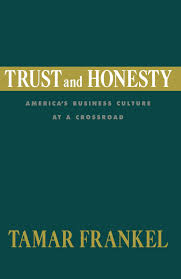
This summer, I have tagged Tamar Frankel’s Trust and Honesty: America’s Business Culture at a Crossroad and Flannery O’Connor’s Everything That Rises Must Converge.

Open to other reading suggestions in the comments. I have a pretty deep “want to read” list, but am always looking for more additions.

I am also listening to a Yale online course called Philosophy and the Science of Human Nature, taught by Tamar Gendler. I am already more than halfway finished with the course – mostly listening in the car or while doing various chores. While I did not take any Philosophy courses in college, much of the material is more familiar than I would have thought. These open courses have been fun, and I am open to suggestions of other good courses.