Today started in Williston, ND, and we then went to Mountrail County.  We vistied Tioga and Stanley, then headed south through New Town and Killdeer on the way back to Dickinson, where we stay tonight before flying out tomorrow morning (ridiculously early, I might add). 

We started the day at Williston State College, where we learned about the TrainND program and other degree programs.  TrainND works with companies to do OSHA and other safety training, and trained more than 16,000 people last, the vast majority of whom were employed.  The College also offers degree programs for those seeking to be Lease Operators and PLC-trained operators. Interesting for academics, the college had 38% turnover last summer.  The college has invested in campus housing for faculty, which can be part of the incentive package to bring people.  Apartments run from $2600/mo for 1 and 2 BR options, with home rentals over $3K.  Seventy percent of new faculty hires are moving into the new campus housing apartments (which looked nice from the outside). Just like the industry, the college is “catching up” with the whole thing. 

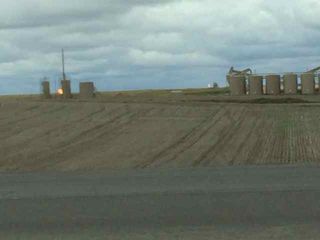
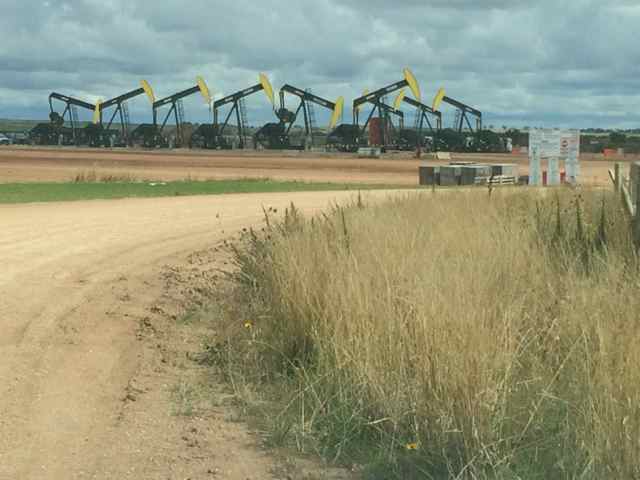
We saw more densely packed well sites, such at this 9-pack (nine wells on one well pad).  This is an advantage of hydraulic fracturing, in that one well pad can handle multiple wells, which leads to less land impact per well.   9pack
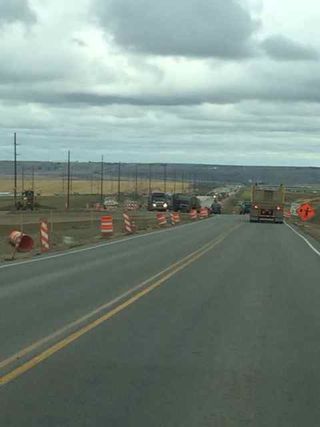
We also saw major traffic, including long lines of traffic coming over the
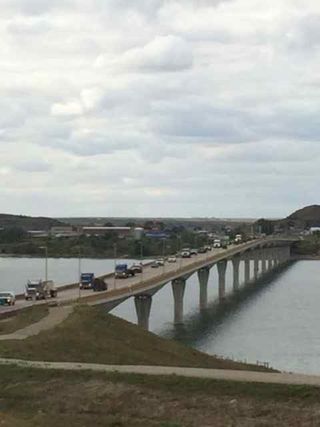
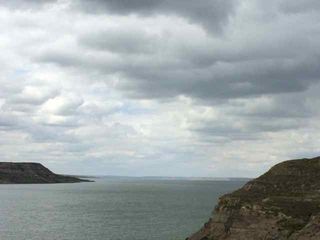
BridgetrafficFour Bears Bridge at Lake Sakakawea.   LakeWe didn’t have a terrible time driving, and it was not the horror story that has been repeated at times, but it was striking to have open rolling hills with very few signs of people, other than wells, flares, and trucks. 

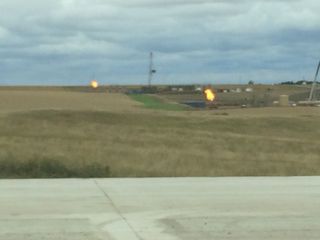
  Flare2

We saw two natural gas faciltities, aswell, today, which is encourging, as it’s important to have facilities to take the natural gas that’s coming out of the ground along with the oil.  

Also of interest was a waste water facility, which is critical to better oil production.  I have written many times that the biggest concern about hydraulic fracturing in not the fracking or drilling process; it’s surface concerns about spills of things like the waste water coming back up the well.  (Drilling matters, too, but protecting ground water in that context is about good well casings, and the concerns are largely the same as conventional drilling.)  
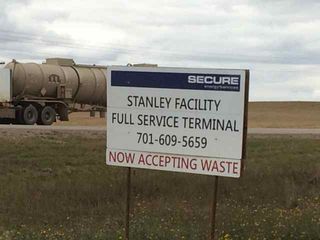
WasteacctpedSuch facilities are important, as they have helped vastly reduce the use of impoundment pits used for waste water in the early Bakken experience.  

I heard for at least the third time today that the EPA is the biggest risk the industry faces. I continue to believe this is a red herring.  That is, the biggest risk the industry faces is a major disaster from careless activities.  It seems that many of the biggest concerns on that front are being handled well in North Dakota (better, in my sense, than in the Marcellus Shale).  It’s not to say everything is right, but there does seem to be a commitment to getting the process done well. Economic incentives are largely aligned with that goal, too.  

The one thing that concerns me here, conceptually, is that people don’t seem that concerned about water safety.  I know most of the industry is working hard to keep things clean, but a bad chemical spill, oil spill, or waste water spill in the lake (picture above) could be disastrous.  It’s not that I have seen anything specific that makes me worry about the lake. I didn’t.  It’s just that I’d prefer to hear, “We’re worried about water contamination,  but we’re doing our best to prevent it.”  Instead, ” I have have heard repeatedly, “Water issues aren’t really a concern.” I think that means that major issues haven’t arisen, and not that people don’t care, but that doesn’t mean issue can’t or won’t arise. 

Finally, as to the EPA, I don’t think the EPA is poised to do much to slow hydraulic fracturing in oil country.  And I don’t think they should. That said, a major disaster would open the door to EPA or other federal action. Such a disaster would invite a shut down, and I know the industry doesn’t want that.  If the industry continues to improve, as it has since 2007, major disasters should be avoided. Here’s hoping industry, regulators, and the people of the region continue to improve safety so that the benefits of heavy oil production increasingly outweigh the downsides. It can be done, and I sincerely hope it is.


As I predicted in 2011 here and here, in 2012 here, in 2013 in amicus brief, and countless times on this blog, the SEC Dodd-Frank conflicts minerals law has had significant unintended consequences on the Congolese people and has been difficult to comply with. Apparently the Commerce Department, which has a role to play in determining which mines are controlled by rebels so that US issuers can stay away from them, can’t actually figure it out either. In the past few days, the Washington Post, the Guardian, and other experts including seventy individuals and NGOS (some Congolese) who signed a memo, have called this misguided law into question.  In my view, without the “name and shame” aspect of the law, it is basically an extremely expensive, onerous due diligence requirement that only a few large companies can or have the incentive to do well or thoroughly. More important, and I as I expected, it has had little impact on the violence on the ground and has hurt the people it purported to help.

I had hoped to be wrong. The foundation that I work with helps medical practitioners, midwives, and traditional birth attendants in eastern Congo and many of their patients and neighbors are members of the artisanal mining community. I won’t go as far as Steve Bainbridge has in calling for the law’s repeal because I think that companies should do better due diligence of their supply chains, especially in conflict zones. This law, however, is not the right one for Congo and the SEC is not the right agency to address this human rights crisis. Frankly, I don’t know that the EU’s voluntary certification is the right answer either. I hope that Canada, which is looking at a similar rule, pays close heed and doesn’t perpetuate the same mistake that the US Congress made and that the SEC exacerbated. In the meantime, I will stay tuned to see how and if the courts, Congress, and the SEC revisit the rule.


Campbell2                                                      Wyoming

Two recent professor postings that may be of interest to our readers:

Campbell University School of Law (Raleigh, NC) has posted a law professor opening (commercial law).

University of Wyoming College of Law (Laramie, WY) has posted a law professor opening (business law).

We covered a lot of ground today, driving up from Medora, ND, to Williston, ND, through Watford City.  The traffic was not terrible for us, though the truck traffic and the road construction was slow going for a while.  We’re told we missed the worst of the traffic because our timing was good. It still felt like big city traffic in what is not a big city.  Traffic

Watford City has been a prime example of a place where the oil boom has caused significant growing pains. A recent article in The Atlantic asked, What If Your Small Town Suddenly Got Huge?, and explained: 

The Bakken oil boom has brought rapid growth to many towns and cities in western North Dakota, including Williston, north of the Missouri River, and Dickinson, alongside Interstate 94. But Watford City, where the population has jumped from just 1,400 people six years ago to more than 10,000 today, has experienced a particularly dramatic shift in character. 

There is dirt being moved everywhere: for roads, for housing, and, of course, for oil.  Driving this region you see very few homes, rolling hills, a few small buttes, and some abandoned farm homes. Oil wells blend in surprisingly well in many spots, as the sites are often small, and they look like small farms, without the farm house or barn.  The colors of the sites blend in with the landscape, and are often easy to miss if they are far from the road, other than the flicker (and sometimes blaze) of flared natural gas that comes up with the oil and has no where else to go.   Notfarm

It continues to be striking to me that here in oil country, that gas is burned rather than saved, when back in West Virginia and the rest of the Marcellus Shale play (and in Texas’s Barnett Shale), millions of dollars are spent per well to pull that exact commondity from the ground.  Efforts to gather the gas here in North Dakota are underway, but it’s not an easy undertaking.  There is little immediate need here for natural gas, as there is abundant electricity already available because of lignite coal, and even some wind and hydro power in the state. The crew camp we visited on Tuesday is completely electric (no natural gas)– even for heat, because the prices are so low.  

Later in the day discussed traffic issues in the area with the state Department of Transportation, landowner issues with a landowner group, and air and water quality with a state health department official. I plan to write more on each of these issues in the next few weeks, so for now I’ll just note that, as you’d expect, traffic is bad; landowners without mineral rights are sometimes not happy; and the health department has some challenges.

We also had the chance to speak with a geologist in the area, who explained the basics of the formation and how it works. It was interesting, but I’ll leave that to the geology folks, as there are plenty of sources discussing that (PDF). The thing I wanted to note now was her explanation of the North Dakota’s library of core samples. A recent Bismarck Tribune article explains:

In the early 1950s when the oil activity began, then-North Dakota State Geologist Wilson M. Laird, Ph.D., went to the legislature and lobbied to preserve the rocks of the producing zones and store them into a library. They bought Laird’s concept, created a law based on the Model Act drafted by the Legal Committee of the Interstate Oil Compact Commission and the archives began.

This collection of rocks may be the most valuable rocks on the planet as they hold the secrets to the Bakken. Those secrets are being unlocked everyday as new technologies are created in response to the publicly-owned core samples of North Dakota.

Some states have adopted similar libraries, some have not. Looking across state lines at Montana where the Bakken crude also roams underfoot, less production is occurring. According to many in the industry, the historical shared data within the Wilson Laird library is one of the key reasons.

“In 2013, industry and academia examined 79,000 feet of core, an all-time record in the core library.” Ed Burns, North Dakota State Geologist said. “More specifically, we had 28 companies and nine separate universities use the library.”

In the past sharing data was not as common due to the large amounts of information, intellectually property rights and competition. North Dakota was the exception to that rule.

Apparently core samples are required about every 30 feet (horizontally or vertically) once the well gets below 8,000 feet vertically. (There are some exceptions when things get going quickly, but even then samples are needed about every 90 feet.) Because so much of North Dakota’s information is publicly available, this information can help companies figure out what to look for in the drilling process, which can help maxmize production from wells. 

This kind of forced data sharing is rather remarkable in that it’s not something we usually see among competitors.  That said, in an industry with a depleteable resource where virtually every state has a law outlawing “waste,” it does makes some sense.  See, e.g., the North Dakota Century Code: 

43-02-03-06. Waste prohibited. All operators, contractors, drillers, carriers, gas distributors, service companies, pipe pulling and salvaging contractors, or other persons shall at all times conduct their operations in the drilling, equipping, operating, producing, plugging, and site reclamation of oil and gas wells in a manner that will prevent waste.

The industry would be well served to share such information and show a similar commitment to avoiding waste in all aspects of the process (not just oil and gas).  We’d probably see less water use, better environmental protection, and faster clean up where things go wrong.  There’s some indication that at least the best of the industry are doing so, and I sincerely hope that continues. Stay tuned for Day 4.  

Following are some pictures from my adventures so far, as described in my prior posts on my Bakken Oil trip in western North Dakota, here and here. Thanks to co-blogger Haskell Murray for the suggestion.

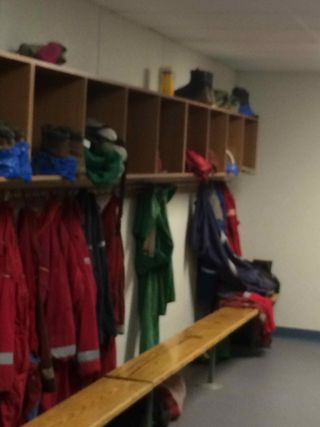
 This is a picture of one of the mudrooms from a crew camp near Dickinson, ND, in Dunn County:

Mudroom

This is a VIP room in the same facility. It has a private bath, while other rooms are smaller and share a jack-and-jill style bathroom. 

VIP

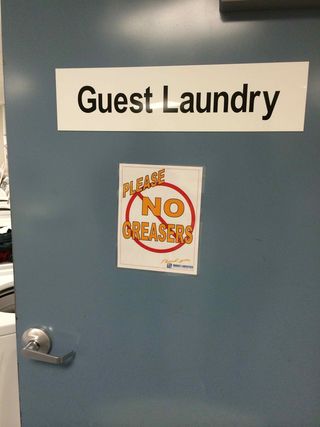
This is the sign for the guest laundry — No Greasers. 

NoGrease

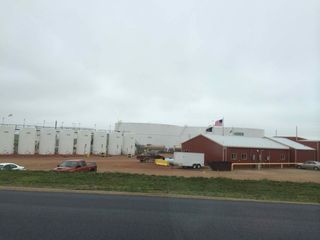
This is a picture of the crude oil site for loading oil on the tanker cars.  

OIlfield

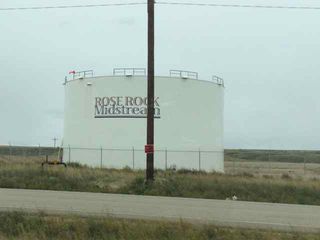
A crude storage tank: 

CrudeStorage

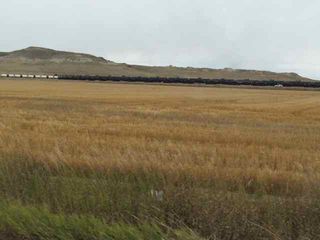
Most of the oil coming out of North Dakota, 1 million barrels a day, is shipped by rail: 

Railcars

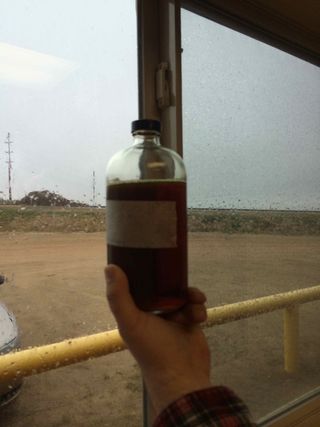
This is North Dakota crude. It comes from the ground a little more orange in color, but mellows to this over time.  It’s not thick; it almost like iced tea. 

NDCrude

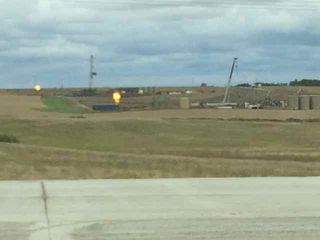
Flaring natural gas remains a problem, though some gathering is underway to help reduced the amount of flaring in the state. 

Flare

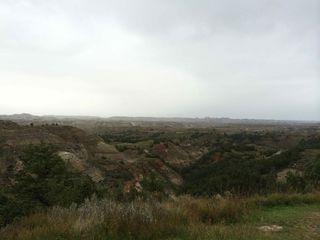
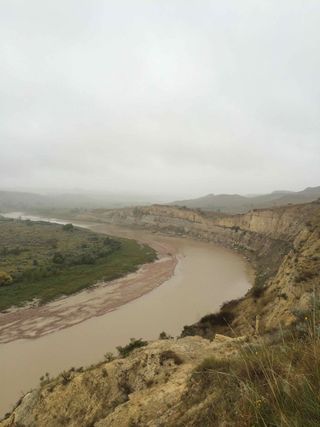
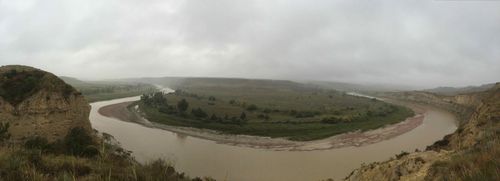
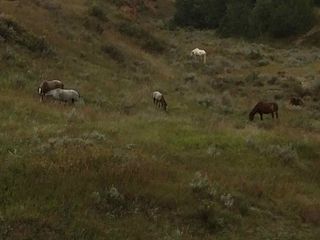
Finally, some pictures from Theodore Roosevelt National Park:

TRPark1

TR2

Ttpan

TRHorses

Daniel K. Tarullo, the Fed governor overseeing regulatory policies, testified before the Senate Banking Committee on Tuesday and signaled the central bank’s intent to increase special capital requirements for the largest banks to 11.5 percent.  The Fed’s plans are more conservative than new international regulations that require 9.5 percent reserves.  The eight banks currently deemed globally significant and therefore subject to the requirements are: Bank of America, Bank of New York Mellon, Citigroup, Goldman Sachs, JPMorgan Chase, Morgan Stanley, State Street and Wells Fargo.   The market reacted negatively to the news, dropping the stock price of the institutions. 

Even if banking regulations aren’t in your immediate wheel house of interest, an increase in reserves of 3% means about 17B for a bank like Goldman which would pad its reserve through measures like selling stock, holding on to profits or cutting its business operations.  The impact of these regulations could be felt all areas of business (perhaps why these particular banks are considered to be globally significant institutions). These changes will certain spark a lot of debate both in the academic and the practice worlds.

-Anne Tucker

This experience has been rather remarkable, and I’m only two days in to the trip.  We covered a lot of miles today, and not all of it was related to the oil and gas business. I started the day with a run, at a misty 43 degrees, after a high of 85 yesterday.  This is not relevant, other than to saw I was a bit cold this morning.  

 Target Logistics Dunn County Lodge

A few visits of interest today: First:  Target Logistics Dunn County Lodge, which is a crew camp site.  These are often know as “man camps.” They prefer “workforce housing.” I’ll stick with crew camps. 

It was was an impressive site for quickly built housing. The facility provides housing that does not take away from the local community, and deals with parking, water, and utility issues, as well as other resource issues.  The site has about 600 beds, and costs about $8-$10 million to build. They plan about a 20-month payoff for the build, which they met. Impressive. 

Prices are geared to be market competitive. The average is about $120 per night, which includes all food and utilities, though companies negotiate their own deals.  The people who work in the area tend to be transient — two weeks on two weeks off. People who do hydraulic fracturing tend to do two weeks on, on week off.  Construction people do four weeks on, two weeks off. The people who service the facility (and are also not locals, because the market is tight) work six weeks on two weeks off, and they pay their own travel.  

There are mostly men on the site, but women are there.  They have their own rooms or share rooms with other women with a “jill and jill” bathroom share. People generally work within 45 miles or they find other facilities.  The site is zero tolerance — no alcohol, no firearms, no visitors. The have on-site workout facilities, laundry, and food service.  It’s clean, well organized, and safe.  It’s the Cadillac of temporary housing.  And I’d try very hard not to ever, ever live there.  While I admit, it’s better than some of my college housing, it lacks the sense of free will I had then. 

Bakken Oil Express

Next was a trip to Bakken Oil Express, an oil shipping facility.  It was impressive in its organization and its operation.  It was big, with oil tanks, a rail yard, and lots of trucks.  Oil there moves by unit train, which is 104 cars.  The site has several tanks, and they can store 640k gallons of oil.  Tanks are generally 90k or 105k gallons.  An average truck brings 225 barrels of oil. It takes 17 to 18 hours to load a train, and the site loads about 1.5 trains per day. That is about 685 gallons per car. 

A diesel refinery is supposed to come on line on the site to serve the region, which is expected in December.  The site has about 75 employees, with salaries at $27/hour and up.

The site is  working to upgrade safety, including fire suppression, which it doesn’t have now. They are building foaming pipes to help if they have a problem. Right now, the plan in case of fire is to ship out what’s possible, and let it burn out. 

Theodore Roosevelt National Park 

This is a park you should see. I think I’d say that of all national parks, but I love this one.  The park is facing several challenges.  This includes protecting the “sound scape and sense of solitude,” that made Teddy Roosevelt love the place so much. This is a challenge for a park that has major highways running through it and major mineral operations being sought in the nearby land parcels.

The park has done well working with companies, who have responded well to requests to keep noise and other issues away from the park when issues have been raised.  Bakken flaring (or natural gas) has been an issue, too, and the park is working to preserve the night sky.  The area has had (and continues to have ) amazing view of the stars and the night sky, and flaring can cause haze and horizon light that makes the sky less amazing.  They are working on it.  

There is no drilling in the park, but drilling near has impacts, too.  So far, industry, the park, and the community have done well to minimize impacts.  

Tomorrow, we visit more communities, which are widely known to have had even larger impacts than what I have seen so far. The oil boom has been good for the region in many ways, but it’s been hard, too.  We’re about to get a sense of how hard.  

Today marked the first day of several meeting with people from North Dakota to discuss the oil boom and how it has impacted the state.  I lived in the state, and I loved it, so I think I am a little more connected than many to what’s happened here.  That said, I lived on the other side of the state from the oil boom, and I only spent five (largely great) years in North Dakota, so while I’m informed, I have hardly “lived the boom.”  I’ve just been watching and trying to pay attention. 

A few things I was told tonight struck me as significant: 

1. Housing costs are still a huge issue. Building a new house in Dickinson can run upwards of $250 per square foot. A one-bedroom apartment can easily run $1300.

2. In 1997, there were 698 hotel rooms in the city, largely for tourism jumping off for the North Dakota Badlands.  By 2004, that number was 754.  As of 2013, that number has increased to 1632. (The number is true of 2014, too.) 

3. In 2005, the average daily rate for a hotel room was $53.96

By 2008: $68.95

2009: $75.57

2010: $87.59

2011: $109.52

2012 :$124.03

2013: $112.37 (280 rooms were added in 2013).

This does not likely mean that things are slowing down, thought perhaps they are stabilizing.  More permanent housing has also been going up at a significant rate, so the increased number of hotel rooms, combined with those leaving the temporary housing market, likely explains the (relatively) modest decrease in average daily rate.  

4. Traffic and road maintenance remain a big concern.  One person I met tonight said he’d had a paved road to his house for years, until the oil boom came, and it’s now back to being a gravel road. 

5. I learned the term “Bakken charge,” which I’m told refers to the premium one pays for goods and services in this region.  Examples given include $5 Little Caesar’s Pizzas, which are $5.99 here (or 20% more) and flyers from big box stores with 20% ot 40% higher prices than the same flyers in other markets.

6. The idea of community action is less of a focus here than in other areas, like what we’ve seen in some spots in West Virginia.  It’s not that people don’t care, but they don’t necessarily participate in community actions.  Once can opine on the reasons why, and I have my guesses, but as a lawyer, I’ll stick to reporting what I’ve been told on this one: if you want support, you need to go to the people where they are.  (That seems like sound advice anywhere.) 

7. All those people asking for minimun wage at fast-food restaurants across the country “are really just asking to be paid like the they live in Dickinson, ND.” 

8. A major biggest employment challenge is finding people “who can pass a drug test. Some employers say when that when potential applicants are asked that question, ‘half the people just turn and walk out.”” 

I learned a lot more than this after a good conversation with interesting people, but I’ll leave it here for tonight. 

Last week, I posted my observations (musings?) relating to a colloquy that I had with Tennessee Governor Bill Haslam at an event sponsored by the C. Warren Neel Corporate Governance Center on The University of Tennessee’s Knoxville campus.  At almost the same time, and not at all related to my attendance at that event, I picked up a reprint of a recent article, CEOs and Presidents, authored by Tom Lin at Temple.  Tom and I often work in overlapping fields.  In particular, both of us have shown interest, from different perspectives, in substantially similar issues relating to corporate executives. 

I commend Tom’s article to you.  It provides a lucid and engaging comparison of CEOs and Presidents (as the title suggests).  (His analysis is, of course,  significantly more rich and nuanced than the reflections I shared in my earlier post.)  But Tom’s piece doesn’t stop there.  It goes on to critique the desirability of the “President as CEO” model based on the harms posed to both corporations and democracies and also highlights some important lessons we can learn from his study.

I do want to challenge Tom on one provocative statement that he makes in the article, however.  After critically commenting on the dangers of (among other things) government reliance on private industry and values in the accomplishment of its objectives, he observes that “[g]overnment and corporations are not actual or conceptual substitutes for one another, but are complements of one another.”  He lists examples and avows that both government and private industry are optimized when they collaborate.  

Continue Reading More on Political Leaders and Private Industry Leaders

I’m currently flying at about 30,000 feet on my way to Dickinson, North Dakota.  Regular readers know I do much of my research in the energy sector and that the impacts of horizontal drilling and hydraulic fracturing have had on the local, regional, national, and global economies are an interest of mine.  This trip marks my first return to North Dakota since I left the University of North Dakota School of Law in the summer of 2012, and it will be my most extended trip to the Bakken oil patch in the western part of the state. 

I have the benefit of traveling with a group from West Virginia University, and we’re gathering information for a variety of applications, all of which I hope will help us plan for a more sustainable economic and environmentally viable energy future.  The trip is scheduled to include meetings with government officials (state and local), industry representatives, landowners, farmers, educators, and others.  I’m looking forward to this rare opportunity to hear so many different perspectives from people living in the heart of the U.S. oil boom. 

Over the last few years, I have written about the challenges and opportunities related to the shale oil and gas reserves made available through horizontal drilling and hydraulic fracturing, with a focus on the economic, environmental, and social impacts.  I’m curious to see how my earlier assessments stack up with new information regarding the current situation.  Throughout the week, I plan to write about things I learn, provide some updates about what’s happening, and maybe share some thoughts about what’s next from the business, legal, and regulatory perspectives. Follow me on Twitter, too, @jfershee for (hopefully) in-the-moment updates.   

Stay tuned for more to come, and for those interested, here are some of my recent pieces on the subject: