
From Anne Tucker (who is off filming academic videos this afternon–whatever that means!):

Today’s Supreme Court decision in Burwell v. Hobby Lobby Stores Inc. et al. exempted closely held corporations from complying with the contraceptive mandate in the Affordable Care Act.  There is plenty to debate about the opinion—corporations are persons under RFRA and can exercise religion as well as a host of choice quotes from the SCOTUS about “modern corporate law”—and I will leave that fun for another time.  I want to highlight three initial reactions:    

  1. There is no definition of closely held in today’s opinion.  Will we draw lines based on state corporate codes and elections to be S corp?  Will we rely upon the IRS definition of a closely held company?  It is unclear.  There is NOTHING in the opinion that prevents today’s ruling from applying to publically traded, closely held corporations like Wal-Mart.  The line drawing engaged by the SCOTUS in Hobby Lobby is not such a neatly drawn, tight circle, but is a wide net.  I discussed this briefly in a HuffPost Live segment earlier today—here.
  2. This is a statutory, not a constitutional ruling.  On its face.  Of course Congress could amend RFRA and exclude corporations, but there are exactly zero people holding out hope for that solution, at least in our present climate.  The language of the opinion, however, gives strong dicta supporting religious rights and identities of corporations, whether for profit or not.  [“Any suggestion that for-profit corporations are incapable of exercising religion because their purpose is simply to make money flies in the face of modern corporate law.”]
  3. Today, the Court weighed in on the moral dilemma of performing an “innocent” act (i.e., providing health care coverage) that enables an “immoral” act (i.e., using an IUD whether for family planning or medical reasons).  May companies object to coverage that includes screening for sexually transmitted diseases because unwed employees may use it ensure safe, premarital sex?  The answer would seem to be yes. Of course, we can imagine that the Court would find a compelling interest here like they did with contraceptives, but what about the least restrictive means?  In Hobby Lobby, the Court found the existing program for the government to pay for contraceptives (for exempted nonprofit entities) as evidence of a less restrictive alternative.  So the government pays for the thing that for-profit corporations don’t want to pay for.  In other words, we now subsidize corporate religious beliefs. And if you are a corporation do you want to pay for something that competitors don’t have to?  The sincerity of the belief might be an issue, but if corporate law teaches us one thing, it is how to build a record.

-Anne Tucker

Formatting changes/errors are all mine.

Great work, Anne!
I have been catching up on my long backlist of reading and recently read an excellent article on litigation challenging the fees of mutual fund advisers: Quinn Curtis and John Morley, The Flawed Mechanics of Mutual Fund Fee Litigation.

As you may know, section 36(b) of the Investment Company Act of 1940 gives mutual fund investors and the SEC a cause of action to challenge excessive investment adviser fees.
Section 36(b) has generated quite a bit of academic commentary; Curtis and Morley’s footnote listing those articles (fn. 4, if you’re interested) takes up more than a page of single-spaced text. The Supreme Court has also recently chimed in on section 36(b). Jones v. Harris Assocs. L.P., 559 U.S. 335 (2010) discussed the standard for reviewing advisors’ fees under section 36(b).

Don’t worry; Curtis and Morley don’t rehash all of the earlier commentary. Instead, they take the existence of a section 36(b) cause of action as a given and ask how it can be improved to better achieve its purposes. Here’s the abstract:

We identify a number of serious mechanical flaws in the statutes and judicial doctrines that organize fee liability for mutual fund managers. Originating in section 36(b) of the Investment Company Act, this form of liability allows investors to sue managers for charging fees above a judicially created standard. Commentators have extensively debated whether this form of liability should exist, but in this paper we focus instead on improving the mechanics of how it actually works. We identify a number of problems. Among other things, statutes and case law give recoveries to investors who did not actually pay the relevant fees. Statutes and case law also impose no penalties to provide deterrence; they treat similar categories of fees differently; they create an unusual settlement process that prevents litigants from settling their full claims; they expose low-cost advisers to serious litigation risk; they exhibit deep confusion about what makes fees excessive; and they provide unduly small incentives for plaintiffs’ lawyers that are only adequate in cases of low merit. Most of these problems appear to be the unintended results of accidents and confusion, rather than deliberate policy choices. We conclude by offering specific ideas for reform.

The article, to be published in the Yale Journal of Regulation, was posted on SSRN in March, but it’s been sitting in my computer reading file since then. Better late than never. If you’re interested in the regulation of mutual funds and investment advisers, it’s definitely worth reading.

So, Halliburton Co. v. Erica P. John Fund, Inc. (2014) (“Halliburton II”)  came down, and to call it a change in the law is too generous – at best, it might qualify as a “clarification.”  After all of the angst  over the possibility that the Court might give plaintiffs the burden of proving the price impact of a particular misstatement, the Court soundly rejected that argument, reaffirmed Basic, Inc. v. Levinson (1988), and instead merely allowed defendants to rebut the fraud on the market presumption.  Because demonstrating a lack of price impact is as difficult as showing price impact in the first place, I don’t expect Halliburton II to change much in existing law – if anything, some of the rhetoric may make matters easier for plaintiffs.

[More under the cut]

Continue Reading Halliburton II – An Unexpected Gift to Plaintiffs

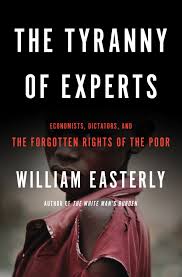
On Steve Bradford’s recommendation, I chose William Easterly’s (NYU) The Tyranny of Experts: Economists, Dictators, and the Forgotten Rights of the Poor (2014) as the book for my annual beach trip with the in-laws and cousins. (Last year was Daniel Kahneman’s (Princeton) Thinking, Fast and Slow – and yes, my wife’s side of the family makes fun of my beach reading material).  Easterly is an author I have wanted to read for a while now, and I still need to read some of his earlier books. 

Easterly

More after the break.

Continue Reading Easterly on The Tyranny of Experts

Previously, I have written about making MOOCs more effective and online v. in-person classes.  Today, I am writing about MOOCs, online classes in general, and the future of education. This will be a relatively short post because, of course, I don’t know what the future holds. But, after the break, I will take a few guesses based on what we are already seeing.

Continue Reading The Future of Higher Education

I always enjoy reading Bryan Cave partner Scott Killingsworth’s comments in various LinkedIn groups. In addition to practicing law, he’s a contributing editor to a treatise on the duties of board members. He’s just published a short but thorough essay on “The Privatization of Compliance.” It reminds me of some of the comments that Dean Colin Scott made at Law and Society about tools of private transnational regulation, which include self-regulation, contracts, consumers, industry initiatives, corporate social responsibility programs and meta-regulators. Killingsworth’s abstract is below.

Corporate Compliance is becoming privatized, and privatization is going viral. Achieving consistent legal compliance in today’s regulatory environment is a challenge severe enough to keep compliance officers awake at night and one at which even well-managed companies regularly fail. But besides coping with governmental oversight and legal enforcement, companies now face a growing array of both substantive and process-oriented compliance obligations imposed by trading partners and other private organizations, sometimes but not always instigated by the government. Embodied in contract clauses and codes of conduct for business partners, these obligations often go beyond mere compliance with law and address the methods by which compliance is assured. They create new compliance obligations and enforcement mechanisms and touch upon the structure, design, priorities, functions and administration of corporate ethics and compliance programs. And these obligations are contagious: increasingly accountable not only for their own compliance but also that of their supply chains, companies must seek corresponding contractual assurances upstream, causing a chain reaction of proliferating and sometimes inconsistent mandates. 

This essay examines the origins and the accelerating growth of the privatization of compliance requirements and oversight; highlights critical differences between compliance obligations imposed between private parties and those imposed by governmental actors; and evaluates the trend’s benefits, drawbacks and likely direction. Particular attention is given to the use of supplier codes of conduct and contractual compliance mandates, often in combination; to the issue of contractual remedies for social, process-oriented, or vague obligations that may have little direct bearing on the object of the associated business transaction; to the proliferating trend of requiring business partners to “flow down” required conduct and compliance mechanisms to additional tiers within the supply chain; and to this trend’s challenging implications for the corporate compliance function’s role and its interaction with operations, procurement, and sales groups. Recommendations are made for achieving efficiencies and reducing system dysfunction by seeking a broad consensus on generally accepted principles for business-partner codes of conduct, compliance-related contract clauses, and remedies appropriate to each.


For those of you needing a repreive from the breaking SCOTUS opinions this week and the rush to digest the latest in a string of controversial cases (and Hobby Lobby still hasn’t come down), I come bearing gifts in the form of a classic:  Margaret Blair & Lynn Stout’s A Team Production Theory of Corporate Law.  

I am home from a lovely conference at Seattle University School of Law’s Adolf A. Berle Jr. Center on Corporations, Law & Society.  The conference (Berle VI)  focused on the team production theory as it was originally conceived, its role in scholarship over the last 15 years, and how it is an integral component of emerging scholarship.  Most of us are familiar with the seminal paper and its conceptualization of the firm as creating situations where different stakeholders invest team-specific resources creating nonseparable gains that aren’t easily addressed by contract.  As most readers will know, Blair and Stout theorized that in this situation where various stakeholders make different types of investment (capital, human/labor, etc.) and where it is hard to tell what is earned from each separate contribution, that the stakeholders leave decisions up to the board of directors– a mediating hierarchy–to apportion the gains and monitor the firm.  Their view of the firm and the role of the board of directors, as theorized in this paper, served as a challenge to shareholder primacy as the dominant theory of corporate law. Of course, most academics cite to this paper in doctrinal articles when establishing the landscape of corporate law theories. If you haven’t read the paper completely, or haven’t read it in a while:  do so.  It will be time well spent.  

If you aren’t aware of the Berle Conferences, they are an incredible resource compiling established and emerging corporate law scholars on a variety of issues.  Prior papers, speakers lists and other information regarding the Berle Center is available here.  The team production theory papers will be published in a forthcoming issue of the Seattle University Law Review, and I will post an updated link.

Finally, for those of you still compiling a summer (or lifelong) reading list, I am adding Margaret Blair’s 1995 book on corporate theory—Ownership & Control–which was the jumping off point for the team production theory and the catalyst behind two very successful corporate law scholars’ careers.

Now you can go back to SCOTUS watch 2014.

-Anne Tucker

Harumph.  Business as usual at the SCOTUS . . . .  As a student and teacher of Basic v. Levinson and its progeny, I guess I had hoped for more from the U.S. Supreme Court’s opinion in Halliburton, released two days ago.  I haven’t yet read all the articles on the case that were published since the release of the opinion (as usual, quite a number), so my thoughts here represent my personal reflections.

After engaging in some self-analysis, I have determined that my disappointment with the Court’s opinion stems from the fact that I am a transactional lawyer . . . and the Court’s opinion is about procedure.  Not that civil and criminal procedure do not impact transactional law.  Au contraire.  The procedure and substance of Section 10(b)/Rule 10b-5 claims are intertwined in many fascinating ways.  I will come back to that somewhat in a minute.  But the Court’s opinion in Halliburton just doesn’t satisfy the transactional lawyer in me.

This also is somewhat true of the SCOTUS opinions in both Dura Pharmaceuticals and Tellabs, which deal with pleading (in)sufficiencies in Section 10(b)/Rule 10b-5 litigation rather than (as in Halliburton) class certification questions.  In its class certification focus, Halliburton is much more the sibling of Amgen, which I find infinitely more satisfying because it (like Basic and Matrixx) focuses on materiality, which infuses all disclosure decisions.  All of these cases, however, center on a defendant’s ability to get dismissal of an action at an early stage, something that defendants in Section 10(b)/Rule 10b-5 cases desperately want to do.  The longer the case goes on, the more incentive defendants have to settle–oftentimes (in my experience) foregoing the opportunity to defend themselves against specious claims because of the ongoing drain on financial and human resources.

Continue Reading Halliburton? Ho, hum . . . .