
April 2015

It’s that time of year again where I have my business associations students pretend to be shareholders and draft proposals. I blogged about this topic last semester here. Most of this semester’s proposals related to environmental, social and governance factors. In the real world, a record 433 ESG proposals have been filed this year, and the breakdown as of mid-February was as follows according to As You Sow:

Environment/Climate Change- 27%

Political Activity- 26%

Human Rights/Labor-15%

Sustainability-12%

Diversity-9%

Animals-2%

Summaries of some of the student proposals are below (my apologies if my truncated descriptions make their proposals less clear): 

1) Netflix-follow the UN Guiding Principles on Business and Human Rights and the core standards of the International Labour Organization

2) Luxottica- separate Chair and CEO

3) DineEquity- issue quarterly reports on efforts to combat childhood obesity and the links to financial risks to the company

4) Starbucks- provide additional disclosure of risks related to declines in consumer spending and decreases in wages

5) Chipotle- issue executive compensation/pay disparity report

6) Citrix Systems-add board diversity

7) Dunkin Donuts- eliminate the use of Styrofoam cups

8) Campbell Soup- issue sustainability report

9) Shake Shack- issue sustainability report

10) Starbucks- separate
For thirty years, I have had a pet peeve about the media’s routine reporting on mergers and acquisitions.  I have kept this to myself, for the most part, other than scattered comments to law practice colleagues and law students over the years.  Today, I go public with this veritable thorn in my side.

From many press reports (which commonly characterize business combinations as mergers), you would think that every business combination is structured as a merger.  I know I am being picky here (since there are both legal and non-legal common parlance definitions of the verb “merge”).  But a merger, to a business lawyer, is a particular form of business combination, to be distinguished from a stock purchase, asset purchase, consolidation, or statutory share exchange transaction.

The distinction is meaningful to business lawyers for whom the implications of deal type are well known.  However, imho, it also can be meaningful to others with an interest in the transaction, assuming the implications of the deal structure are understood by the journalist and conveyed accurately to readers.  For instance, the existence (or lack) of shareholder approval requirements and appraisal rights, the need for contractual consents, permit or license transfers or applications, or regulatory approvals, the tax treatment, etc. may differ based on the transaction structure.

In December, 2014 the Second Circuit in US v. Newman addressed liability of remote tippees.  In Newman, a lawyer told a friend who told a roommate information regarding the sale of SPSS Inc. to IBM that found its way into later trades by a cohort of analysts at hedge funds and investment firms. (Op. at 5-7).  The Second Circuit in  Newman  vacated insider trading convictions and narrowed the standard for “improper benefit”, reconsideration of which was denied last week, and thus stands pending review by the U.S. Supreme Court.  To qualify as an improper benefit under Newman, there must be proof of a meaningfully close relationship, where the “the personal benefit received in exchange for confidential information must be of some consequence.” (Op. at 22).  Newman also made clear that liability standards are the same whether the tippee’s liability arises under the classical or the misappropriate theories. (Op. at 11).

Judge Jed S. Rakoff, of Federal District Court in Manhattan, issued an order denying a motion to dismiss the SEC’s civil charges against Daryl Payton and Benjamin Durrant III, defendants in Newman who received their information from the roommate of the friend of the lawyer.

So, Duke is the 2015 NCAA Men’s Basketball champion. As a Michigan State basketball fan, this was at least mildly gratifying because the Spartans final losses the past two seasons have been to the eventual champion. (MSU’s final two losses this season: Wisconsin and Duke.) Hardly the same as winning the whole thing, but after a loss, one takes what one can get. 

This semester I am teaching Sports Law for the first time, and it has been an interesting and rewarding experience. As our recent guest, Marc Edelman, recently noted, there is a lot going on right now in college sports (there probably always is), with questions about paying NCAA players and players’ rights to unionize, among other things, leading the way.  

I am a big fan of college sports, and I generally prefer college sports to professional sports. I don’t, however, have any illusion that big-time college sports are, in any real sense, pure or amateur. (For that matter, I don’t know what “pure” means, but I hear complaints that colleges sports are “no longer pure,” so it appears there is some benchmark somewhere.)  College sports are a modified form of professional sports or, as the term I used to hear from time to time in other contexts, semi-pro sports.

What College Sports Are

College sports, in the simplest sense, are highly talented young people competing on behalf of educational institutions in exchange for the opportunity to pursue a mostly funded college education, if they so choose and can make it fit in with their athletic obligations.  The athletes are compensated for their efforts with opportunities that are varied and wide ranging, depending on the athlete and the institution for which they compete.  

Obviously, the experience for the high-profile college athlete — generally football and men’s and women’s basketball — is different from that of the less-watched sports, such as gymnastics, track, and golf.  But in all instances, the athletes represent their institution on and off the field, and they all have significant obligations that come along with their participation on their team. (Not all athletes have full or even partial scholarships, which can vary the obligations, though often all athletes have similar requirements.)

(To read more, please click below)

Yesterday was the third anniversary of the JOBS Act. President Obama signed it into law on April 5, 2012. The JOBS Act, as regular readers of this blog know, requires the SEC to adopt rules to enact an exemption for crowdfunded securities offerings. The statutory deadline for the SEC to do so was December 31, 2012. The SEC proposed the required rules on October 23, 2013, but it still has not adopted them.

It is now

  • 1096 days since Congress passed the JOBS Act
  • 826 days since the deadline for the SEC to adopt the required rules
  • 530 days since the SEC proposed the rules

. . . and still no crowdfunding exemption.

If I treated my tax returns like the SEC has treated the crowdfunding rules, I would be in jail.

SEC Chair Mary Jo White has recently said that the SEC hopes to finalize the rules by the end of the year. I certainly hope so.

Recently, I received the following conference announcement via e-mail:

———–

Understanding the Modern Company

Organised by the Department of Law, Queen Mary University of London,

in cooperation with University College London

Saturday 9 May 2015, 09.00 to 17.00

Centre for Commercial Law Studies

Queen Mary University of London

67-69 Lincoln’s Inn Fields

London WC2A 3JB

From their origin in medieval times to their modern incarnation as transnational bodies that traverse nations, the company remains an important, yet highly misunderstood entity. It is perhaps not surprising then that understanding what a company is and to whom it is accountable remains a persistent and enduring debate across the globe.

Today, the company is viewed in a variety, and often contradictory, ways. Some see it as a public body; others view it as a system of private ordering, while still others see it as a hybrid between these two views. Companies have also been characterized as the property of their shareholders, a network, a team, and even akin to a natural person. Yet the precise nature of the company and its role in society remain a modern mystery.

This conference brings together a wealth of scholars from around the world to explore the

Emory Law School seeks an Assistant Director of the Center for Transactional Law and Practice to teach in and share the administrative duties associated with running the largest program in the Law School.  Each candidate should have a J.D. or comparable law degree and substantial experience as an attorney practicing or teaching transactional law.  Significant contacts in the Atlanta legal community are a plus.

Initially, the Assistant Director will be responsible for leading the charge to further develop the Deal Skills curriculum.  (In Deal Skills – one of Emory Law’s signature core transactional skills courses – students are introduced to the business and legal issues common to commercial transactions.)  The Assistant Director will co-teach at least one section of Deal Skills each semester, supervise the current Deal Skills adjuncts, and recruit, train, and evaluate the performance of new adjunct professors teaching the other sections of Deal Skills.

As the faculty advisor for Emory Law’s Transactional Law Program Negotiation Team, the Assistant Director will identify appropriate competitions, select team members, recruit coaches, and supervise both the drafting and negotiation components of each competition.  The Assistant Director will also serve as the host of the Southeast Regional LawMeets® Competition held at

When forum selection bylaws first became a thing, the response from the plaintiffs’ bar was a bit muted.  This is because at least some plaintiffs’ firms viewed forum selection bylaws as beneficial, in that they had the potential to cut down on competition among plaintiffs’ firms for control over a given case.  No longer would a firm filing a case in Delaware have to fear that a competing firm, filing a case in another jurisdiction, would settle on sweetheart terms – or worse, end up getting dismissed, with collateral estoppel effects – before the Delaware firm had a chance litigate. 

 Which brings us to the Walmart litigation and a dispute between two plaintiffs’ firms.

 [More under the jump]

Smart

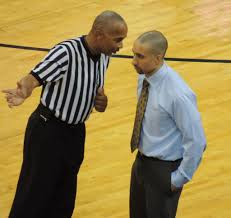
If you pay attention to college sports news, you know that Shaka Smart is leaving VCU to coach men’s basketball at the University of Texas.

As a professor, my interest, of course, is in the coaching contract.

Like most coaching contracts, Shaka Smart’s contract with VCU includes a buy-out provision, which is currently $500,000. (The buy-out was set at $600,000, with a $100,000 reduction per year. This is the second year of this VCU-Smart contract, hence the $500,000 amount).

More interestingly, the contract includes a provision that requires a home-and-home series with VCU and Smart’s new team or payment of an additional $250,000 to VCU. Smart took VCU to the Final Four in 2011, so in 2013 when this new contract between Smart and VCU was signed, VCU knew that Smart was one of the most sought after coaches in the country. As such, this seems like an excellent (and creative) clause to include; if Smart left VCU, he would likely be headed to a top-program and games with that top-progam could be quite valuable.

All of the above has been reported in other outlets. What I haven’t seen reported (though I obviously haven’t read all the