
March 2019

Received today from BLPB friends Beate Sjåfjell and María Jesús Muñoz Torres:

Happy International Women’s Day! We celebrate this day by issuing the call for papers for the 5th international workshop of Daughters of Themis: International Network of Female Business Scholars. The theme is Finance for Sustainability; a highly topical theme! The deadline is 26 March, and we hope that the brief window of opportunity will be large enough for all interested to respond.

We appreciate if you would circulate this call to any interested colleagues identifying as female business scholars, including junior scholars (PhD candidates) as well as colleagues in lower-income countries. Please note that we this year do have some, very limited, funds available so that we can contribute to the funding for one or two participants based on financial hardship.

For those unfamiliar with Daughters of Themis: our annual workshop is the heart of our network, and you can read more here, reporting back from our three last workshops here: 2018, 2017 and 2016.

Please feel free to contact Beate or María Jesús with any questions you might have.

Unfortunately, this workshop overlaps a bit with the Grunin Center’s annual conference (which focuses in
Gregg D. Polsky, University of  Georgia Law, recently posted his paper, Explaining Choice-of-Entity Decisions by Silicon Valley Start-Ups. It is an interesting read and worth a look. H/T Tax Prof Blog.  Following the abstract, I have a few initial thoughts:

Perhaps the most fundamental role of a business lawyer is to recommend the optimal entity choice for nascent business enterprises. Nevertheless, even in 2018, the choice-of-entity analysis remains highly muddled. Most business lawyers across the United States consistently recommend flow-through entities, such as limited liability companies and S corporations, to their clients. In contrast, a discrete group of highly sophisticated business lawyers, those who advise start-ups in Silicon Valley and other hotbeds of start-up activity, prefer C corporations.

Prior commentary has described and tried to explain this paradox without finding an adequate explanation. These commentators have noted a host of superficially plausible explanations, all of which they ultimately conclude are not wholly persuasive. The puzzle therefore remains.

This Article attempts to finally solve the puzzle by examining two factors that have been either vastly underappreciated or completely ignored in the existing literature. First, while previous commentators have briefly noted that flow-through structures are more complex and administratively burdensome, they

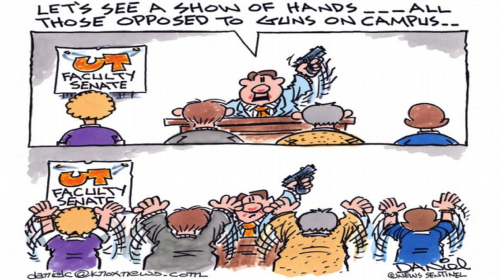
FS(CDanielCartoon)

*          *          *

“A lawyer, as a member of the legal profession, is a representative of clients, an officer of the legal system and a public citizen having special responsibility for the quality of justice.

Am. Bar Assoc., Model Rules of Prof. Conduct Preamble ¶ 1 (emphasis added)

Although we business lawyers do not talk about this much–at least not in forums like this–as licensed attorneys, we have an obligation to speak out publicly on matters of justice.  Paragraph 6 of the Preamble to the Model Rules of Professional Conduct offers details on this role.  Among my favorite parts of this paragraph from the Preamble are the following duties that most commonly impact my work:

  • “As a public citizen, a lawyer should seek improvement of the law, access to the legal system, the administration of justice and the quality of service rendered by the legal profession.”
  • “As a member of a learned profession, a lawyer should cultivate knowledge of the law beyond its use for clients, employ that knowledge in reform of the law and work to strengthen legal education.”
  • “In addition, a lawyer should further the public’s understanding of

Wenqian Huang at the Bank for International Settlements recently posted a new version of her working paper: Central counterparty capitalization and misaligned incentives.  Here’s its abstract:

Financial stability depends on the effective regulation of central counterparties (CCPs), which must take account of the incentives that drive CCP behavior. This paper studies the incentives of a for-profit CCP with limited liability. It faces a trade-off between fee income and counterparty credit risk. A better-capitalized CCP sets a higher collateral requirement to reduce potential default losses, even though it forgoes fee income by deterring potential traders. I show empirically that a 1% increase in CCP capital is associated with a 0.6% increase in required collateral. Limited liability, however, creates a wedge between its capital and collateral policy and the socially optimal solution to this trade-off. The optimal capital requirements should account for clearing fees.

For those who understand the different incentive structures associated with member versus investor owned clearinghouses, some of the model’s finding will be unsurprising: in the absence of capital requirements (such as in the U.S.), member-owned clearinghouses hold more capital than investor-owned institutions.  This has important public policy implications.  Nevertheless, as I noted in an earlier post

I’ve previously posted that judges sometimes suggest that markets are efficient to a degree that borders on the mystical.*  But on the opposite end of the spectrum, it often seems as though Congress does not believe in efficient markets at all.  For example, the PSLRA’s “crash damages” provision contains the implicit assumption that when negative information comes to light, it will take 90 days for the stock to appropriately internalize it.  15 U.S.C. §78u-4(e)(1).  Dodd Frank requires all public companies to disclose information on their compliance with the Federal Mine Safety & Health Act (I amuse myself by highlighting for my class the “mine safety disclosure” in the Starbucks 10-K, for example), even though that information is public via other channels.  (Spoiler alert: the disclosures apparently make a difference, so Congress may be right!) 

And most recently, we have the Improving Corporate Governance Through Diversity Act of 2019, introduced by Representative Meeks in the House and Senator Menendez in the Senate.

These identical bills would require public companies to disclose “Data, based on voluntary self-identification, on the racial, ethnic, and gender composition of the board of directors of the issuer;  nominees for the board of directors of

The Business Law Clinic (Clinic) is part of a comprehensive curriculum in transactional law that is comprised of the Clinic, the Business Law Center (Center) and certificate and degree conferring programs. The Clinic, established in 1999, offers students a unique opportunity to develop essential lawyering skills in a professional, interactive environment. Loyola seeks a dynamic Clinic Co-Director/Center Executive Director to work collaboratively with the Clinic Co-Director and the Director of the Business Law Center to provide strategic leadership, teach the Clinic class, supervise student work with clients, and to assist the Center Director in the development of the business and transactional law curriculum, scholarly conferences and programming.

The Co-Director/Executive Director will serve as the Randy L. and Melvin R. Berlin Clinical Professor of Law that is a presumptively renewable long-term contract position with voting privileges within the Loyola University Chicago School of Law. Loyola University Chicago School of Law is a student-focused law center inspired by the Jesuit tradition of academic excellence, intellectual openness, and service to others. Our mission is to educate diverse, talented students to be responsible leaders in a rapidly changing, interdependent world, to prepare graduates who will be ethical advocates for justice and the rule of