This week I received the notice below from Professor Jason Gordon. Professor Gordon is a legal studies and management professor at Georgia Gwinnett College, School of Business. As explained below, he is offering copies of two entrepreneurship books that he thought might be useful to BLPB readers.  

Dear Colleagues,

I recently published two texts entitled Business Plans for Growth-Based Ventures and Understanding Business Entities for Entrepreneurs and Managers. These books are designed for use by clinical law professors and as a supplement in entrepreneurship courses. The second text concerns entity selection considerations, but includes entity funding and conversion considerations and specific considerations for startup ventures.

The texts also contain supplemental electronic material available for free at TheBusinessProfessor.com.

If any of you would like a free copy of either text in Amazon e-book format, please send me your email address at jgordon10 [at] ggc [dot] edu.

A preview of the Business Plans E-Book is available here.

A preview of the Business Entities E-Book is available here

I watch a lot of Shark Tank episodes. Like most “reality shows,” Shark Tank is somewhat artificial. The show does not purport to be an accurate portrayal of how entrepreneurs typically raise capital, but I still think the show can be instructive. From time to time, mostly in my undergraduate classes, I show clips from the show that are available online.

Shark Tank
(creative commons image, no attribution requested)

After the break I share some of the lessons I think entrepreneurs (and lawyers advising entrepreneurs) can learn from Shark Tank. After this first list of lessons, I share a second list — things folks should not take from the show. 

Earlier this week, I watched Ivory Tower: Is College Worth the Cost? on CNN, which was a somewhat depressing documentary for someone who hopes to spend the next 30+ years in higher education.

One of the things the documentary decries is the construction of more and more extravagant buildings and amenities on college campuses.

While the extent and type of building that should occur can be reasonably debated – and my own institution has almost doubled the number of buildings on campus in the past decade – I want to make a relatively modest claim here: aesthetics matter in higher education.

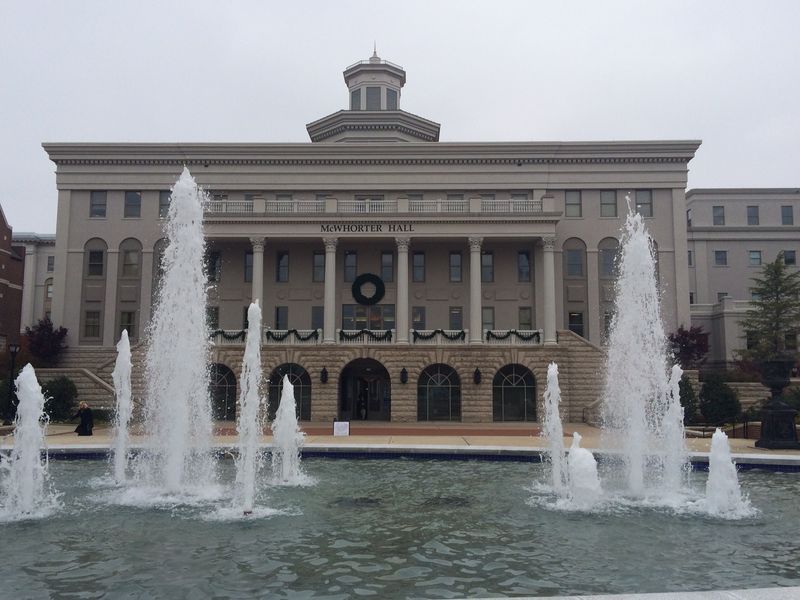
Belmont University

(Photo of a Belmont University building and fountain from my iPhone).

Perhaps some schools have gone overboard in creating beautiful campuses. However, at institutions that exist to illuminate for students something much more important than mere financial returns, I think it is fitting to invest in beautiful campuses, for their own sake.

Again, perhaps most schools do not need student recreation centers than costs hundreds of millions of dollars, but there is something inspiring about going to a school, and teaching at a school, that is breathtakingly beautiful. 

This post may surprise some people who know me because I

As a relatively new parent, I have been amazed at the insatiable curiosity of our son (19-months old). Like most parents, I think my son is special, but I see this curiosity in most children around his age. These young children want to investigate everything and will try anything. They make a lot of mistakes, but they are constantly learning and they seem to love learning.

Curiosity comes quite naturally. Obedience, however, needs to be taught. 

As a professor, I wish I could bottle my son’s curiosity and feed it to my students.

As a parent, I wish my young son obeyed as well as (most of) my students do. 

But I wonder, do we sometimes trade curiosity for obedience? Sir Ken Robinson has spoken about the problem of schools killing creativity. (Creativity and curiousity are related, I think). As a parent and as a professor, his talk is challenging.

If you are not prepared to be wrong you will never come up with anything original…we are now running national education systems where mistakes are the worst things you can make. We are educating people out of their creative capacities…Picasso once said this, he said that “all children are born

 I subscribe to a few helpful law-related listservs:

All of these listservs provide useful information, through the helpful e-mails from the participants. Especially for those of us at business schools, where we do not have many legally trained colleagues, access to the collective wisdom of those on the listserv is invaluable. Occasionally, however, the listservs produce an avalanche of uninteresting e-mails. The LLC listserv allows the option of getting a single weekly digest of the discussion, which I prefer, though the Yahoo! formatting of the digest is unattractive and cumbersome.

What law-related listservs do you enjoy? Any thoughts on the best (free) platform for listservs?

I used to joke that my alma mater Columbia University’s core curriculum, which required students to study the history of art, music, literature, and philosophy (among other things) was designed solely to make sure that graduates could distinguish a Manet from a Monet and not embarrass the university at cocktail parties for wealthy donors. I have since tortured my son by dragging him through museums and ruins all over the world pointing spouting what I remember about chiaroscuro and Doric columns. He’s now a freshman at San Francisco Art Institute, and I’m sure that my now-fond memories of class helped to spark a love of art in him. I must confess though that as a college freshman I was less fond of  Contemporary Civilization class, (“CC”) which took us through Plato, Aristotle, Herodotus, Hume, Hegel, and all of the usual suspects. At the time I thought it was boring and too high level for a student who planned to work in the gritty city counseling abused children and rape survivors.

Fast forward twenty years or so, and my job as a Compliance and Ethics Officer for a Fortune 500 company immersed me in many of the principles

256px-Alison_Lundergan_Grimes

(Photo courtesy of Wikimedia Commons, by Patrick Delahanty from Louisville, United States)

Alison Lundergan Grimes and I both graduated from Rhodes College, a small liberal arts college in Memphis, TN. I have not spoken to Alison since college, so I was surprised to see her mentioned on CNN a number of weeks ago as the democratic nominee for U.S. Senator from Kentucky. Since then, she has been in the news quite a bit. She will face Minority Leader Mitch McConnell, in what has turned into one of the hotter Senate races this year.    

Even in college I did not know Alison well, but we did take a public speaking class together. Alison was the type of student who was often in a suit and pearls in class, while I wore flip flops year-round and whatever wrinkled, Goodwill-purchased clothes were the most clean. She was a Chi Omega (easily the most refined group on campus), and I was a part of the football team for all four years (if there was a rowdier group on campus than the football team, it was the rugby club, which I joined because my playing time on the football team was

Last night (actually this morning around 1 a.m.), I returned to Nashville after a delayed connection on my way back from an excellent conference at Seattle Pacific University. The conference was hosted by SPU’s Center for Integrity in Business.

I was only in Seattle for about 48 hours, but the trip was well worth it. As I have mentioned before, there isn’t a good substitute for meeting people in person. Seattle Pacific University gathered an excellent, diverse group of practitioners and academics from various disciplines to discuss topics at the intersection of faith and social enterprise. I may write more about the conference later, but am pretty wiped out right now after limited sleep, catching up, and teaching today.  

While I seem to always get at least one delayed flight when I travel, I do not mind traveling because I love the quiet time on the plane or the car. (With an 18-month old son at home “quiet” is relatively rare in my life.) Almost always, I can finish at least one full book on the airplane on a trip like this one. This time I read Paul Collier’s The Plundered Planet. I might write