
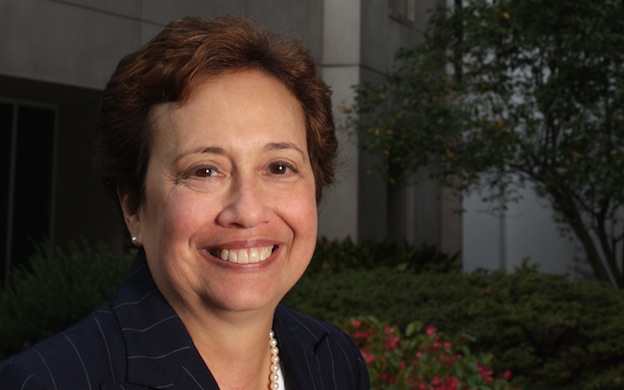
Tina L. Stark Emory Law, October 2007

Transactional lawyering and the education of transactional lawyers has been transformed by Tina L. Stark (Weisenfeld). You may have known her for her wonderful books–Drafting Contracts: How & Why Lawyers Do What They Do and Negotiating and Drafting Contract Boilerplate are on my bookshelves and those of so many others. You may have heard her speak at a conference or symposium.

Yet, many of us also knew Tina on a more personal level. Some of us had her as an instructor or as a colleague. Long a consultant and advisor to law schools, bar associations, and legal employers on transactional legal education and training, Tina also held full-time administrative and teaching appointments at Emory University School of Law and Boston University School of Law and was a visitor at Fordham University School of Law. Earlier in her career, she was an adjunct law professor at Fordham Law and the Maurice A. Deane School of Law at Hofstra University.

Tina passed away earlier this week. But her presence will continue to be felt in so many ways. She and I initially bonded over our not only our love of teaching plainly

As the erstwhile “Monday blogger” for the BLPB, I have written Labor Day posts over the years on a variety of Labor Day topics–from the history surrounding the holiday, to the labor of law teaching. Last year, I wrote about gratitude on Labor Day. This year, I carry that gratitude theme forward in a specific context: appreciation for lawyers and for being a lawyer.

I know that the holiday is not generally seen as a moment in the calendar year in which we step back to honor service professionals. As I have noted in prior Labor Day posts, the workers intended to be honored are those who made our country prosperous in and around the time of the Industrial Revolution–working long, hard hours for low pay. The Department of Labor’s website offers a summary description.

Labor Day is an annual celebration of the social and economic achievements of American workers. The holiday is rooted in the late nineteenth century, when labor activists pushed for a federal holiday to recognize the many contributions workers have made to America’s strength, prosperity, and well-being.

I mean no disrespect to that original intention by focusing on lawyers here. I continue to believe that

Business lawyers understand that corporate directors and officers owe fiduciary duties to the firm. These duties include responsibilities to provide oversight, which are colloquially known under Delaware law (and beyond) as Caremark duties, based on a flagship Delaware Supreme Court opinion, In re Caremark Int’l Inc. Derivative Litig., 698 A.2d 959 (Del. Ch. 1996). Although historically understood by many (yours truly included) as either a separate fiduciary duty of good faith or a component of the fiduciary duty of care, oversight obligations under Delaware law currently are classified as a component of the fiduciary duty of loyalty. According to the Delaware Supreme Court, “because a showing of bad faith conduct … is essential to establish director oversight liability, the fiduciary duty violated by that conduct is the duty of loyalty.” Stone ex rel. AmSouth Bancorporation v. Ritter, 911 A.2d 362, 370 (Del. 2006).  

Successful Caremark claims are difficult to plead and prove, given the relatively high burden of showing bad faith conduct. Historically, almost all claims alleging a breach of Caremark duties in Delaware courts have been dismissed before trial for failure to state a claim. Recently, a case involving Meta Platforms, Inc. directors and officers, including Mark

Earlier this week, The University of Tennessee Frank Winston College of Law (yes, a new name, with a great story behind it!) announced my appointment as the incoming director of the Clayton Center for Entrepreneurial Law. You can find the full story here. I posted the news on social media earlier in the week. Thanks to those of you who commented and contacted me in response to those posts.

As I said there and have told many of you, I am truly excited to take on this new role for the academic program in which I have worked for 25 years–the program that brought me to Tennessee and the College of Law in 2000 after nearly 15 years of practice up in Boston, Massachusetts. I assume the directorship on August 1. I am grateful to the center’s interim director, Brian Krumm, who has ably managed the center since the 2024 retirement of longtime director George Kuney.

The Clayton Center is rooted in entrepreneurship, being the namesake of James L. Clayton, a 1964 graduate of the Winston College of Law who is the founder of Knoxville-based Clayton Homes, Inc., now a subsidiary of Berkshire Hathaway Inc.

Friends keep sending me contracts they created with ChatGPT or Claude.

They read well. The formatting is clean.

But essential clauses are often missing—or the terms don’t reflect the actual business deal.

Sometimes I revise heavily. Sometimes I start over.

This post isn’t about whether AI is capable.

It’s about whether the person prompting knows how contracts actually work in business.

A contract isn’t a CYA document like my friends think. It reflects how the parties have chosen to allocate risk, reflect their priorities, and protect relationships and business interests.

AI can assist with drafting. I use it. I teach it. But without commercial judgment, even the best prompt won’t protect the business.

We’re need to train future lawyers and all workers not to rely on AI but to partner with it.

At University of Miami School of Law, we’re preparing students to step into the real world—with both digital and business acumen.

In our Transactional Skills Program, students don’t learn theory.

They negotiate, redline, bill, meet with simulated clients, and use AI responsibly. They also work with real-world agreements—documents they’ll see in practice:

✅ NDAs, employment, and contractor agreements

✅ SaaS, MSAs, and licensing deals

✅ Escrow, loan

Yesterday, The New York Times published the attached article. [this one, on the Paul, Weiss settlement] Many of you may have read about the referenced brokered deal between the Paul, Weiss firm and the Trump administration. But did you consider the related firm decision making as a matter of business associations law? I want us to engage with that in lieu of today’s class, using our knowledge of partnership

A friend alerted me to this recent Report and Recommendation in a case involving a request to audit books and records under the Employee Retirement Income Security Act of 1974, as amended (commonly known as ERISA). The Report and Recommendation relates to the inclusion of citations to nonexistent cases in court filings made by a solo practitioner, Rafael Ramirez. I find the court’s narrative, reasoning, and recommendation illuminating in a sobering sort of way. As many of us feel our way through how to best guide our students in using generative artificial intelligence in their legal work, the Report and Recommendation offers for for thought.

To start, I was surprised by the explanation offered by Mr. Ramirez in response to the court’s order to show cause why he should not be sanctioned for violating Federal Rule of Civil Procedure 11(b). In that regard, the court represented that

Mr. Ramirez admitted that he had relied on programs utilizing generative artificial intelligence (“AI”) to draft the briefs. Mr. Ramirez explained that he had used AI before to assist with legal matters, such as drafting agreements, and did not know that AI was capable of generating fictitious cases and citations.

Is it

I managed to hold off for a few weeks–and then for the past 24-48 hours (or so)–in reporting back on the current state of the Corporate Transparency Act (CTA). But the U.S. Supreme Court has again spoken, and so it is time to do an update (since little more is likely to happen over the weekend). FinCEN, the U.S. Financial Crimes Enforcement Network, summarizes the current state of play, an update from my post earlier this month.

On January 23, 2025, the Supreme Court granted the government’s motion to stay a nationwide injunction issued by a federal judge in Texas (Texas Top Cop Shop, Inc. v. McHenry—formerly, Texas Top Cop Shop v. Garland). As a separate nationwide order issued by a different federal judge in Texas (Smith v. U.S. Department of the Treasury) still remains in place, reporting companies are not currently required to file beneficial ownership information with FinCEN despite the Supreme Court’s action in Texas Top Cop Shop. Reporting companies also are not subject to liability if they fail to file this information while the Smith order remains in force. However, reporting companies may continue to voluntarily submit beneficial ownership information reports.

And so it

Announcement
By now, we hope that you’ve all seen the Press Release announcing the historic 6 million dollar gift from Emory’s emeritus professor Bill Carney for the formation of the William and Jane Carney Center for Business and Transactional Law.We are thrilled to jointly present this Conference, which will celebrate three pillars of the new Carney Center: doctrine, practice, and pedagogy. We will welcome you as scholars, lawyers, and teachers engaged in preparing students to become business and transactional attorneys.

The Conference will be held at Emory, beginning at 1:00 p.m. on Friday, May 30, 2025, and ending at 3:45 p.m. on Saturday, May 31, 2025. Information about registration and accommodations is forthcoming.
Call for Proposals
We are accepting proposals immediately, from now through the end of March. You may present alone or with colleagues.  Please prepare to give a 60-minute, interactive presentation on any aspect of business and transactional law and skills education viewed