
The SEC’s ongoing sweep recently resolved potential claims against nine different SEC-registered investment advisory firms for violations of its Marketing Rule.   The firms paid civil penalties ranging from $60,000 to $325,000.  In total, the SEC secured about $1.2 million in civil penalties.

Marketing Rule enforcement sits in an interesting place after the Jarkesy decision.  The Marketing Rule is Advisers Act Rule 206(4)-1.  It’s codified at 17 C.F.R. 275.206(4)-1Section 206 of the Advisers Act is an anti-fraud provision.

Jarkesy would seemingly apply to give respondents the right to a jury trial and a federal court proceeding. Although addressing a different portion of the securities laws, the Jarkesy majority put it this way:

According to the SEC, these are actions under the “antifraud provisions of the federal securities laws” for “fraudulent conduct.” App. to Pet. for Cert. 72a–73a (opinion of the Commission). They provide civil penalties, a punitive remedy that we have recognized “could only be enforced in courts of law.” Tull, 481 U. S., at 422. And they target the same basic conduct as common law fraud, employ the same terms of art, and operate pursuant to similar legal principles. See supra, at 10–12. In short, this action involves a “matter[] of private rather than public right.” Granfinanciera, 492 U. S., at 56. Therefore, “Congress may not ‘withdraw’” it “‘from judicial cognizance.’” Stern, 564 U. S., at 484 (quoting Murray’s Lessee, 18 How., at 284).

Had the SEC not reached an agreement to resolve these claims, it likely would have decided to pursue claims in federal court instead of more expeditiously through its in-house administrative process.  

It’s unknowable how the change in enforcement procedure may or may not have affected the resolution on these issues.  Consider the largest penalty, $325,000 from Integrated Advisors.  The firm has “approximately $4.2 billion in regulatory assets under management.”  The civil penalty resolved a claim arising out of this factual circumstance: 

During the Relevant Period, Integrated Advisors published a communication on the public website of one of its DBA firms that constituted an “advertisement” because it offered investment advisory services with regard to securities to prospective clients, through its affiliation with Integrated Advisors, and offered new investment advisory services with regard to securities to current clients. As the communication was published on a public website, it was made to more than one person.

This advertisement contained the material statement of fact that the DBA firm was “a true fiduciary that puts the client first by aligning incentives and eliminating conflicts of interest” without providing any context for this claim. However, Integrated Advisors has recognized various conflicts of interest inherent in providing investment advisory services, including conflicts of interest disclosed in its Form ADV Part 2A brochures.

Frankly, I see the SEC as having Integrated Advisors dead to rights here, yet I don’t know that the misstatement necessarily warranted the biggest penalty of the bunch.  Of course, we’re only able to see what made it into the order.  It may be that the SEC was more concerned with how well the firm supervises advisers going out and making statements.  Given its scale, the penalty may be more aimed at ensuring an oversight problem gets fixed.

Other advisers made the same mistakes and walked out with lower penalties.  Consider AZ Apice.  The firm claimed that its advice was “free from conflicts of interest” while also disclosing conflicts on its Form ADV.  It paid just $70,000.  Of course, AZ Apice only has about $325 million in assets under management, so the SEC may have scaled the penalty based on firm size.  

TS Bank, doing business as Callahan Financial Planning made the same mistake, plus more, while also getting a lower penalty.  The firm has a mere $248 million in assets under management. It also claimed not to have conflicts while disclosing conflicts.  Yet it went off the rails by making false claims about being a “member” of an entity that doesn’t exist!  This is how the order describes it.

Callahan disseminated an advertisement on its public website containing an untrue statement of a material fact. Specifically, Callahan Financial published an advertisement on its website in which it described Callahan Financial as a “Member” of “Fiduciary Firm.” However, Callahan Financial was not a “Member” of “Fiduciary Firm,” as “Fiduciary Firm” is a non-existent organization. Callahan Financial’s advertisement included a purported logo for this non-existent organization.

For these sins, Callahan paid just $85,000.

From this, we can see the SEC trying to calibrate penalties appropriately–taking into account firm size and the nature of the wrongdoing.  What Callahan did seems worse than AZ Apice and Integrated advisers because it invented a fake entity and even gave it a logo.  It’s also the smallest of the three by assets under management.  

Other firms with exposure may be looking at these and trying to figure out where they could resolve issues with the SEC.  Firms with more assets under management should probably expect that they’ll end up with a higher penalty.  You might be able to work out what kind of grid may be in play here by connecting the dots behind all nine of the awards.
The Contest
The Public Investors Advocate Bar Association (PIABA) sponsors this contest for papers touching on securities law and securities arbitration and will pay over $3,000 in awards to law students with prizes at $1,500, $1,000, and $750 for the top three entrants.  The PIABA Bar Journal will publish the first place paper and, in years past, has also made offers to publish other papers from the contest.  Papers must be submitted by Friday, March 28, 2025.

Eligibility
The competition is open to all students attending a law school in the United States.[1]  PIABA employees and externs (except for students working less than 20 hours per week) are not eligible to enter the competition. 

Criteria and Judging
All entries will be judged anonymously by the Competition Judges, who will select the winning submission(s). PIABA will notify the award winner(s) in early April.

Entries will be judged based on the following criteria: quality of research and authority provided; accuracy and clarity of the analysis; compliance with legal writing standards and technical quality of writing, including organization, grammar, syntax, and form. Strong preference will be given to articles that advocate pro-investor positions, provide updates on or surveys of securities or ADR law, and/or are consistent with PIABA’s mission of promoting the education and interests of the public investor in securities and commodities arbitration, protecting public investors from abuses in the arbitration process, and making securities and commodities arbitration fair through legislative reforms to arbitration forum providers. The Judges reserve the right not to award any prizes if it is determined that no entries are of sufficient quality to merit selection that year.

Format
The text of a submission must be double-spaced, with twelve-point font and one-inch margins. Any Question(s) Presented section, the Statement of the Facts / Statement of the Law section, the Argument section, and/or the Conclusion together are a minimum of 15 pages and a maximum of 30 pages.  If the submission covers both a topic among those listed above and a topic not listed above, only the topic listed above will be evaluated.  Submissions will not be penalized for arguing a position that would limit investor rights rather than expand them.

Submission Deadline
The submission deadline is 5 p.m. eastern on Friday, March 28, 2025. Submissions will be accepted via an online submission portal only.  The portal will be posted to PIABA’s website. The contestant’s name and other identifying markings such as school name are not to be on any copy of the submitted entry.  PIABA will assign a random number to each entry and will record this number on all copies of each submission.  Neither the contestant’s identity nor their academic institution will be known to any Competition Judge.  Each entrant may submit only one entry. 
 
About James E. Beckley
James E. Beckley – a passionate securities arbitration activist and an accomplished scholar – was well known for defending and promoting the rights of public investors.  Along with his advocacy skills, he was as a prolific and outstanding writer. Mr. Beckley served on the Securities Industry Conference on Arbitration, an organization created at the request of the Securities and Exchange Commission to maintain and update the Uniform Code of Arbitration for securities arbitration, and to serve as a sounding board on issues of fairness in arbitration.  At the time of his death in 1999, Mr. Beckley was the Public Investors Arbitration Bar Association (“PIABA”) President. This competition and award has been established to honor his legacy.


[1] Full-time students who are not law students but who write law-related papers as part of a course at an American law school may also enter

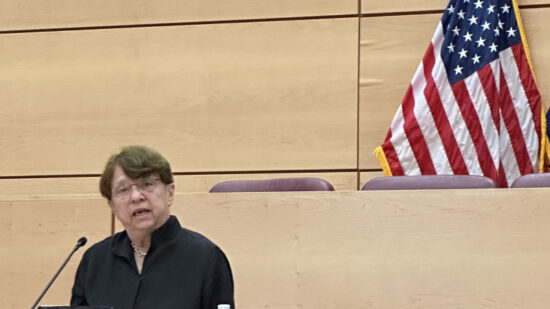
Earlier today, I had the honor of attending the second annual Peter J. Henning Memorial Lecture at Wayne State University Law School.  Mary Jo White, a partner at Debevoise & Plimpton and the former U.S. Attorney for the Southern District of New York and Chair of the U.S. Securities and Exchange Commission, delivered the lecture.  Her topic: “The Psychology of White Collar Crime and How to Combat It.”

Mary Jo is an engaging speaker.  Her talk covered significant ground in a short period of time.  In addressing her chosen topic, she drew from academic and professional sources, including her own experience.

Her focus was on ways to create effective deterrence. She offered three things that work well in that regard: 

  • prison sentences (althoigh not those with significantly long terms and no opportunity for parole) and wide publicity of the same in the news media, citing to 1980s insider trading enforcement efforts and the new millennium Enron era accounting fraud enforcement efforts as examples;
  • multiple enforcement cases of the same kind brought close in time–creating what she referred to as “industry-changing deterrence”; and 
  • whistleblower programs, which she praised for their capacity to permit broad and quick enforcement against serious frauds.

She also noted drawbacks associated with enforcing against firms rather than individuals.

Along the way, Mary Jo made numerous smaller points and subpoints, extolling the virtues of in-person compliance trainings, including empathic trainings offered by people who are in effectively the same position as the trainees.  She observed that deterrence is difficult in white collar crime enforcement; those who engage in while collar crime are psychologically complex and do not always respond logically in making law compliance/violation decisions.  She cited to Eugene Soltes’s work Why They Do It) and to Cressey’s fraud triangle and the subsequent Wolfe and Hermanson fraud diamond.  She noted technology’s roles both as an efficient way to help identify fraud and as an assistance to fraudulent behavior.

In closing, Mary Jo suggested that achieving the effective deterrence of white collar crime will involve “thinking outside the box” about laws providing for and governing enforcement.  In particular, she suggested we should be looking at ways of increasing C-suite accountability.  She noted, however, the need for enforcement to be even and fair (devoid of, e.g., political motivations and overlays) in a C-suite accountability environment, which she admits may be easier said than done.

I am glad to be a part of this tradition honoring Peter Henning’s life.  My post on last year’s lecture can be found here.  Peter was a mentor and friend and will always be missed.  But this lecture series is one simple and consistent way to help keep his memory and work alive.

I didn’t really think it through. I actually thought that teaching Business Associations (BA) online, would mean that I would have fewer students. I’m teaching online because I have two immunocompromised parents and I don’t want to take any risks. But alas, I have 90 students this semester.

Not to brag, but I’m pretty good at teaching online. I haves some students who have taken three or four classes with me online and none of them are required. But I have never taught ninety online. That number is completely contrary to best practices for online teaching and learning. 

I even tried to scare some students away. Before every semester, I ask all students to complete a Google form that helps me understand them a bit better. This lets me know how to pronounce their names, what experience they have in business, where they have worked, what classes they are taking, and what they are most interested in learning about. This survey helped me understand how many of them were taking BA and Evidence at the same time. Some masochists are taking BA, Evidence, and our Transactional Skills I course, which is incredibly time consuming. But alas, only two dropped.

I always count class participation and professionalism for 25% of the grade because I try to teach this class as a hybrid between skills and doctrinal. How do you do that with so many students? Here’s what has helped so far. 

  • Yes, the students do case briefs. But I require them to brief the case as though they were talking to a business person in plain English. As they prepare to brief the case and consider what facts to include, I ask them to consider why a business person would care if they will never see this same fact pattern again? What does the jargon mean? What are the key takeaways? I tell them that if they can’t explain it to a lay person, then they don’t truly understand it.
  • I also allow them to have co-counsel if they can’t answer a question. I give the person discussing the case the chance to answer my curveball questions first and if they can’t, I ask for volunteers as “co-counsel.” This helps others stay involved and it gives them the chance to shine as well. 
  • The students now also explain the problem sets from the book that I used to go through with the class with me as the sage on the stage. The textbook I use is light on cases by design. In addition to reading cases, my students spend time looking at simplified agreements and answering questions about whether the parties involved can take certain actions based on the agreement and the relevant state statutes. It’s painstaking sometimes, but it’s more in line with what business lawyers will do. The more the students feel like they are doing “real work,” the more engaged they are. Now they lead those discussions and I add more facts and steer them in the right direction when they don’t get it. Statutory interpretation is hard for them, so I take the lead on that part. 
  • Even if we went through every case and problem in the book, I still wouldn’t be able to have all students speak so I’ve now added a current events component. Students have to pick an item in the news that relates to what we are covering that week or something we have already covered. This requires them to read the news and apply what they have learned. They can also use a scene from a show like Billions, Succession, or some other show or movie and explain what the writers got right and what they got wrong based on what they’ve learned in class. 
  • I am also giving a midterm for the first time in a long time. Although the midterm will have multiple choice questions, I will have students look at past essay questions and issue spot for the class. I will do the same with past final exam questions when we do that review. When students “teach,” they learn twice. 
  • As one credit of this four-credit class, my students must watch videos and answer questions in the videos prior to class because I used a flipped classroom method. I do most of the videos myself and draft the multiple choice and short answer questions so I have a good idea of what students do and don’t understand. At the end of most of the videos, there is a discussion board where students can post questions about topics that they still don’t understand. Rather than answering the questions myself, I now offer the opportunity for other students to answer them on a Google sheet. This gives students the chance to earn additional class participation points, especially those who don’t like to raise their hands in class. And it saves me a ton of time.
  • Another thing that saves me time? For the second half of the semester, I use videos from HotShot, a company that provides training videos to law firms and law schools. HotShot has videos from practicing lawyers, short quizzes, and cheat sheets so the students can learn the information in a different way from someone else. It also gives the students a leg up on some of their peers when they do internships and post-graduation jobs.
  • I also use breakout rooms for students to brainstorm as though they are advising a fictional business. Each week so far, I’ve been adding new facts to the fact pattern so the students can apply what they have learned. And every time they use legalese, I tell them I don’t understand. It’s very hard to visit 20 breakout rooms, so I jump around. I also encourage them to email me with the names of their peers who provide particularly helpful insights in these sessions. Students have sent me lovely notes about their peers and this also helps them get to know each other. Breakout rooms help build community with such a large class.
  •  I also open the Zoom room 15 minutes before class for office hours. Some students come in just to hear what others say and sometimes we just sit there and talk about non-BA topics. I also hold office hours on weekends and at several times during the week so the students can build a relationship with me.
  • I use the chat feature on Zoom a lot. Students answer a question of the day each class when they come in. Sometimes it relates to a case. Sometimes it relates to their other classes and what they are finding difficult. It’s a nice way to get them engaged as soon as they enter the Zoom room. I also encourage them to use the chat during class. Some students raise their hands to answer questions before I even finish the sentence like it’s Family Feud. Others are more comfortable answering the questions in the chat. Some are more comfortable asking questions in the chat. The chat feature is the great equalizer and I save them all. 
  • As an AI enthusiast and GC to an AI startup, I am a huge proponent of teaching students how to use generative AI. Some future assignments will have students show up to class and I will simulate a partner asking them to draft a short email to a client answering a question from our fictional client. Some of the students will be able to use AI and some will not. Then the class will point out what legal principles the students who used AI missed or got incorrect. The first time they use the AI, I won’t give them any guidance. Throughout the semester, I will show them the best ways to use prompts to arrive at a better answer. 
  • Law students are often competitive. In the past, I have divided the students up into teams, and they have worked on projects as firms. As part of the final exam review, I do BA Jeopardy, where the teams answer multiple choice, short answer, and fill in the blank questions in a rapid fire style. If the team can’t answer, I quickly move to the next team. And if they don’t answer, then I answer. The team with the most points gets extra points toward their final grade. With ninety students, I will have students earn points as individuals. This will ensure that they are all prepared and have the chance to raise their grades in a fun way. 

How are you making teaching more fun for yourself and more impactful for your students?


Well, Hurricane Francine passed through New Orleans, and left me with power (yay!) but no internet (boo!), which means I’m relatively helpless.

Still, I’ll take this opportunity to announce that I’ve started a podcast, Shareholder Primacy, with Mike Levin (The Activist Investor).  We’re still working out what it wants to be, but our first episode is up (here on Apple, here on Spotify, here on YouTube) addressing the status of the Tesla compensation case, and the implications of the universal proxy.

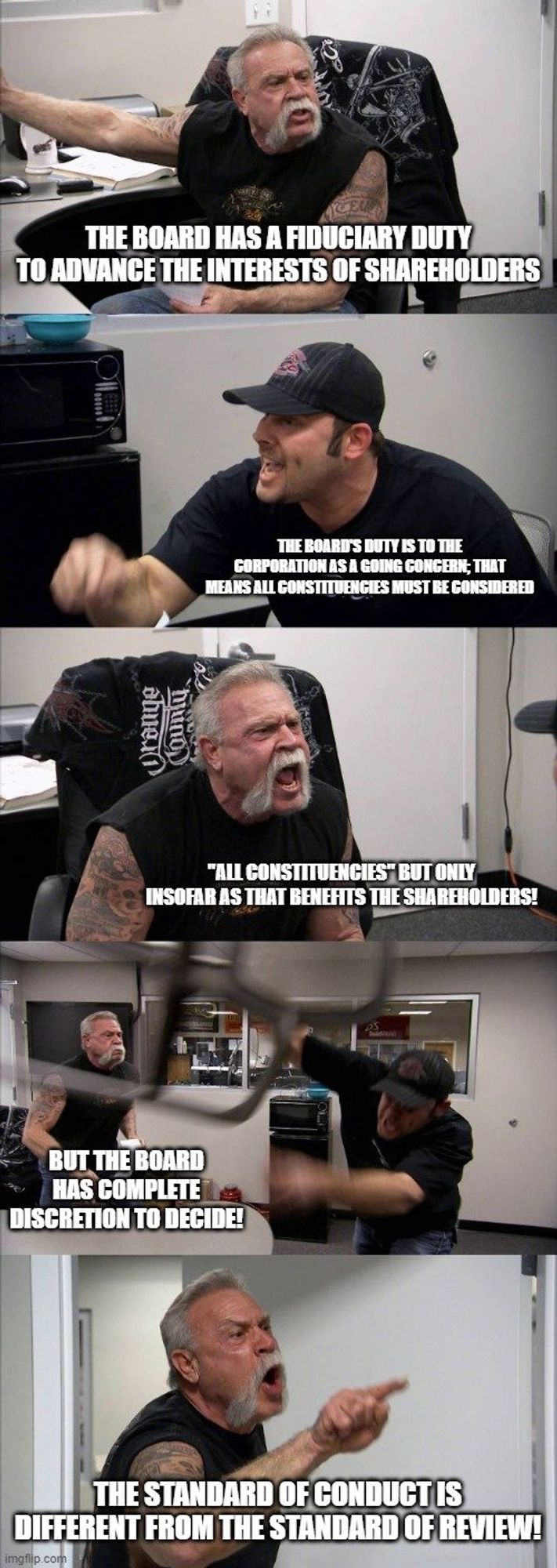
Also, I’m very proud of this meme I made:

E8831d72-6284-44d5-b15c-0e87ffc7551e


Touro University Jacob D. Fuchsberg Law Center Seeking to Fill
Four Tenure Track Positions in Property, Business Organizations, Trusts and Estates, Tax, and Evidence

The Touro University Jacob D. Fuchsberg Law Center is pleased to announce that it is currently seeking outstanding applicants for four tenure-track appointments to its full-time faculty starting in August 2025. The law school welcomes applications from candidates interested in teaching Property, Business Organizations, Trusts and Estates, Tax, and Evidence.

Ideal candidates must have a J.D. degree from an ABA accredited law school and a commitment to teaching in an environment dedicated to excellence in teaching and mentoring of students. We look for innovative faculty with a preference for both practice and teaching experience. Applicants must demonstrate a commitment to service to legal education and to the wider community as well as a desire to engage in the intellectual life of the Law Center. With one of the most diverse student bodies in the country, Touro Law Center is dedicated to the aims of diversity and strongly encourages applications from women and minorities.  Applicants are expected to be willing and capable of teaching in-person and remotely and familiar with best practices in both modalities. 

Touro Law Center, a member of the Association of American Law Schools (AALS), is part of the Touro University. Established in 1970 to focus on higher education for the Jewish community, the Touro University has grown to serve a widely diverse population. We are uniquely attuned to the importance of an education for students of all backgrounds and circumstances.

Located on beautiful and historic Long Island with its many beaches, coastlines, and parks, Touro Law Center has a unique location directly across the street from the federal and state courts, providing substantial opportunities for teaching and learning. Within the New York City metropolitan area, we are a train ride to Manhattan and an even shorter train ride to JFK Airport.

If interested, all applicants must apply through the portal here.

Questions about the positions may be directed to Professor Laura Dooley, ldooley@tourolaw.edu, Chair, Faculty Appointments Committee.

The University of Maine School of Law, in the thriving and increasingly diverse coastal community of Portland, Maine, invites applications for four full-time faculty positions to begin in 2025 – two doctrinal and two clinical.  The Law School is particularly interested in doctrinal candidates whose focus includes criminal law and related subjects (including criminal procedure); and property law and related subjects (including land use and environmental law).  The Law School is interested in clinical faculty to direct its Youth Justice Clinic and direct its new Business Law Clinic.

Applicants must possess a J.D. degree, an excellent academic record, a record or promise of high scholarly achievement (particularly for doctrinal positions), and a record or promise of successful teaching and mentoring students. Both lateral and entry level candidates will be considered. Rank and salary will be competitive and commensurate with qualifications and experience. Members of minority groups, women, and others whose background would contribute to the diversity of the Law School are encouraged to apply.

Application materials should include a cover letter, C.V., and research agenda. Please direct application materials and questions to the chair of the Appointments Committee, Professor Anthony Moffa, at the following email address: mainelawsearch@maine.edu.

Review of applications will begin immediately and continue until the position is filled.

The University of Maine System is an EEO/AA employer.  All qualified applicants will receive consideration for employment without regard to race, color, religion, sex, national origin, sexual orientation, age, disability, protected veteran status, or any other characteristic protected by law.

The Southeastern Association of Law Schools (SEALS) 2025 annual meeting is scheduled for July 26-Aug. 2 at the Omni Resort in Amelia Island, Florida.I am committed to conjure up ideas for business law panels and discussion groups at the conference.  But before I approach that task, I want to follow up on Haskell’s recent post, SEALS Conference Reflection — Mind, Soul, and Body?, from August 28th.

In that post, Haskell made the following observations:

Traditionally, legal academics do an excellent job sharpening the mind. “Think like a lawyer” is a phrase even my colleagues across campus know. The soul gets much less attention at most schools, but that seems to be changing a bit, especially with increasing concerns for lawyer well-being.

The body, however, seems almost entirely neglected both at the SEALS Conference and at law schools nationwide. Yes, there were tennis and pickleball tournaments, but I don’t think there was a single panel related to the physical health of our students, faculty, and staff.

I know he’s right.  So, in the comments to his post, I suggested a SEALS discussion session on physical wellness.  I want to start the process of putting together that session through this post.

The premise underlying the discussion group emanates from Haskell’s post. 

Physical wellbeing is a critical foundation to what we do.  It is different for each of us based on our age, sex, gender, race, health history, genetic make-up, and more.  Our ability to navigate or address challenges to our physical health over time impacts our capabilities and our happiness.  By sharing our experiences and knowledge about physical wellbeing, we can make each other stronger.

So, will you join me in this SEALS discussion group?  If so, let me know in the comments or by email.    I look forward to hearing back and working with some of you on this important SEALS program.  I appreciate Haskell’s original post for planting a seed for this.

Dear BLPB Readers:

“The American Business Law Journal (ABLJ) is currently accepting submissions for Volume 62 (2025).  

The ABLJ is a faculty-edited, double blind peer-reviewed journal, continuously published since 1963. The journal is ranked is ranked #2 in the 2023 Washington & Lee Law Journal Rankings for journals in Business, Corporations and Securities Law. It is ranked as an “A” journal by the Australian Business Deans Council.

Our mission is to publish only top quality law review articles and essays that make a scholarly contribution to all areas of law that impact business theory and practice, either U.S. or comparative in scope. We search for those articles that articulate a novel research question and make a meaningful contribution directly relevant to scholars and practitioners of business law. The blind peer-review process means legal scholars well-versed in the relevant specialty area have determined selected articles are original, thorough, important, and timely, and peer editors provide expert feedback and support throughout the editorial process. 

The ABLJ is published quarterly. Articles should be between 16,000 and 20,000 words (inclusive of footnotes). Essays should be between 7,000 and 10,000 words (inclusive of footnotes). 
 
Authors may submit their manuscripts and CVs/resumes through Scholastica or directly via email to Ruth Jebe, Managing Editor at abljsubmission@alsb.org. 
 
For more information on submissions, please review Author Guidelines information on the ABLJ Wiley website.”

This time, it’s Brazil.

If you’re not following the saga, the story is apparently that ex-Twitter, now controlled by Elon Musk (not the CEO, though; you can’t even really say he’s the owner without qualifying about the interests of other investors and – don’t forget – the debtholders), ignored the order of Brazilian Supreme Court Justice Alexandre de Moraes to remove certain accounts associated with hate speech and misinformation.  Apparently out of fear that Twitter’s Brazilian employees would be arrested, Twitter shut down its Brazilian offices.  At that point, Twitter was out of compliance with a Brazilian requirement that a legal representative be present in the country.  So, Justice de Moraes ordered that access to Twitter be blocked throughout Brazil.  (Legal challenges to that order continue)

That’s not great for Twitter, but it turns out, it was even worse for Starlink, a wholly-owned subsidiary of Musk-controlled SpaceX, because the Justice ordered that Starlink’s financial accounts be frozen in order to force payment of fines owed by Twitter.  Musk at first insisted that he would not block access to Twitter via Brazilian Starlink, then – on that point – relented.  Shortly thereafter, it was reported SpaceX was evacuating its personnel from the country.  As the Wall Street Journal put it, “Starlink’s entanglement in a dispute originally about X is a stark illustration of how some government officials around the world may draw few distinctions between enterprises that Musk runs.”

So, all of this has the makings of a great introductory classroom discussion of corporate separateness, enterprise liability, and veil-piercing.  I have no idea what the law on this is in Brazil, but let’s talk about how we’d analyze this under American law.

(more under the jump)

Continue Reading In Which Elon Musk Once Again Becomes a Classroom Hypothetical