
The WVU College of Law’s Center for Energy and Sustainable Development is seeking a fellow for 2014-16, and the details are below.  As I  have written before, the Future of Business is the Future of Energy. Just today, the New York Times Dealbook has an article, Norway’s Sovereign Wealth Fund Ramps Up Investment Plans, which notes: 

Norway’s giant sovereign wealth fund said on Tuesday that it would manage its $884 billion portfolio more aggressively over the next three years, taking larger stakes in companies and increasing its real estate portfolio.

. . . .

The fund’s investments have grown increasingly sophisticated under Yngve Slyngstad, the chief executive of Norges Bank Investment Management, who came to the fund in 1998 to build an equity portfolio and became C.E.O. in 2008. Since the end of 2007, equities have increased as a percentage of the portfolio to about 61 percent from 42 percent.

Mr. Slyngstad has also diversified the holdings into smaller companies and into emerging markets, but the stock investments remain concentrated in Europe and North America. The fund’s largest equity holdings are all companies based in Europe, including Nestlé, NovartisHSBC Holdings, the Vodafone Groupand Royal Dutch Shell.

The fund has been under pressure from environmental groups and some political parties in Norway to shed investments in oil and natural gas and coal companies and to increase its green investments. The government has so far largely resisted. It created a panel of experts this year to study the issue.

Understanding the interplay between energy, finance, and the environment is becoming more and more critical to businesses (and their lawyers).  Please share this opportunity with anyone you know who might have an interest in exploring this area. 

FELLOWSHIP IN 
ENERGY AND SUSTAINABLE DEVELOPMENT LAW
FOR 2014-16

Accepting Applications Until June 30, 2014

West Virginia University College of Law’s Center for Energy and Sustainable Development is now accepting applications for a Fellowship in Energy and Sustainable Development. The fellowship combines the opportunity to work with attorneys, faculty and students at the Center for Energy and Sustainable Development with the opportunity to obtain the WVU Law LL.M. degree in Energy and Sustainable Development Law. The LL.M. program provides a uniquely deep and balanced curriculum in perhaps the nation’s richest natural resource region. The fellowship position involves policy and legal research and writing, and assisting with organizing projects such as conferences and workshops.

The Center for Energy and Sustainable Development

The Center is an energy and environmental public policy and research organization at the WVU College of Law. The Center conducts objective, unbiased research and policy analyses, and focuses on promoting practices that will balance the continuing demand for energy resources—and the associated economic benefits—alongside the need to reduce the environmental impacts of developing the earth’s natural resources. One mission of the Center is to train the next generation of energy and environmental attorneys. The Center benefits from being located on the campus of a major research institution, with expanded opportunities for inter-disciplinary research and an integral role for the Center in providing the policy, legal and regulatory analyses to support the technical research being conducted across the WVU campus.

LL.M. in Energy and Sustainable Development Law

The WVU College of Law LL.M. in Energy and Sustainable Development Law is the only LL.M. program in the United States that provides a balanced curriculum in both energy law and the law of sustainable development. Working with WVUCollege of Law’s Center for Energy and Sustainable Development, LL.M. students will develop the expertise to advise clients and provide leadership on matters covering the full range of energy, environmental and sustainable development law. The LL.M. in Energy and Sustainable Development Law provides a broad and deep offering of courses, experiential learning opportunities, and practical training for every part of the energy sector. Our broad spectrum of courses allows our students to prepare to be lawyers serving energy companies, investors, environmental organizations, landowners, utilities, manufacturing companies, lawmakers, policymakers, regulators and land use professionals.

Energy and Sustainable Development Law Fellow

This fellowship is a part-time (at least twenty hours per week), two-year position from August 2014 through July 2016. The Fellow will receive an annual stipend of $20,000 and tuition remission for the LL.M. program. The Fellow would take 6-7 credits per semester allowing time for part-time work at the Center. The Fellow will further the work of the Center by pursuing research on issues relating to energy and sustainable development law and policy, under the direction of the Center’s Director and the WVU Law faculty associated with the Center. The Fellow will be expected to generate policy-oriented written work to be published through the Center and other venues such as law journals. The Fellow will also assist with projects relating to the Center’s programs, including organizing conferences and other events, and public education and outreach efforts. Efforts will be made to match project assignments with the Fellow’s interest.

Fellowship Qualifications

Candidates should possess a J.D.; a strong academic record; excellent analytical and writing skills; a demonstrated interest and background in energy, sustainability or environmental law and policy; and admission to the LL.M. program at West Virginia University College of Law (application for LL.M. admission can occur concurrently with the fellowship application).

Applicants should apply to Samatha.Stefanov@mail.wvu.edu. Please submit a letter discussing qualifications and interests, a resume, a law school transcript, a recent writing sample and contact information for three references.

We are now accepting applications. The application deadline is June 30, 2014(concurrent with the deadline for admission to the LL.M. program) or until the post is filled.

Visit our website at http://energy.law.wvu.edu/ for more information about our programs.

West Virginia University College of Law is an equal opportunity employer and has a special interest in enriching its intellectual environment through further diversifying the range of perspectives represented by its faculty and teaching staff.
Happy summer! Now that the summer solstice has passed, if you’ve ever wondered about language choice and the effects it might have on corporate behavior and objective, I invite you to check out an essay I recently made public. Spoiler Alert: I am a Seuss fan – the essay was written in conjunction with a symposium on Dr. Seuss™ and Civil Society so it requires some willing suspension of disbelief… although not entirely because I do believe that the core proposition made is sound. Here’s a short abstract:

While sustainability proponents have been building their case for why corporations should care about more than profits, this essay argues that the case for sustainability or “CSR” cannot be successfully made without engaging with the entrenched norm of shareholder primacy. This essay makes the modest yet underexplored claim that any attempt to amend, rewrite, interrogate, or, at the extreme, debunk the shareholder primacy/private purpose view of the corporation must successfully counter the “framing effect” and “framing bias” that shareholder primacy enjoys.

The full essay is available here. And if you’re in the mood for something even more off the beaten path, there is a poem in the addendum. I invite you to add your own lines/verses…

This past week, I joined a group of our business law prof colleagues at the National Business Law Scholars Conference out at Loyola Law School in Los Angeles.  Headlined by a keynote presentation on “the audience” for business law scholarship from Frank Partnoy and an author-meets-reader session on Michael Dorff‘s new book, Indispensable and Other Myths: The True Story of CEO Pay, the conference featured a staggeringly interesting array of panels on everything from standard corporate governance to financial regulation.  Kudos to the planning committee.

Steve Bainbridge presented Must Salmon Love Meinhard? Agape and Partnership Fiduciary Duties in an opening concurrent panel. If you haven’t read it yet, I recommend it.  Admittedly (as I told Steve), I have an especial interest in the Meinhard case and in the expressive function of decisional law.  But most of us in the business law professor group teach the case in one course or another, and his paper is relevant to many in that context.

Continue Reading Meinhard, Salmon, and the Expressive Role of Judicial Opinions

I hope you will excuse some self-promotion, but the third edition of my book Basic Accounting Principles for Lawyers is now available.

For those of you who aren’t familiar with the book, it’s a short, introduction to accounting principles and the accounting environment. It’s aimed at students (and lawyers) who know nothing about accounting; I try to keep the discussion as light and non-technical as possible, with a little humor sprinkled here and there. It’s intended to be used as a supplement in courses that draw on accounting, but you can also use it to pick up some accounting on your own without falling asleep. (No guarantees.)

Support a starving artist and buy a copy.

Professor Urska Velikonja has just published a new article arguing that the trend toward corporate boards with a “supermajority” – not merely a majority – of independent directors is part of a strategy by large institutional investors and corporate managers to fend off more substantive forms of corporate regulation that would reduce shareholder wealth.  Her thesis is that when corporations engage in risky and illegal behavior, they – and their shareholders – capture gains while externalizing losses; thus, large shareholders and managers have an interest in staving off real regulation.  The easiest way to do that is by advocating for greater board independence – it’s functionally a call for self-regulation. 

I think the thesis has an intuitive appeal – similar to, for example, The Failure of Mandated Disclosure, which, as Steven Bradford pointed out, argues that we too often default to additional and wasteful disclosures as a substitute for substantive regulation (see also Joan Heminway’s post on disclosure creep).

In the case of Professor Velikonja’s argument, though, I think the picture is slightly more complicated.  Many institutional investors are employee or union pension funds – in other words, their beneficiaries are exactly the third parties to whom corporate misbehavior is externalized.  It’s not obvious that they, or the funds who represent them, would prefer less substantive regulation, even if it resulted in lower corporate profits; however, the fund fiduciaries – in their capacity as fund fiduciaries – only have limited tools available to protect their beneficiaries.   They can advocate for better corporate governance, but it’s not obvious that they can, consistent with their fiduciary obligations, advocate for greater corporate regulation.  (David Webber discusses some of the limits of fiduciary pension plan discretion in The Use and Abuse of Labor’s Capital).  Anyway, given these constraints, I am not certain that it is fair to say that institutional investors as a group prefer to advocate for corporate governance reforms over more meaningful regulation – for at least some of them, their options may be somewhat limited.

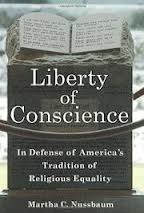
In various airports and airplanes over the past few weeks I read University of Chicago professor Martha Nussbaum’s (University of Chicago) book on religious equality in America entitled Liberty of Conscience (2008).  Even though this book predates the Hobby Lobby case, it addresses a number of underlying issues at play in the case. 

Liberty of Conscience

More after the break.

Continue Reading Nussbaum on Liberty of Conscience

Regular readers of this blog have seen several posts discussing the materiality of various SEC disclosures. See here and here for recent examples. I have been vocal about my objection to the Dodd-Frank conflict minerals rule, which requires US issuers to disclose their use of tin, tungsten, tantalum and gold deriving from the Democratic Republic of Congo and surrounding nations, and describe the measures taken to conduct audits and due diligence of their supply chains. See this post and this law review article.

Last year SEC Chair Mary Jo White indicated that she has concerns about the amount and types of disclosures that companies put forth and whether or not they truly assist investors in making informed decisions.  In fact, the agency is undergoing a review of corporate disclosures and has recently announced that rather than focusing on disclosure “overload” the agency wants to look at “effectiveness,” duplication, and “holes in the regulatory regime where additional disclosure may be good for investors.”

I’m glad that the SEC is looking at these issues and I urge lawmakers to consider this SEC focus when drafting additional disclosure regulation. One possible test case is the Business Supply Chain Transparency on Trafficking and Slavery Act of 2014 (H.R. 4842) by Representative Carolyn Maloney, which would require companies with over $100 million in gross revenues to publicly disclose the measures they take to prevent human trafficking, slavery and child labor in their supply chains as part of their annual reports.

The sentiment behind Representative Maloney’s bill is similar to what drove the Dodd-Frank conflict minerals rule (without the extensive audit requirements) and the California Transparency in Supply Chains Act (CTSA). In her announcement she stated,  

“Every day, Americans purchase products tainted by forced labor and this bill is a first step to end these inhumane practices. By requiring companies with more than $100 million in worldwide receipts to be transparent about their supply chain policies, American consumers can learn what is being done to stop horrific and illegal labor practices. This bill doesn’t tell companies what to do, it simply asks them to tell us what steps they are already taking. This transparency will empower consumers with more information that could impact their purchasing decisions.”

While the Conflict Minerals and CTSA are “name and shame” laws, which aim to change corporate behavior through disclosure, the proposed federal bill has a twist. It requires the Secretary of Labor, the Secretary of State and other appropriate Federal and international agencies, independent labor evaluators, and human rights groups, to develop an annual list of the top 100 companies complying with supply chain labor standards.

I don’t have an issue with the basic premise of the proposed federal law because human trafficking is such a serious problem that the American Bar Association, the Department of Labor, and others have developed resources for corporations to tackle the problem within their supply chains. A number of states have also enacted laws, and in fact Republican Florida Governor Rick Scott, hardly the poster child for liberals, announced his own legislation this week (although it focuses on relief for victims).

Further, to the extent that companies are using the 2011 UN Guiding Principles on Business and Human Rights to develop due diligence processes for their supply chains, this disclosure should not be difficult. In fact, the proposed bill specifically mentions the Guiding Principles. I don’t know how expensive the law will be to comply with, and I’m sure that there will be lobbying and tweaks if the bill gets out of the House. But If Congress wants to add this to the list of required corporate disclosures, legislators should monitor the SEC disclosure review carefully so that if the human trafficking bill passes, the agency’s implementing regulations appropriately convey legislative intent. 

I know that corporations  are interested in this issue because I spoke to a reporter yesterday who was prompted by recent articles and news reports to write about what boards should know about human trafficking in supply chains. As I told the reporter, although I applaud the initiatives I remain skeptical about whether these kinds of environmental, social and governance disclosures really affect consumer behavior and whether these are the best ways to protect the intended constituencies. That’s what I will be writing about this summer. 


The Investment Company Institute released its annual factbook (summarizing data trends for 2013) in May.  The full report is available for download here, and chapter overviews are available here.  

Like many others, I discovered the ICI factbook when I first started researching mutual funds.  I have cited to the annual reports extensively in three subsequent papers.  Finding this source was, and continues to feel like a stroke of really good luck because it can provide numbers to back an assertion and is a excellent source for describing current market trends.  The graphs are also excellent visual aids for presentations and class (with attribution, of course).

I plan to highlight a few sections of the report over the next several weeks.  This week’s installment will focus on trends of mutual fund investment.  The academic debate about indirect ownership long ago peaked, but the trend hasn’t.  To my mind, understanding the ways in which how people invest in the market (through funds) changes or exerts pressure on our corporate governance model and the role that funds play in our securities market are two of the biggest challenges of corporate law.  More on this topic later.  For now, feast on the data compiled, computed and charted for you by ICI:

Figure 6.1

These numbers drove the U.S. Mutual Fund market–the largest in the world– with over $15T in assets under management.

How are those assets allocated?  

The majority of U.S. mutual fund assets were in long-term funds. Equity funds made up 52 percent of U.S. mutual fund assets at year-end 2013 (Figure 2.1). Domestic equity funds (those that invest primarily in shares of U.S. corporations) held 38 percent of total industry assets. World equity funds (those that invest primarily in non-U.S. corporations) accounted for another 14 percent. Bond funds accounted for 22 percent of U.S. mutual fund assets. Money market funds (18 percent) and hybrid funds (8 percent) held the remainder.

How does the mutual fund market reflect consumer/investor confidence?

Lower stock market volatility also may have had a positive impact on investors’ willingness to take above-average or substantial investment risk in 2013…..In 2008, 23 percent of households were willing to take above-average or substantial investment risk. From 2009 through 2012, this level dropped to 19 percent. …In 2013, households’ willingness to take above-average or substantial investment risk increased to 21 percent, while risk aversion (as measured by the percentage of households willing to take only below-average or no risk) declined to 43 percent.

For more information on mutual fund trends, read the second chapter of the report, available here.

-Anne Tucker