
Shortly after President Barack Obama’s first press conference in 2009, the Huffington Post published an article, “When Did You Stop Beating Your Wife?”, that challenged the false premises of many of the questions being asked of the new president. The article opens by noting:

Sooner or later every human being on the face of this planet is confronted with tough questions. One of the toughest and most common is the infamous loaded question, “when did you stop beating your wife?” which implies that you have indeed been beating your wife. How do you answer without agreeing with the implication? How do you not answer without appearing evasive?

The author’s solution is that you should refuse to answer the question by simply responding, “no,” or by challenging the false assumption imbedded in the question. But what if the question is not asked at a press conference, by opposing counsel in the courtroom, or at a cocktail party, but as part of a federally mandated disclosure regime? This is a dilemma issuers may face if the Securities and Exchange Commission’s (SEC’s) proposed rule to “Enhance and Standardize Climate-Related Disclosures for Investors” is adopted.

Existing SEC disclosure rules and guidance already require that issuers disclose man-made-climate-change-related risks that would materially impact market participants’ investment decisions concerning the company. Nevertheless, the SEC has determined that the existing regime grants boards too much discretion in deciding whether and how to disclose climate risk—which has resulted in climate-related disclosures that are insufficiently “consistent,” “comparable,” and “clear.”

The SEC’s proposed changes to the disclosure regime would compel all publicly-traded companies to answer specific, standardized climate-related questions concerning, for example, the physical risks of human-caused-climate-related events (e.g., “severe weather events and other natural conditions”) on their business models and earnings in a manner that will be consistent and comparable with the answers of the thousands of other regulated issuers. But what if the boards’ honest answers to these difficult questions cannot be made to fit the SEC’s proposed one-size-fits-all mold? What if some issuers question the premises of the questions?

What if, for example, a board is not convinced that extreme weather events such as hurricanes, tornadoes, wildfires, droughts, etc., can be traced directly to human versus non-human causes? In such circumstances, mandatory reporting on either transitional or physical risks due to human-caused climate change might look a lot like mandatory disclosures on questions like “When did you stop beating your spouse?” Can issuers satisfy the SEC’s reporting requirements by simply answering “no,” as the Huffington Post author suggested President Obama should have answered such questions, or by challenging the premise of the question?

There is no doubt that the extent, effects, and appropriate response to human-caused-climate change is a partisan issue in the United States. One Vanderbilt survey found that 77.3% of respondents who identify as “liberal” believe that climate change is a serious problem, but only 17.2% of those who identify as “conservative” regard climate change as a serious problem. Moreover, the division over the impacts and appropriate responses to climate change are not just political—they exist in the scientific community as well. For example, Steven E. Koonin, a former Undersecretary for Science in the U.S. Department of Energy under President Obama, and member of the Academy of Sciences, recently published a book, Unsettled: What Climate Science Tells Us, What It Doesn’t, and Why It Matters, which questions a number of the premises informing the SEC’s proposed disclosure regime.

Take, as just one example, the proposed rule’s mandatory disclosure of “physical” risks to issuers due to extreme weather events resulting from human-caused-climate change. The home page of the Task Force on Climate-Related Financial Disclosures, which the SEC credits as a principal source for its proposed rule, includes a video presentation by former Democratic Presidential Candidate, Michael Bloomberg, stating that climate change is a “crisis that shocked the [financial] system” in 2021: “wildfires, heat, flooding, and other extreme weather events have devastated communities and cost trillions of dollars this year alone.”

The premise of Bloomberg’s statement, which the SEC has effectively adopted, is that our models can reliably trace these extreme weather events to human causes. But is this true? Koonin points out that while a recent U.S. government climate report claims that heat waves across the U.S. have become more frequent since 1960, it “neglected to mention that the body of the report shows they are no more common today than they were in 1900.” Koonin also points out similar holes in common claims that human-caused climate change is responsible for extreme weather events like flooding, wildfires, and hurricanes. More fundamentally, Koonin argues that the new field of “event attribution science,” which provides the principal basis for claimed causal links between human influences and extreme weather events is “rife with issues,” and he is “appalled such studies are given credence, much less media coverage.”

None of the above should be interpreted as an attempt on my part to take sides in the climate debate. (I am no authority; my PhD is in philosophy, not in anything useful.) It is just to illustrate how these issues continue to be highly contested subjects of debate in both political and scientific circles.

The worry I raise here is that this sphere of discourse is far too contested and politically charged to be the subject of a mandatory disclosure regime. In response to challenges by Commissioner Hester Peirce and others that the SEC’s proposed rule on climate disclosure compels speech in a manner inconsistent with the First Amendment, Commissioner Gensler has responded that the reporting requirements do not mandate content. But, again, is this correct? If the disclosure questions are loaded, don’t they (at least implicitly) dictate the content of the response—particularly if the questions are carefully designed to elicit “standardized,” “consistent,” “comparable,” and “clear” answers?
Professor Julie Hill recently posted Bank Access to Federal Reserve Accounts and Payment Systems.  It’s an excellent and important article.  As I’ve blogged about (here) and written about (here), access to a master account at the Fed is an arcane, but highly important issue.      

Here’s the abstract for Professor Hill’s article:

Should the Federal Reserve process payments for a Colorado credit union established to serve the cannabis industry? Should the Federal Reserve provide an account for a Connecticut uninsured bank that plans to keep all its depositors’ money in that Federal Reserve account? Should the Federal Reserve provide payment services for an uninsured, government-owned bank in American Samoa? What about Wyoming cryptocurrency custody banks? Should they have access to Federal Reserve accounts and payment systems? Although the Federal Reserve has recently considered account and payment services applications from these novel banks, its process for evaluating the applications is not transparent.

This Article examines how the Federal Reserve decides which banks get access to its accounts and payment systems. It explores the sometimes-ambiguous statutory authority governing the Federal Reserve’s provision of accounts and payments and chronicles the Federal Reserve’s longtime policies limiting access for risky banks. Because the statutes, regulations, and Federal Reserve policies are largely silent about the process banks encounter when seeking accounts and payment services, the Article analyzes recent novel account applications. These applications reveal confusion. Most district Federal Reserve Banks do not explain how banks should apply for an account or what information they should provide. It is not clear who decides which banks are legally eligible to receive accounts. While the Federal Reserve Banks all evaluate risk associated with account and payments requests, the Reserve Banks may not have the same risk tolerances. There are no processes to encourage consistent decisionmaking across the twelve Federal Reserve Banks. Getting a decision takes years. These applications show that the Federal Reserve needs a transparent framework for evaluating access requests. Unfortunately, the Federal Reserve’s recently proposed guidelines, which consist primarily of a risk identification framework, do not go far enough.

Last May, I posted on a wonderful two-day event–a symposium hosted over Zoom by Brooklyn Law School celebrating the career of Professor Roberta Karmel.  As I noted then, I was honored to be invited to speak at the event. It was so inspiring.

I have just posted the essay that I presented at the symposium, “Federalized Corporate Governance: The Dream of William O. Douglas as Sarbanes-Oxley Turns 20” (recently published by the Brooklyn Journal of Corporate, Financial & Commercial Law), on SSRN.  It can be found here

The roadmap paragraph from the essay’s introduction offers a brief description of the essay’s contents.

This essay focuses on the federalization of U.S. corporate governance since Sarbanes-Oxley—and, more specifically, since Roberta’s article was published in 2005 [Realizing the Dream of William O. Douglas — The Securities and Exchange Commission Takes Charge of Corporate Governance, 30 DEL. J. CORP. L. 79 (2005)]—pulling forward key aspects of Roberta’s work in Realizing the Dream. To accomplish this purpose, the essay first briefly reviews the contours of Roberta’s article. It then offers observations on corporate governance in the wake of (among other things) the public offering reforms adopted by the U.S. Securities and Exchange Commission (SEC) in 2005, the SEC’s 2010 adoption of Rule 14a-11, the 2010 enactment of the Dodd–Frank Wall Street Reform and Consumer Protection Act (Dodd-Frank), the 2012 enactment of the Jumpstart Our Business Startups Act (JOBS Act), and recent adoptions of corporate charter and bylaw provisions that constrain aspects of shareholder-initiated federal securities and derivative litigation. Finally, before briefly concluding, the essay provides brief insights on the overall implications for future corporate governance regulation of these and other occurrences since the publication of Realizing the Dream.

I found it great fun to build on the architecture of Roberta’s earlier work in writing this piece.  Work on the essay allowed me to appreciate in new ways the many linkages between corporate governance and corporate finance–an appreciation that will no doubt continue to infuse my teaching with new ideas over time.  I hope some of you will take time out to read the essay and that you gain some insight from it.   Comments are, of course, always welcomed.

Further to my post from last Sunday, I received notice that Northwestern continues to accept applications for full-time lecturers for its Master of Science in Law program.  (The soft submission deadline was April 8.)  Preferred qualifications include a JD and 3-5 years of experience teaching or working in a field relevant to the MSL curriculum, such as a legal, business, entrepreneurship, or regulatory setting.  Applicants should submit a CV and a cover letter explaining interest in the position through Northwestern’s online application system at this link: https://facultyrecruiting.northwestern.edu/apply/MTQ2Mg%3D%3D

The blog has previously covered the ongoing litigation over California’s director diversity statutes, with Ann contributing this insightful writeup of an earlier Ninth Circuit decision.  The case has returned to the Ninth Circuit on appeal again after the District Court denied a motion for a preliminary injunction.   The case involves a shareholder claim challenging SB 826 on the theory that the law exerts pressure on shareholders to unconstitutionally discriminate when they cast their votes for directors in shareholder elections out of fear that electing a board without enough women will subject the corporation to a fine.

I joined with seventeen other securities and business law scholars to file an amicus brief arguing that the shareholder claim should be classified as a derivative claim.  Many thanks to all who joined and many apologies to Faith Stevelman who joined before the filing deadline and sent thoughtful comments.  In the rush to finalize the brief, I didn’t get her name on the final list of amici.  

This is the summary of the argument:

This shareholder derivative litigation should be decided under ordinary rules for shareholder litigation.  Plaintiff has asserted claims and sought a preliminary injunction as a shareholder of OSI Systems, Inc. (OSI).  Plaintiff alleged that he fears California’s law may harm OSI and that this fear might hypothetically influence him to cast his few shareholder votes in some discriminatory way in a corporate election to select a slate of directors.  His alleged injury is nothing more than an abstract “voting consideration” affecting how he might cast his vote to avoid an injury to OSI, and derivatively to the value of his shares.  The Plaintiff’s standing derives from fear of a potential corporate injury.  As Plaintiff’s alleged injury is in no way meaningfully independent from an entirely hypothetical future injury to OSI, this is a derivative claim.

The record makes clear that Plaintiff’s nominal stockholdings give him no meaningful prospect of influencing a director election for OSI’s board.  OSI elects its board through a plurality voting system.  Plaintiff’s paltry holdings have no meaningful prospect of influencing the outcome of any director election. Moreover, OSI’s director elections have been uncontested since it went public.  At the time the Ninth Circuit first considered this litigation, Plaintiff presented his complaint as though his votes might matter in some contested election where he had to make some meaningful decision between rival slates of directors.  Meland v. Weber, 2 F.4th 838, 847 (9th Cir. 2021) (“Meland I”) (“Meland has alleged that he is required or encouraged to make discriminatory decisions in voting for board members”).  The facts now reveal that this is not the case.  Plaintiff has never faced any meaningful choice between different directors implicating his voting decision.  The few votes available to cast from his nominal shareholdings would never have mattered because there were no other candidates.

Ultimately, the right to bring corporate claims properly belongs to the corporation and not to each shareholder.  OSI’s existing board has the authority under Delaware law to decide whether and when to pursue litigation and challenge statutes affecting the corporation.  SB 826 primarily impacts the board because the board makes all the meaningful decisions about whether to remain subject to SB 826 and whom to nominate as a director.  Any fine imposed would fall upon OSI and OSI would have standing to challenge it—if it deemed it in its interest to do so.

Allowing shareholder plaintiffs with nominal stakes to assert claims on the theory that laws encourage them to vote to avoid harm to the corporation risks destroying the distinction between direct and derivative claims.  Granting shareholders standing to litigate these claims would deny the corporate board the ability to maintain exclusive control over the corporation’s litigation assets.


The NYU Pollack Center invites applications for a Wagner Fellowship for the 2022-2023 academic year.  Thanks to a generous grant of the Leonard Wagner Testamentary Trust, the Center for Law & Business offers a one-year graduate research fellowship to help develop future law academics with an interest in the social control of business institutions and the social responsibility of business.

Requirements:

Applicants must hold a JD or LLM degree and have practiced law for two years. Preference is given to applicants with a research interest in the legal regulation of business and ethics, and to those who have a degree from NYU School of Law. Fellows are expected to make a full-time commitment to their graduate research at the center. Involvement in Pollack Center research ventures is required.

How to Apply:

Applications must be received by May 16th 2022. Applicants must submit the following materials*:

  • Statement describing academic and research interests
  • Proposal for the research project during the fellowship year
  • Curriculum Vitae
  • Law school academic transcripts
  • A letter of recommendation
  • A writing sample, preferably a scholarly paper written in the past two years

*Not all materials are required for every applicant.  Please inquire regarding required materials.

More information is available at the Pollack Center Website. Please direct all materials to Stephen Choi and David Yermack, Directors. We prefer that you first e-mail materials to Anat Carmy-Wiechman at wiechman@mercury.law.nyu.edu, followed by a physical copy mailed to the NYU Center for Law & Business at 139 MacDougal Street, Room 116, New York, NY 10012.

Please direct inquiries to Anat Carmy Wiechman at wiechman@mercury.law.nyu.edu or (212) 992-6173.

By now, I’m sure everyone is very much aware that Elon Musk took a giant stake in Twitter, was late filing his Schedule 13G (and failed to include a certification that he intended to hold passively), was added to Twitter’s board, and updated his Schedule 13G to a 13D, leaving a question whether he should have been filing on 13D all along.  Once Musk did reveal his stake, Twitter’s stock price shot up.

The SEC has not historically policed the Schedule 13G/Schedule 13D filing requirements with great vigor, though Gary Gensler has highlighted the potential harm to traders/markets when they trade in ignorance of the presence of a potential activist investor; see also United States v. Bilzerian, 926 F.2d 1285 (2d Cir. 1991) (“Section 13(d)’s purpose is to alert investors to potential changes in corporate control so that they can properly evaluate the company in which they had invested or were investing.” (quotations and alterations omitted)).

Matt Levine asks whether this means Elon Musk engaged in insider trading, since he managed to save maybe $143 million by continuing to amass Twitter stock before finally revealing his holdings.

I’m going to ask something else: do the traders who sold between the time he was supposed to file the 13G, and the time he actually filed it, have a claim?  And it seems pretty much, yes they do.

And boy howdy this got long, so, under the cut it goes:

Continue Reading So Elon Musk didn’t file a form on time

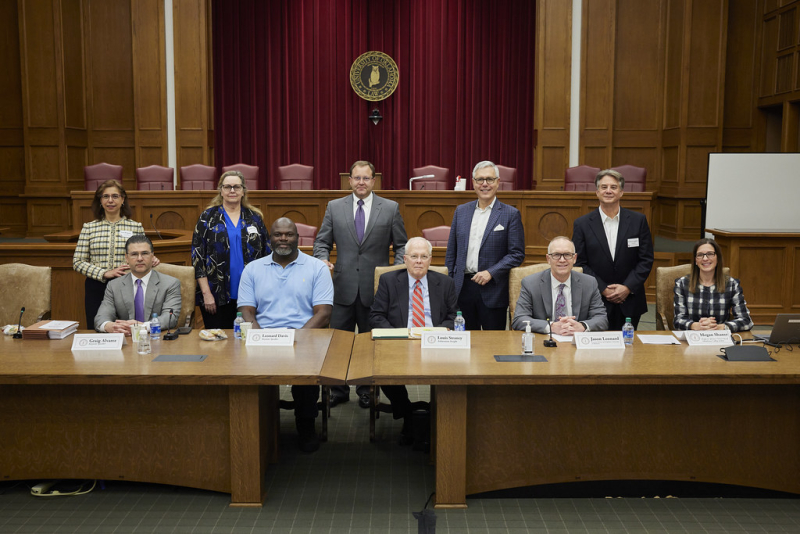
Recently, I had the pleasure of attending “Avoiding Fraud in the ERA of NIL and Student Athletes,” the inaugural event of the Wilkinson Family Speaker Series at the University of Oklahoma College of Law.  I learned so much and had a chance to meet several of the incredible speakers!  I wanted to share with BLPB readers a summary from Laura Palk, the Assistant Dean of External Affairs, so that those interested in these topics will be on the lookout for future events in this series. 

“OU Law Dean Katheleen Guzman in collaboration with VP for Intercollegiate Athletics, Joe Castiglione, hosted a two-day discussion regarding investor fraud and the student athlete in light of the new name image likeness rules, starting with a fireside chat with former NFL player, Leonard Davis, and his attorney, Graig Alvarez. They were joined by moderator, Lou Straney, to share their story of how athletes are frequently targeted by trusted friends and advisors and how to avoid becoming a target. The next day, Professor Megan Shaner, along with national experts Jeff Abrams, Lisa Braganca, Robert Cockburn, Richard Frankowski, Professor Nicole Iannarone, Jason Leonard, Robin Ringo and Professor Andrew Tuch, presented a symposium educating the OU community and alumni about various types of investment fraud, how to identify it, prevent it and litigate it.”

OU Law Photo

It’s been one week since I announced and started posting in this virtual symposium on the NextGen Bar Exam. Thanks to Josh, Ben, and John for joining me in commenting on the proposed content scope outline relating to Business Associations and Relationships.  You can find their posts here, here, and here, respectively. 

We have raised issues about terminology.  And there are a few areas that are lacking in clarity or specificity.  In addition, two important overarching points have emerged to date in our posts.  One is that it is important to indicate the source of the law being tested, since the default rules operative in various areas of LLC and corporate law are not the same in the dominant national statutory frameworks.  (I offer another example of how this may matter in the discussion of corporate director and officer fiduciary duties, below.)  The other is that the default rules in business associations law tell only part of the story.   Constitutional issues, authorized private ordering, and decisional law that both supplements and interprets state legislative enactments can all play roles.

In this post, I offer a few more points that illustrate or add to these observations.

Partnership Nomenclature

The outline notes that distinctions between or among partnerships (denominated “general partnerships” in the outline), limited liability partnerships, and limited partnerships will be tested.  That seems appropriate.  But the next few prompt all refer to “general partners.”  Neither partnerships nor limited liability partnerships have general partners.  They just have partners.  Only limited partnerships distinguish general partners from limited partners.

Partnership Governance

Only the duty of loyalty between and among partners and the partnership is proposed to be tested as a matter of partnership fiduciary duties.  Why not care?  And what about the obligation of good faith and fair dealing?  These governance rules are all equally important.  And duties of care and loyalty exist in agency law, unincorporated business associations law, and corporate law.

Moreover, the outline notes under “Duty of loyalty”: “This topic includes the consequences of a partner acting outside the scope of the partner’s authority to bind the partnership.”  This annotation is perplexing to me.  I have two principal substantive comments about it.

First, a partner’s authority to bind the partnership is a matter of agency authority–the authority to transact with third parties.  A partner’s fiduciary duties are a matter of internal governance (as the relevant outline topic, “Rights of . . . partners among themselves” indicates).  Two separate parts of the Revised Uniform Partnership Act (the “RUPA”) address relations with third parties and internal governance–Articles 3 and 4, respectively.  So, the annotation introduces an apples-and-oranges problem–the illumination of an internal governance rule by reference to a third-party relations rule.

Second, the duty of loyalty of partners in a RUPA partnership is relatively specific.  It consists of three exclusive components: 

(1) to account to the partnership and hold as trustee for it any property, profit, or benefit derived by the partner in the conduct and winding up of the partnership business or derived from a use by the partner of partnership property, including the appropriation of a partnership opportunity;

(2) to refrain from dealing with the partnership in the conduct or winding up of the partnership business as or on behalf of a party having an interest adverse to the partnership; and

(3) to refrain from competing with the partnership in the conduct of the partnership business before the dissolution of the partnership.

It is hard for me to see how a partner acting outside of their agency authority would implicate any of the three components of the duty of loyalty.  That conduct does not, of itself, result in the partner: deriving or taking any property, profit, or benefit of or belonging to the partnership; having conflicting interests, or competing with the partnership.

Corporations and LLCs, Generally

I agree with John that LLCs and corporations should each have their own category.  The doctrinal rules (structure, governance, and finance) are simply too different.  The general categories under each (and under partnerships, for that matter)–formation, management and control, fiduciary duties, agency, third-party liability, etc.–can be almost exactly the same.   Topics like veil piercing, pre-organizational contracting, and shareholder/member litigation that apply to both corporations and LLCs in similar ways can be noted in the outline for each with a cross-reference to the other or can be called out separately in the outline (with any unique corporate or LLC nuances addressed in that broader context).

Corporate Director (and Officer) Fiduciary Duties

While Josh and Ben have focused some pointed and valuable comments on jurisdictional differences in limited liability company fiduciary duties (comments that I endorse), I am at least as troubled by jurisdictional differences in corporate fiduciary duties.  I have written in the past in this space (here, here, and here) about the challenges in teaching corporate fiduciary duty law.  Delaware’s classification of Caremark oversight duties as good faith questions actionable as breaches of the duty of loyalty runs counter to decisional law in other jurisdictions that characterizes oversight failures as breaches of the duty of care.  In sum, the relative narrowness of the fiduciary duty of care in Delaware, the capaciousness of Delaware’s duty of loyalty, and the Delaware judiciary’s reinterpretation of a director’s obligation of good faith as a component of the duty of loyalty distinguish the law of director fiduciary duties in Delaware from the law of fiduciary duties elsewhere. 

Generally

Like others, I have doubts about the fairness and efficacy of bar exams as meaningful gatekeepers for the profession.  But I assume good faith in constructing the NextGen Bar Exam.  With that in mind, any bar exam should assess the law that licensed practitioners should know.  And it should use normative terms in signaling the law to be tested and recognize the use of normative terms in evaluating performance.  In this regard, it is important to note that there are parallel types of legal rules in agency, unincorporated business associations law, and corporate law.  There are recognized, well-worn labels for describing these component legal rules in agency and business associations law.  Why reinvent the wheel?  If parallel legal doctrine from business associations and relationships laws is to be tested, the content scope outline should use the acknowledged customary descriptors for those rules.

These comments round out my thoughts on the “Business Associations and Relationships” portion of the proposed Content Scope Outlines for the NextGen Bar Exam of the Future.  I welcome additional posts and any responses here on the BLPB, and as I noted in my initial post, comments can be filed with the National Conference of Bar Examiners hereThe comment period closes on April 18, 2022.