July 2018

Hello to all from Tokyo, Japan (Honshu).  I have been in Japan for almost a week to present at and attend the 20th General Congress of the International Academy of Comparative Law (IACL), which was held last week in Fukuoka, Japan (Kyushu).  By the time you read this, I will be on my way home.

Fukuoka(Me+Sign)

As it turns out, I was at the Congress with old business law friends Hannah Buxbaum (Indiana Maurer Law), Felix Chang (Cincinnati Law), and Frank Gevurtz (McGeorge Law), as well as erstwhile SEALS buddy Eugene Mazo (Rutgers Law).  I also met super new academic friends from all over the world, including several from the United States.  I attended all of the business law programs after my arrival (I missed the first day due to my travel schedule) and a number of sessions on general comparative and cross-border legal matters.  All of that is too much to write about here, but I will give you a slice.

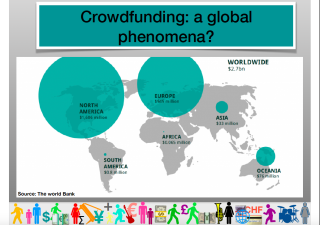
I spoke on the legal regulation of crowdfunding as the National Rapporteur for the United States.  My written contribution to the project, which I am told will be part of a published volume, is on SSRN here.  The entire project consists of eighteen papers from around the world, each of which responded to the same series of prompts conveyed to us by the General Rapporteur for the project (in our case, Caroline Kleiner from the University of Strasbourg).  The General Rapporteur is charged with consolidating the information and observations from the national reports and synthesizing key take-aways.  I do not envy her job!  The importance of the U.S. law and market to the global phenomenon is well illustrated by this slide from Caroline’s summary.
Fukuoka(GlobalCrowdfundingSlide)

The Congress was different from other international crowdfunding events at which I have presented my work.  The diversity of the audience–in terms of the number of countries and legal specialties represented–was significantly greater than in any other international academic forum at which I have presented.  Our panel of National Rapporteurs also was a bit more diverse and different than what I have experienced elsewhere, including panelists hailing from from Argentina, Brazil, Canada, France, Germany, Poland, and Singapore (in addition to me).  At international conferences focusing on the microfinance aspects of crowdfunding, participants from India and Africa are more prominent.  I expect to say more about the individual national reports on crowdfunding in later posts, as the need or desire arises.

A few outtakes on other sessions follow.

The indie hit Sorry to Bother You was recently described as “the most overtly anticapitalist feature film made in America.”

Riffing off the well-documented phenomenon that people respond to telephone calls based on the perceived race of the caller, Sorry to Bother You tells the story of a young black man, Cassius Green – Cash is Green, get it? – who goes from rags to riches by using his “white voice” for telemarketing.  As Cash climbs the corporate ladder, he is torn between his newfound prosperity and loyalty to his old friends.

But that bare description of the film’s premise is hardly preparation for the surreal dystopian fantasy that follows.  The plot is nearly beyond description, but most of the action centers on WorryFree, a labor contracting company that offers its employees dormitory-style housing and cafeteria-tray meals in exchange for lifetime work commitments – an arrangement deemed not to be slavery after congressional investigation.  A proto-anarchist movement struggles to disrupt WorryFree’s operations and unionize Cash’s workplace, but mass media and viral marketing allow even the protests to be commodified and sold as entertainment.  As such, the film dramatizes the concept of narcotizing dysfunction, where knowledge of an

Pura vida from Costa Rica. Between recovery from carpal tunnel surgery a few weeks ago and an ATV flip two days ago, I don’t have much mental or physical energy to do a full post. I haven’t mastered dictation so I’m typing this on an iPad with one hand. Next week, I’ll provide more substance as well as a preview on my September talk at our second annual BPLB symposium at the University of Tennessee. Today, I want to pass on some resources for those who don’t know anything about blockchain. 

For those who want to provide resources for students, Walter Effross has put together a great site:

Ten Reasons for Blockchain Law Literacy

The following sources come from Professor Tonya Evans at UNH, who has developed an online curriculum on blockchain:

Use Cases: 

https://medium.com/fluree/blockchain-for-2018-and-beyond-a-growing-list-of-blockchain-use-cases-37db7c19fb99

https://www.mycryptopedia.com/16-promising-blockchain-use-cases/

Education:

https://medium.com/universablockchain/blockchain-in-education-49ad413b9e12

Blockchain + Law:

http://www.abajournal.com/news/article/lawyers_can_contribute_to_the_rise_of_blockchain_by_understanding_it

https://abovethelaw.com/2018/02/blockchain-can-smart-contracts-replace-lawyers/

Bitcoin And Blockchain: What Lawyers Need To Know

Next week, I’ll talk about my research into how blockchain is used in corporate governance, compliance, supply chain management, enterprise risk management, cybersexurity, and human rights. 

The Washington Post recently ran a piece by Ridhi Tariyal, the CEO of NextGen Jane.  Tariyal describes the environment she faced raising capital as a woman in Silicon Valley and the identity performance strategies she used to project a masculine identity to access capital.  The startup now works to develop a “smart” tampon that will test “the endometrial cells shed in menstrual fluid for disease.”  At times, her startup faced extra challenges because venture capitalists tend to be overwhelmingly male and “are unaccustomed to talking about menstruation.”

She faced pressure to minimize her gender and project masculinity in different ways.  Some suggested she hire more men.  Others pushed her to shift the pitch language to strip and obscure as many references to gender or menstruation by employing odd terms such as “novel female substrate” instead of simply saying menstrual blood.  

Even though she tried these strategies to project an idealized masculinity to masculine sources of capital, the strategies simply did not work for her business model.  She explains how she came to reject them:

Ultimately, I realized I cannot project my male alter ego and simultaneously talk about my period. I had reached the limits of professional theater. The business

SnapchatLogo

One of the business law academy’s power couples, Amy and Bert Westbrook, recently posted an intriguing piece on SSRN that Bert and I have been communicating about a bit this summer.  It is entitled Snapchat’s Gift: Equity Culture in High-Tech Firms, and it is, indeed, a lovely gift–well conceived and packaged.  It is a look at dual class common equity in technology firms–and equity more generally–that confronts and incorporates many perspectives from law, economics, and other social sciences.

Some of you, like me, teach basic corporate finance in a variety of courses.  In those situations, it is important for instructors to have a handle on descriptions of the basic instruments of corporate finance–debt, equity, hybrid, and other.  What is the package of rights each instrument represents that incentivizes investors to supply money or other valuable assets?  In my classes, we ultimately discuss equity as a bundle of rights that includes potentials for financial gain and governance.  Snapchat’s Gift digs into the validity of these perceived rights in relevant part by focusing on recent changes in the primary public offering market for equity securities in the United States–in particular, the advent of highly publicized and fully subscribed initial public offerings of nonvoting common shares.

Nebraska

Details on another excellent business law professor position are posted below.

——–

Entry-Level or Experienced Faculty Position

The UNIVERSITY OF NEBRASKA COLLEGE OF LAW invites applications for entry-level and lateral candidates for two tenure-track or tenured faculty positions.

Our primary areas of interest are Civil Procedure, Business Associations, and other business law courses, including, but not limited to, Corporate Finance, Securities Regulation, Corporate Governance, Non-Profit Organizations, and Transactional Drafting.

Other needs include courses related to

  • Health Care (g., Federal Regulation of Health Care Providers, Health Care Finance, Administrative Law, Medical Malpractice, Privacy Law, Law and Medicine, Public Health Law, Bioethics and the Law, and the Law of Provider and Patient);
  • Litigation Skills and Related Courses (g., Trial Advocacy, Civil Rights Litigation, Conflicts of Law, Remedies, Pretrial Litigation, and other litigation skills courses);
  • Criminal Law (g., Federal Criminal Law, White Collar Crime, Post­Conviction Remedies, and Criminal Sentencing);
  • Environmental Law (g., Environmental Law, Water Law, and Natural Resources Law);
  • Family Law; and
  • Election Law.

Minimum required qualifications include a J.D. Degree or equivalent, superior academic record, and a demonstrated interest in relevant substantive areas. The title of Assistant or Associate Professor will

An Illinois appellate court decision that was just made available on Westlaw provides some revealing insight into Hydra, the longtime source of evil that many recognize from Captain America: The First Avenger

Hydra stated that Hydra’s manager is Ahuva Horowitz, defendant’s wife, and that she owns 100% of the membership interests of Hydra a limited liability corporation.

Xcel Supply LLC v. Horowitz, 2018 IL App (1st) 162986, ¶ 14, 100 N.E.3d 557, 561, reh’g denied (Mar. 9, 2018) (emphasis added). 

First, let’s correct the record: Hydra is listed as an LLC, a limited liability company. It is not a corporation.  

Second, I should also note, after further review, it’s not really THAT Hydra. It is apparently not this one:

In a prehuman time, a cabal of cold-blooded alien reptiles arrived on Earth, planning to start a legacy of evil. They planted the seed that would later gave birth to future evil empires. 

So, instead, the instant Hydra is Hydra Properties, LLC, which came into existence in 2009. That makes more sense, but it’s a lot less interesting.  

Still, either way, and for either Hydra, if it’s Hydra LLC, it’s not a corporation.