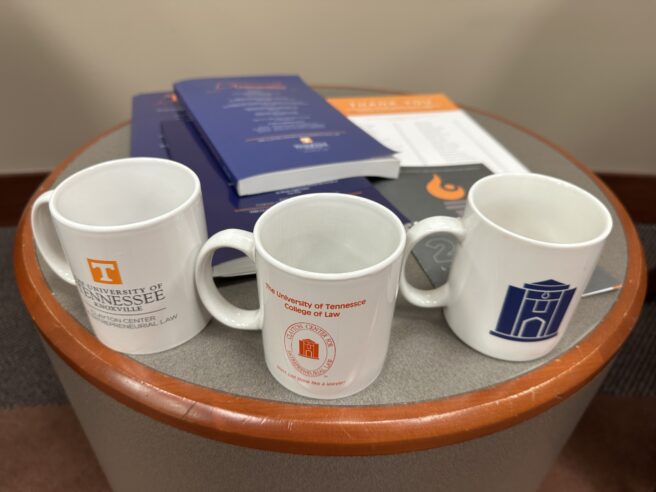
And so, we reach the end of another calendar year . . . .  And it has been a busy one for the Clayton Center for Entrepreneurial Law at Tennessee Winston Law.  The change in the calendar, like the change in seasons, always seems to be a time of reflection for me.  And that reflection typically leads to a sense of gratitude.  I will share some of what I am thankful for here.

I appreciate so much the wonderful stewardship of Brian Krumm, who directed the Clayton Center for the first seven months of 2025.  We are a student-focused institution, and Brian exemplifies that in all that he does for our business law program.  And as the ongoing coach of our students in four upcoming transactional law competitions (The Closer at Baylor Law, the Wayne State University Law & Taft Stettinius & Hollister Transactional Law Competition, Syracuse Law’s Transatlantic Negotiation Competition, and the William & Mary Colonial Cup), Brian will continue to earn my respect and gratitude as the academic year continues, for that work and so much more.

I am grateful for our newest business law colleague, Andrew Appleby.  In a semester of professional and personal

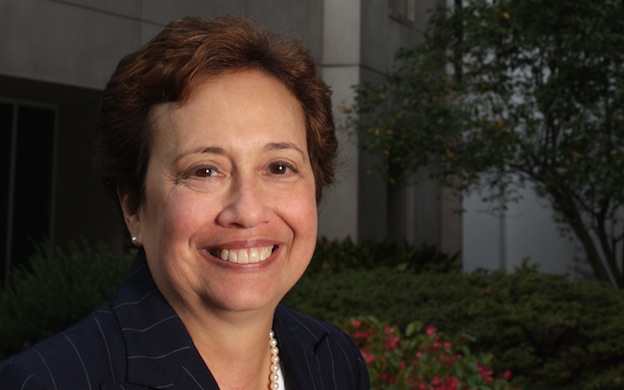
Tina L. Stark Emory Law, October 2007

Transactional lawyering and the education of transactional lawyers has been transformed by Tina L. Stark (Weisenfeld). You may have known her for her wonderful books–Drafting Contracts: How & Why Lawyers Do What They Do and Negotiating and Drafting Contract Boilerplate are on my bookshelves and those of so many others. You may have heard her speak at a conference or symposium.

Yet, many of us also knew Tina on a more personal level. Some of us had her as an instructor or as a colleague. Long a consultant and advisor to law schools, bar associations, and legal employers on transactional legal education and training, Tina also held full-time administrative and teaching appointments at Emory University School of Law and Boston University School of Law and was a visitor at Fordham University School of Law. Earlier in her career, she was an adjunct law professor at Fordham Law and the Maurice A. Deane School of Law at Hofstra University.

Tina passed away earlier this week. But her presence will continue to be felt in so many ways. She and I initially bonded over our not only our love of teaching plainly

Surprisingly, the literature on lawyer-leader development has neglected adult learning theories. This Article addresses that gap and grounds the teaching of leadership in a well-established theoretical tradition. It presents the results of a design-based research study that applies Mezirow’s transformative learning theory to the design and delivery of a leadership seminar taught at Brigham Young University Law School. The study finds that 95% of students enrolled in the second iteration of the course took new, concrete leadership actions as a direct result of their participation in the class.

As business law professors, we are always teaching leadership and professional responsibility (even if only interstitially), whether we are teaching in experiential, doctrinal, or other settings. Accordingly, an upcoming program hosted by the Section on Leadership of the Association of American Law Schools (which I chair this year) may be of interest. The program, a webinar aptly titled Leadership Development and Professional Responsibility, is next Tuesday, November 18, 1:00 pm – 2:00 pm ET/12:00 pm – 1:00 pm CT/11:00 am – 12:00 pm MT/10:00 am – 11:00 pm PT. Here is the synopsis.

How can law schools cultivate ethical judgment and the capacity for principled leadership among students? How might the Professional Responsibility course provide avenues for exploring broader questions related to lawyer leadership? This AALS webinar explores the relationship between professional responsibility, legal ethics, and leadership formation in legal education and examines how law schools can prepare graduates not only to practice law competently, but to lead with integrity and purpose.

I hope you can join us for this program. Registration is available here.

As you start in on the new work week, I want to let you know about the Section on Leadership’s webinar on Wednesday, September 17th, 1:00 pm – 2:00 pm ET/12:00 pm – 1:00 pm CT/11:00 am – 12:00 am MT/10:00 am – 11:00 am PT.  The title for the program is “Adaptive Leadership Theory & Rule of Law as Resources in Challenging Times for Law & Legal Education.” The program description is set forth below.

Under authoritarian pressure, law schools may be tempted to self-censor or compromise their missions. Adaptive leadership offers deans and administrators strategic and moral tools to regulate stress, preserve mission integrity, and cultivate leadership across their communities. Complementing this, the Rule of Law Working Group—through the Holloran Center and Mellon-funded “Pluralizing” Legal Professional Identity project—is creating resources to embed democracy, equity, justice, and the rule of law into the curriculum.

You can register here.

The session has been organized, and is being led, by the section’s chair-elect, Tania Luma.  She is joined by Kendall Kerew and Kelly Terry.  This program promises to offer much wisdom to faculty and staff both in our institutional and instructional lives at work.  I am excited to

As the erstwhile “Monday blogger” for the BLPB, I have written Labor Day posts over the years on a variety of Labor Day topics–from the history surrounding the holiday, to the labor of law teaching. Last year, I wrote about gratitude on Labor Day. This year, I carry that gratitude theme forward in a specific context: appreciation for lawyers and for being a lawyer.

I know that the holiday is not generally seen as a moment in the calendar year in which we step back to honor service professionals. As I have noted in prior Labor Day posts, the workers intended to be honored are those who made our country prosperous in and around the time of the Industrial Revolution–working long, hard hours for low pay. The Department of Labor’s website offers a summary description.

Labor Day is an annual celebration of the social and economic achievements of American workers. The holiday is rooted in the late nineteenth century, when labor activists pushed for a federal holiday to recognize the many contributions workers have made to America’s strength, prosperity, and well-being.

I mean no disrespect to that original intention by focusing on lawyers here. I continue to believe that

Out with the old; in with the new.

It’s almost time for a new academic year to start. Like spring, it can be a time of renewal. That is certainly true for me this year.

With my new position as director of our business law program at Tennessee Winston Law, I got a new office. My office move has provided me with many opportunities for reflection. They have been bittersweet.

The pictures above are of the office I inhabited on and off for over 15 years, taken just after I finished moving my last things out. Most of my colleagues thought I would never leave this place. Truthfully, I didn’t ever really got a chance to properly move in originally. (Due to some poor planning and last-minute shenanigans, my assistant was forced to move my books and boxes into the office while I was at the Association of American Law Schools annual meeting one year.) The mess that my office became just rolled on from there . . . .

Some of what I found in the move has been quite amusing. I marveled at all the hard copies of bar reference letters, tenure letters, etc. that I had in

Business lawyers understand that corporate directors and officers owe fiduciary duties to the firm. These duties include responsibilities to provide oversight, which are colloquially known under Delaware law (and beyond) as Caremark duties, based on a flagship Delaware Supreme Court opinion, In re Caremark Int’l Inc. Derivative Litig., 698 A.2d 959 (Del. Ch. 1996). Although historically understood by many (yours truly included) as either a separate fiduciary duty of good faith or a component of the fiduciary duty of care, oversight obligations under Delaware law currently are classified as a component of the fiduciary duty of loyalty. According to the Delaware Supreme Court, “because a showing of bad faith conduct … is essential to establish director oversight liability, the fiduciary duty violated by that conduct is the duty of loyalty.” Stone ex rel. AmSouth Bancorporation v. Ritter, 911 A.2d 362, 370 (Del. 2006).  

Successful Caremark claims are difficult to plead and prove, given the relatively high burden of showing bad faith conduct. Historically, almost all claims alleging a breach of Caremark duties in Delaware courts have been dismissed before trial for failure to state a claim. Recently, a case involving Meta Platforms, Inc. directors and officers, including Mark

Friend of the BLPB Geeta Kohli (formerly Tewari) at Widener Law Delaware recently launched a newsletter on Substack called Defining Money that may be of interest to business law profs and their students (as well as others). She circulated a message about the newsletter through the AALS Section on Business Associations listserv earlier this week–very timely as we all start to prepare for fall classes. I have checked the newsletter out. Geeta covers a bunch of great topics (some traditional in the business law space and some nontraditional but truly helpful–including for family businesses and the divorce and trust/estate law areas that intersect with family business practice) informed by her business law background and personal experience. Here is what she personally noted in the listserv message.

I’ve recently launched a newsletter called Defining Money, where each week I break down a finance or business law term and pair it with a short story or example-designed especially for those of us who may have experienced financial issues or abuse. After the semester starts, I’ll be focusing more on contract and business related terms.

This project grew out of my desire to make financial concepts more accessible, particularly for students navigating

Earlier this week, The University of Tennessee Frank Winston College of Law (yes, a new name, with a great story behind it!) announced my appointment as the incoming director of the Clayton Center for Entrepreneurial Law. You can find the full story here. I posted the news on social media earlier in the week. Thanks to those of you who commented and contacted me in response to those posts.

As I said there and have told many of you, I am truly excited to take on this new role for the academic program in which I have worked for 25 years–the program that brought me to Tennessee and the College of Law in 2000 after nearly 15 years of practice up in Boston, Massachusetts. I assume the directorship on August 1. I am grateful to the center’s interim director, Brian Krumm, who has ably managed the center since the 2024 retirement of longtime director George Kuney.

The Clayton Center is rooted in entrepreneurship, being the namesake of James L. Clayton, a 1964 graduate of the Winston College of Law who is the founder of Knoxville-based Clayton Homes, Inc., now a subsidiary of Berkshire Hathaway Inc.