I’m super excited to attend and moderate a panel on How to Improve Your Contract Skills with Gen AI Tools and Products at the ContractsCon in Las Vegas from January 22-23, 2025. As the GC for a startup and a nonprofit, and someone who directs the Transactional Skills Program for a law school, I have to stay up to date on the future of contracts for my clients and to prepare our students for a world that will be completely different from the one they expected.

This is not the typical boring CLE. How to Contract Founder, Laura Frederick describes it as “practical training for the work you do all the time.For every mega M&A transaction or financing, there are thousands of regular contracts that companies handle day-in and day-out. This training helps you learn how to do those BETTER with strategies based on best practices used by top lawyers with solid real-world in-house experience. Have a ton of experience already? This event is perfect for lawyers and professionals with 10+ years of contract experience too. We’ve added a whole day of training built to teach advanced contract skills. Plus you can connect with your peers and help out the ones earlier on the training path.” 

Below are the options for the in person sessions.

And if you can’t make it to Vegas, there’s a virtual option available as well.

Buy your tickets asap because the rates go up soon. And I promise you that other than the substantive legal concepts, what happens in Vegas stays in Vegas.

I’ve covered the The Trade Desk proxy here before and how controlled companies might benefit from redomesticating away from Delaware. In his memorandum accompanying the proxy statement, Steven Davidoff Solomon points out that his own analysis does not show any negative premium associated with incorporating away from Delaware. This is how he put it:

As I noted above in Section IV, recent academic studies have found no premium associated with Delaware incorporation, and in some cases, such a premium may even be negative for controlled companies. To provide further information on this issue to the Board, I conducted case studies of the five reincorporations out of Delaware involving companies with a market capitalization of at least $200 million. These companies are Tesla, Inc., Fidelity National Financial, Inc., TripAdvisor, Inc., Cannae Holdings, Inc., and Rezolute, Inc.

Evidence for a possible negative premium for controlled companies incorporated in Delaware comes from an article by Edward Fox, that “finds, surprisingly, that controlled Delaware firms are actually slightly less valuable than similar companies incorporated elsewhere.” (emphasis in original).

Given that recent redomestication announcements for companies with market capitalizations of over $200 million have already been examined, I thought it might be interesting to take a crude peek at market reactions for companies reincorporating to Nevada with under $200 million in market capitalization.

These firms sit in a different position because the fees and expenses associated with maintaining a Delaware domicile may be more material to them. As best I can tell, the recent Nevada reincorporations include Laird Superfood, Inc. (LSF); Save Foods, Inc. (NITO); Augusta Gold Corp. (AUGG); LogicMark, Inc.(LGMK); and Dragonfly Energy Holdings Corp. (DFLI).

Let’s start with Laird Superfood. It currently has a market cap of about $63 million. It announced an intention to redomesticate to Nevada on Saturday, September 23, 2023 in a preliminary proxy. The stock price did not seem to react much when trading resumed on Monday, September 25, 2023. Of course, this is a small firm and probably not the most efficient market.

Save Foods offers another example, but probably one of only marginal utility. The company is now known as N2OFF, Inc. It appears to have announced on Monday, July 31, 2023 with a preliminary proxy. The proxy sought approval for reincorporation and a reverse split at the same time. The trade volume seems remarkably low through this period–likely indicating that nobody really cared. This is unlikely to be an efficiently traded firm, so it’s hard to draw any real conclusions.

Our next small firm data point is Augusta Gold Corp. It announced its plans on Tuesday, July 18, 2023 in a preliminary proxy. It also didn’t seem to have any large impact. Again, this is such a small firm that it’s hard to draw any real conclusions.

LogicMark is another example of limited utility. It currently has about $1 million in market cap. It took two shots at reincorporating to Nevada. It first declared its intentions on Friday, June 17, 2022 in a preliminary proxy. The proposal was not approved. It tried again about six months later, announcing its intentions in a preliminary proxy on Wednesday, January 4, 2023. Again, the stock price does not appear to be reacting–which isn’t surprising given the market cap. This second time the proposal was approved.

Finally, Dragonfly Energy Holdings offers another example with a current market cap of about $37 million. It announced a plan to reincorporate on Thursday, January 12, 2023 in a preliminary proxy. Here, I pulled a slightly different chart because it appears Dragonfly’s stock price was declining all through that month. I don’t see any change in the overall trend right around the reincorporation.

So what to take away from these data points? I don’t see any great evidence, on my limited, unsophisticated look that reincorporations affect the stock price significantly for these small firms. It’s hard to draw any firm conclusions because: (1) these are not event studies; (2) I’m not comparing to similar firms; and (3) this chunk of the market does not appear to be efficiently traded.

For firms where there only real asset is their status as a public company, it probably makes sense to reincorporate to the cheapest jurisdiction if they don’t have a merger partner.

One of the more interesting topics that I have been following under the Corporate Transparency Act (CTA) is the debate about the reporting status of limited liability partnerships (LLPs).  Are LLPs reporting companies under the CTA?  A recent Business Law Today article written by friends-of the-BLPB Bob Keatinge and Tom Rutledge argues they are not.

As the article notes, the debate centers around whether an LLP is an “entity” similar to a corporation or limited liability company that is “created by the filing of a document with a secretary of state or a similar office under the law of a State.”  Certainly, an LLP is created by a secretary of state filing.  However, is a new entity created by that filing, or is an LLP merely a type or status of partnership created by that filing?

I have read much on this debate over the past year and had conversations with many intelligent, experienced practitioners on both sides of the matter.  A textualist approach supports the conclusion reached by Bob and Tom in their article–that LLPs are not new entities.  Yet, detractors note that Bob and Tom’s conclusion, well supported by the history and interpretations of partnership law they present, seems a bit too cute. 

The missing link relates to the policy intended to be served by the CTA through its reporting company definition.  In general, the CTA is designed to provide government law enforcement agents with beneficial ownership information to help preempt, discover, and punish misconduct occurring in business organizations. Given that policy, we might ask whether Congress and FinCEN intended to establish reporting company status based on the concept of a legal entity (the focus of Bob and Tom’s article) or, instead, on the governmental recognition and regulation of an organization through a filing process that brings a business firm and certain information about it into the public realm.  Ultimately, if the federal government desires to ensure that LLPs file reports under the CTA, Congress should act to clarify the matter. 

In any case, I appreciate the analysis Bob and Tom have provided and am happy to be able to share it here.

Although FINRA has changed its rules to deal with abuse of the expungement process, the new rules only apply to claims filed after October 16, 2023.  There are still claims in the pipeline that were filed before then.  For example, an award recommending expungement of twenty nine different complaints recently appeared on FINRA’s website.  That case was filed on October 13, 2023–three days before the reforms designed to stop abuse went into effect.

Because he already had a pending expungement claim, the broker, Matthew S. Buchsbaum, may have been able to expunge a customer complaint arriving after the deadline.   The award also explains that the arbitrator, Laura Carraher, granted an unopposed Motion to Amend the Statement of Claim on July 18, 2024.  The amendment added an additional occurrence to the long list of claims being expunged.  The award itself is fairly sparse on details.  It doesn’t reveal when the additional customer complaint arrived or the details of it.  Given the ability of counsel to identify so many prior customer disputes on the broker’s record, it was probably a customer complaint that emerged after October 16, 2023.  But the award doesn’t give that level of detail, so there is no way to know.

As far as I know, this is probably the new record holder for the most claims expunged in a single arbitration award.  I covered this process in a law review article published in 2020.  At that time, the record holder was Gregory Brian VanWinkle who managed to expunge 24 complaints in a single hearing.  So, congratulations to Mr. Buchsbaum and UBS Financial Services Inc. for taking the title with an award expunging 29 complaints at once.  Someone should create a plaque to memorialize the achievement.

The award illustrates so many problems with the expungement process.  None of the customers whose complaints were up for review participated in the expungement hearing.  It’s not clear exactly how much notice the customers had or what form it arrived in.  All the award says is that on August 13, 2024 the claimant told the arbitrator that they had been served with the Amended Statement of Claim and notice of the date and time of the expungement hearing.  The hearing occurred on September 5, 2024.  That’s less than 30 days after August 13th.  Now, the award does not reveal how much time the customers actually had–it just states that the claimant told the arbitrator that customers had been served on August 13th.  

There is no reason to think anything approaching an adversarial process occurred in this expungement hearing.  Bressler, Amery & Ross, the firm that represented Matthew Buchsbaum against UBS regularly represents UBS.  The award says that UBS did not participate and did not oppose the award.  Maybe a state regulator using its investigative powers could figure out whether UBS paid the bill for Bressler’s services in connection with the hearing.  Indeed, a different Bressler, Amery & Ross lawyer previously represented both a claimant and UBS at the same time in a FINRA expungement proceeding.  I assume UBS paid the bill for that one.  

Were these expungements righteous?  There is no way to know and no reason to have confidence that these kinds of arbitration awards are reliable ways to figure out the truth.  If all you know about a broker is that they have had an expungement, you know that they are 3.3 times as likely to attract future customer complaints as a random broker.  It would be much better if these expungement questions were handled outside of arbitration and in a way that allowed FINRA and the SEC to review what happens.

Yesterday, the Department of Justice unsealed indictments of several cryptocurrency exchange operators for various forms of market manipulation, in coordination with SEC complaints targeting the same conduct.  It turns out there was an elaborate FBI sting operation involved, whereby the FBI actually created a token for the targeted individuals to manipulate.  The FBI set up a website and everything – the website is actually hilarious, because it describes the token with every bit of crypto-futurish-gibberish you can imagine.  To wit:

It almost reads like it was written by AI as a parody, but I hope a real human person got to draft this.  They must be so proud.

Anyhoo, that’s not the only interesting thing.  Here’s what’s also interesting.

Often, when DOJ comes for crypto, it just charges wire fraud.  That way – unlike the SEC – it can avoid getting into a fight about whether a particular token was or was not a security.  But market manipulation, specifically, is a security-related offense.  And the DOJ wanted to get at market manipulation.  By creating its own token, DOJ could be sure that the token satisfied the definition of a “security.”  It designed it to be a security! 

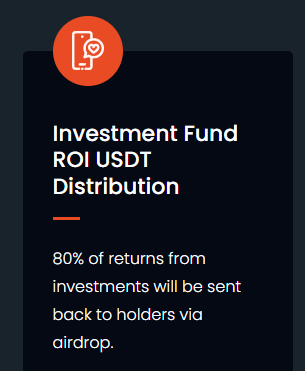
For example, one argument often made in these cases is that it can’t be a security unless there’s some kind of contractual or quasi-contractual claim that investors can make on the corporate assets.  And that’s just what NexFundAI promises:

So, this Law360 article has all the indictments/complaints and you can see – the SEC goes into detail about why their creation, the NexFundAI token (of course it’s AI) was a security. 

To be sure, both agencies bring securities manipulation claims against a few of the defendants who apparently were not involved with NexFundAI – so they will have to prove the security-status of some additional tokens.  But NexFundAI is sure going to make everything easier across the board.

And another thing… New Shareholder Primacy podcast up.  This time, I talk about one-person special committees and Mike Levin talks about how activist investors do their thing.  Available at AppleSpotify, and Youtube.

In a short Memorandum Opinion and Order signed late last month, the U.S. District Court for the Northern District of West Virginia struck down a West Virginia constitutional provision prohibiting churches from incorporating.  The case concerned Article VI, Section 47 of the West Virginia Constitution, which provides that “[n]o charter of incorporation shall be granted to any church or religious denomination.” The Court determined the West Virginia constitutional prohibition “is not neutral or generally applicable, and it does not further a compelling government interest” and therefore offends the U.S. Constitution.  Specifically, the court found that:

  • the West Virginia state constitution’s proscription of church incorporation is not neutral because “it denies incorporation to a defined class of individuals solely based upon their religion” and
  • “the State has not advanced any governmental interest, much less a compelling one, and the Court finds no compelling interest exists in prohibiting ‘any church or religious denomination’ from seeking incorporation. 

The court concludes that the provision “violates the Church’s First Amendment rights to the free exercise of religion, which is applicable to the States through the Fourteenth Amendment.”

The case is Hope Community Church v. Warner.  You can find a copy of the court’s Memorandum Opinion and Order here.  The court notes at the outset that the State of West Virginia did not oppose the plaintiff church’s Motion for Judgment on the Pleadings and shares in the recitation of facts the state’s checkered history of enforcement of the offending constitutional provision following an earlier decision striking down as unconstitutional a “nearly identical” provision in the Commonwealth of Virginia’s constitution.  See Falwell v. Miller, 203 F. Supp. 2d 624, 633 (W.D. Va. 2002).  According to the court, West Virginia is the last state to include in its constitution a prohibition on church incorporation.

Hat tip to friend-of-the-BLPB Tom Rutledge for flagging this development.

This week, we got two denials of class certification in 10b-5 securities cases involving meme stocks.  The first concerned Bed Bath and Beyond, the second concerned a fintech called Rocket Companies, which is not one of your more famous meme stocks, but apparently met the definition for 2 days out of a 2-and-a-half month class period.  One case presented a refreshingly accurate application of current doctrine.  The other presented a clarifying illustration of the doctrinal mess created by the Supreme Court’s decision in Goldman Sachs v. Arkansas Teacher Retirement System and its subsequent interpretation by the Second Circuit.

[More under the jump]

Section 10(b), and Rule 10b-5, prohibit fraud in connection with securities transactions.  Among other things, they prohibit corporate executives from publicly lying about a company, which typically causes the stock price to go up – only to crash again when the truth is revealed.

But when a plaintiff tries to sue in these cases, she confronts a fundamental problem: Fraud claims require proof of reliance.  And most stock purchasers may have trouble proving they relied on any specific false statement.  Maybe the investor didn’t hear the statement personally; maybe they relied on analyst advice – or an index.  Plus, most investor losses are too small to be worth suing over individually; the claims only make sense brought as a class action.  But if each investor has to prove that she personally relied on the false statement, there are too many issues to adjudicate collectively. 

The solution to this problem is the fraud on the market doctrine, adopted by the Supreme Court in Basic, Inc. v. Levinson (1988), and reaffirmed in Halliburton Co. v. Erica P. John Fund, Inc. (2014).  The doctrine consists of two presumptions – I call them the “objective” presumption and the “subjective” presumption – that benefit 10b-5 plaintiffs to help them satisfy the element of reliance on a classwide basis.

The first presumption is that, in an open and developed market – wide trading, lots of analyst coverage, and so forth – material information impacts stock prices.  The second presumption is that investors, subjectively, rely on prices as an unbiased assessment of market value when making an investment.  Together, the presumptions establish that the defendants’ fraud impacted stock prices, and investors relied on those prices – so, by syllogism, investors relied on the fraud.  Therefore, plaintiffs can satisfy the element of reliance at trial and – crucially – because these presumptions apply to all purchasers, plaintiffs can also get a class certified.

But, as Halliburton made clear, these are only presumptions; defendants are permitted to try to rebut them, and if they do so successfully, they can prevent class certification.

Which brings us to In re Bed Bath & Beyond Securities Litigation, 2024 WL 4332616 (D.D.C. Sept. 27, 2024).

Ryan Cohen took a 10% stake in Bed Bath & Beyond.  Later, as the company ran into trouble, he issued a tweet that included a “moon” emoji, which retail investors took to mean he planned to stay in for the long haul.  Other Cohen filings – a 13D, a Form 144 – also suggested he’d stand pat.  Retail investors piled in, the stock price rose, but tanked when it was revealed Cohen sold his stake. A class action followed, alleging Cohen misrepresented his intentions.  The court denied Cohen’s motion to dismiss, leading to the motion for class certification.

In evaluating the motion, the court began by correctly identifying the objective and the subjective presumptions that comprise the fraud on the market doctrine.  The court then observed that during this period, Bed Bath & Beyond’s stock was going nuts.  It was entirely untethered from fundamentals because it was a meme stock.  Under those circumstances, Judge McFadden refused to presume that Cohen’s false statement affected its price.

But think about this for a moment.  The stock was erratic; you can’t simply presume any particular piece of information is affecting prices.  Yet, plaintiffs might still be able to affirmatively prove the statement affected prices.  If so, they’ve satisfied the first half of the fraud on the market syllogism – the stock price was affected.  So long as the second half remains intact – a presumption that investors relied on stock prices – they can still prove their case classwide.

In fact, that’s precisely the argument I laid out before in my blog post about a case against Robinhood, In re January 2021 Short Squeeze Litigation.

Judge McFadden understood that, as well, because he did not rest on his conclusion that there could be no presumption of price impact.  Though he didn’t organize his reasoning the way I’d recommend, he still recognized that plaintiffs might simply introduce direct evidence that the price was impacted – but they had failed to do so.  As he put it:

Bratya argues that price impact from the August 12 tweet is visible to the naked eye. Pl.’s Reply at 17. A graph of BBBY’s price that day shows the price steadily rising from the market opening until 10:41 am, when Cohen sent out his tweet. Fischel Report ¶ 40. And it continues to rise at a steady rate before rising more dramatically around 12:30 pm. Id. Fischel claims that this steady, continuous rise does not register any price bump following Cohen’s tweet. Id. ¶ 40. To the Court’s eyes, however, the graph in fact does show a bump in BBBY’s price in the hour following the tweet, with a more dramatic price increase occurring just two hours later, between 12:30 pm and 1:15 pm. But neither Fischel nor Cain offer analysis on whether these blips are significant or noise. And having been lectured by both parties on the importance of statistical rigor, the Court will not make any conclusions about price impact by eyeballing one graph.

Thus, since there could be no presumption of price impact, and there was not sufficient affirmative direct evidence of price impact, the first leg of the fraud on the market syllogism failed; so, no classwide proof of reliance, and no class certification.  I’m not going to weigh in on whether McFadden correctly evaluated the weight and direction of various pieces of evidence, but I admire his clarity in identifying the correct questions: namely, was the market of a character such that we can presume price impact and, if not, is there other evidence of such impact?

Though McFadden did not, we could go further.  Remember, the second half of the syllogism is a presumption that investors rely on stock prices.  What does that even mean?  To be honest, it’s doctrinally unclear, see Donald C. Langevoort, Basic at Twenty: Rethinking Fraud on the Market2009 Wis. L. Rev. 151, but it does at minimum suggest investors believed the price to be validly set by supply and demand through honest investor assessment of information available.  And it’s very difficult to say this condition would be met for a meme stock.  For a meme stock, the entire point is that retail investors collectively decide to manipulate the stock price to something other than what a sober assessment of the company’s prospects would suggest.  At bare minimum, we might say that even if some retail investors “relied” on stock prices, so many of them did not that we’d create individualized issues for defendants’ rebuttal rights. 

The upshot being, it may very well be the case that individual investors relied on Cohen’s statements – and if they brought claims individually, they could prove their reliance.  But it’s more difficult to presume reliance on a classwide basis. 

But then we turn to the second meme-stock-class-cert case, Shupe v. Rocket Cos., 2024 U.S. Dist. LEXIS 178076 (E.D. Mich. Sept. 30, 2024).

Rocket Companies is a fintech that allegedly lied when it claimed that rising interest rates were having no impact on demand for its loans.  When the truth of declining margins and loan volume was disclosed, its stock price dropped.  Shareholders brought a 10b-5 class action, and the court denied class certification on the ground that the defendants had sufficiently rebutted the fraud on the market presumption.

What evidence did they offer?

As with Bed Bath & Beyond, the defendants focused on the objective presumption – namely, the presumption that their false statements impacted market prices.  To rebut that presumption, they first brought in an expert who pointed to public information about how rising interest rates were likely to harm Rocket’s business, including the risk warnings included in Rocket’s own SEC filings.  She also demonstrated that market analysts at the time were focused on these indicators, and did not appear to rely on Rocket’s statements to the contrary.

In securities litigation parlance, I find this evidence similar to what we usually call “truth on the market” evidence, namely, evidence that sufficient truthful information was swirling around to offset the impact of the defendant’s lies.  Except “truth on the market” evidence is exactly the analysis that the Supreme Court held in Amgen Inc. v. Connecticut Retirement Plans, 568 U.S. 455 (2013), may not be considered on a motion for class certification.  And in Goldman Sachs v. Arkansas Teacher Retirement System, the Supreme Court reaffirmed the correctness of the Amgen holding.

Now, the Goldman Sachs decision by the Supreme Court, echoed by the Second Circuit on remand, also suggested that if the original false statement is much more “generic” than the revelation of the truth, there may be an inference that any price drops associated with the disclosure did not reflect the dissipation of artificial inflation introduced by the lie.

Is that this case?

Yes, according to the Rocket court.  The false statements were that Rocket saw “strong consumer demand,” and that its networks were “growing.”  The corrective disclosure was that Defendants expected “[c]losed loan volume of between $82.5 billion and 87.5 billion”; (2) “[n]et rate lock volume between $81.5 billion and $88.5 billion”; and (3) “[g]ain on sale margins of 2.65% to 2.95%,” – numbers that were far lower than Rocket had reported previously.

See?  The defendants told everyone things were going well, and then disclosed specific figures showing they were going poorly, and the stock price tanked.  How could anyone possibly think the two were connected?

(That was my sarcastic voice.)

This is exactly what I predicted would happen after the Second Circuit’s Goldman decision: namely, plaintiffs and defendants would fight about whether corrective disclosures are sufficiently similar to the initial lie, untethered any determinate standard other than the trial judge’s gut feeling. 

Does anyone remember when, in the context of loss causation – which, nominally, courts may not consider on class certification – courts held that disclosures need not be “mirror images” of the initial lie, because that would functionally require corporate managers to admit to fraud, see Freudenberg v. E*Trade Financial Corp., 712 F. Supp. 2d 171 (S.D.N.Y. 2010), and “would eliminate the possibility of 10b–5 claims altogether”  In re Williams Sec. Litig., 558 F.3d 1130 (10th Cir. 2009)? 

And remember when the Second Circuit held in Goldman that “the question here—whether there is a basis to infer that the back-end price equals front-end inflation—is a different question than loss causation, and, in light of Goldman, requires a closer fit (even if not precise) between the front- and back-end statements….” Op. at 54 n.11?

Yeah, I remember that, too.

And another thing: New Shareholder Primacy podcast up!  This time, Mike Levin and I talk 10(b) actions by shareholders of pre-merger SPACs, and the Tesla pay case (not that one – the other one).  Here at Apple; here at Spotify; here at Youtube.

FORDHAM UNIVERSITY SCHOOL OF LAW invites applications for a full-time tenure, tenure-track, or long-term contract faculty position to direct our Entrepreneurial Law Clinic.  The faculty member will join a vibrant clinical program that has 15 full-time clinicians who teach, practice, and lead. We welcome interest both from those new to clinical legal teaching and from experienced clinicians; an appointment could be made to Associate Clinical Professor, Associate Professor, Clinical Professor, or Professor.

We seek dynamic candidates who are excited about clinical legal education, deeply committed to the academic enterprise, and able to collaborate with diverse groups inside and outside our university. We also welcome candidates who possess the capacity and inclination to support and advance law reform.  Commitment to principles of experiential learning and clinical pedagogy is central to the position; those who are not already conversant with these principles should be committed to developing in this domain.  The faculty member will have primary responsibility teaching and supervising students in the Entrepreneurial Clinic at our in-house law firm (Lincoln Square Legal Services, Inc.).  They will also have primary responsibility for selecting clients and matters and structuring the overall design and goals of the clinic.

In its current form, the highly successful Entrepreneurial Law Clinic provides pro bono transactional legal services to under-resourced entrepreneurs and small business owners and participates in community outreach to educate entrepreneurs about legal issues.  Students work with clients to form entities, structure incentive compensation for founders, protect clients’ intellectual property rights, help clients build their workforce, as well as draft shareholder, operating, vendor, customer, lease and/or employment agreements.  We are open to candidates who wish to work within the Clinic’s current form as well as those who wish to advance their own distinctive vision of an Entrepreneurial Clinic at Fordham Law School.

We welcome applications from all qualified candidates, including those applicants facing barriers to or who have been underserved by legal education and in the legal profession. The salary range for this job is $175,000-$290,000, dependent on experience. Any summer case coverage or research funding is in addition.

Qualifications

Candidates must hold a JD or its equivalent and be members of the New York Bar (or be eligible to seek membership as soon as reasonably possible after committing to join us). A period of at least three years of practice experience in transactional practice is preferred.

Application Instructions

Candidates can review the full job posting and apply for the position through Interfolio. Applications should consist of a C.V. and a cover letter stating the applicant’s vision for the clients and communities the clinic would serve, the range of matters to be handled, and the clinic’s student learning objectives. The cover letter should also indicate aspects of the candidate’s practice experience that render them suitable for the position.  Candidates seeking a tenure or tenure-track position should include a separate research agenda and potential job market paper.

For questions, please contact Professor Tracy Higgins or Professor Paul Radvany, Co-Chairs of the Clinical Faculty Appointments Committee, at thiggins@fordham.eduradvany@fordham.edu.

Applications will be accepted until the position is filled but applicants are strongly encouraged to submit their materials by October 15, 2024 or earlier.

The SEC recently settled an enforcement action against Zymergen for making false projections about its business.  Prior to its IPO in April 2021, many of these projections were given directly to analysts.  Zymergen did not include the projections in its registration statement, because companies are strictly liable to investors for false statements in a registration statement under Section 11 of the Securities Act, and so they generally try to avoid making projections that may turn out to be overly optimistic.  Instead, Zymergen gave the false projections to analysts, so the analysts would take the projections, and use them in building their models, which they would pass on to investors with a recommendation of some sort.

One question then, is, if the SEC had not brought an enforcement action, could Zymergen have been liable to investors for passing on bad info to analysts?

The answer is, maybe not.  Certainly not under Section 11, which only applies to information in a registration statement.  And maybe not under Section 10(b), the general antifraud statute, because Stoneridge v. Scientific-Atlanta holds that public investors are not deemed to “rely” on behind-the-scenes conduct that’s filtered to the public through the false statements of another entity.  (But see Janus Capital Group, Inc. v. First Derivative Traders, raising the possibility, without deciding, that statements to analysts are public for 10(b) purposes).

Could the analysts themselves be liable for passing on targets based on false projections?  Certainly not under Section 10(b), unless they knew or were reckless about falsity, because Section 10(b) only applies to intentional frauds.

What about under Section 12, which imposes negligence liability for anyone who distributes a false offer for the sale of securities (which could theoretically apply to Zymergen, as well?)

It’s complicated.  The Supreme Court has narrowed the application of Section 12 in ways that are somewhat convoluted, and might preclude liability here, though in the pre-IPO context it’s hard to say.  But a second issue concerns whether the research report could be considered an offer in the first place.  Maybe so, except in the JOBS Act of 2012, Congress legislated an exception to the definition of offer, so that any research report is not an offer if it concerns an IPO of an emerging growth company.  So, because Zymergen (like most IPOs) was an emerging growth company, the analysts themselves were free to distribute Zymergen’s false information, without fear of Section 12 liability; they could only be liable if they themselves acted intentionally under Section 10(b). 

The combination creates some… well, troubling incentives, especially for analysts who work for investment banks that are part of the selling group and therefore may feel some pressure to offer positive coverage.  The analyst report itself won’t trigger negligence liability as a false Section 12 prospectus (because of the carveout), shareholders who read the analyst report (probably) can’t sue Zymergen under 10(b) (because of Stoneridge), and neither Zymergen, nor the underwriters who might even employ the analyst, will be liable under Section 11 for false statements in the registration statement, because those false statements were by hypothesis carved out of the registration statement to be farmed out by the analysts instead.

Now, after the dot com scandals of the early 2000s, the SEC procured settlements from the largest investment banks to separate their underwriting and research segments and new FINRA rules also required such separation but, you know, the Zymergen situation does raise the question whether this is the correct balance, especially since I gather it is fairly common practice for pre-IPO firms to share revenue guidance with analysts, in the expectation those analysts will present the information to investors.

On this point, I note that Zymergen’s registration statement contains the following standard language:

We are responsible for the information contained in this prospectus. We and the underwriters have not authorized anyone to provide any information or to make any representations other than those contained in this prospectus or in any free writing prospectuses prepared by us or on our behalf. We and the underwriters take no responsibility for any other information that others may provide you.

The SEC doesn’t mention it; still, it’s weird to me that these companies are permitted to filter their projections through analysts in hopes of flogging an IPO, while simultaneously publicly disclaiming any of that analysis.

That said, investors did, in fact, identify some allegedly false statements that were directly included in Zymergen’s registration statement, and those are the subject of an ongoing securities case under Section 11.  So … all’s well that ends well?

And finally, the latest Shareholder Primacy podcast is up.  This time me and Mike Levin talk TripAdvisor (pending before the Delaware Supreme Court) and 14a-4 shareholder proposals.  Available on SpotifyApple, and YouTube

If you’re in North Carolina, or just passionate about the topic, consider coming to the NCCU 2024 Law and Technology Symposium and Summit October 10–11, 2024 at the Durham Convention Center. The symposium dives deep into generative AI and its impact on healthcare, while the summit offers a broader look at AI, data privacy, cybersecurity, emerging trends in tech policy, legal services regulation, and more. 

To register for the Symposium on October 10, please email techlawpolicyctr@nccu.edu.

To register for the Summit on October 11, where I’m speaking,  click on the “Register Today” link.

The organizers are still finalizing speakers, but if you come, look out for me on the Legal Risks in Cybersecurity Investigations panel. My co-panelists include Tylin Woodstock of Cisco Systems and Daniel Shin of William & Mary Law School.

The full agenda and impressive line up of speakers for the October 11 Summit , including two members of Congress, is below.

8:00 AM ET

Registration

8:00 AM-3:00 PM8:40 AM ET

Welcome

8:40 AM-8:45 AM

April Dawson

Associate Dean of Technology and Innovation and Professor of Law 

North Carolina Central University School of Law 8:45 AM ET

Greetings

8:45 AM-9:15 AM

Alyn Goodson

Executive Vice Chancellor 

North Carolina Central University 

Patricia Timmons-Goodson

Dean 

North Carolina Central University School of Law 9:00 AM ET

Special Remarks

Featured

9:00 AM-9:15 AM

Dyann Heward-Mills

CEO 

Hewardmills 9:20 AM ET

Bridging the Gap: Legislative Responses to Emerging Technologies

9:20 AM-10:20 AM

Valerie Foushee

Member of Congress 

U.S. House of Representatives 

Deborah Ross

Member of Congress 

U.S. House of Representatives 10:30 AM ET

Bridging the Justice Gap: Innovations in Access to Legal Services

10:30 AM-11:30 AM

Lakethia Jefferies

Clinical Director & Supervising Attorney of the Pro Bono Clinic, Externship Program Director 

NCCU School of Law 

Sonja Ebron

CEO and Cofounder 

Courtroom5 

How do you Begin and Grow a career in the Data Privacy Field?

10:30 AM-11:30 AM

Jonathan Cantor

Senior Vice President & Deputy Chief Privacy Officer 

Truist 

Terrance Reeves

Senior Manager of Data Privacy 

HP Inc. 

Responsible AI, Privacy and the Cost of Invisibility of the Global Majority

10:30 AM-11:30 AM

Charlotte Jones

Head of Product, Privacy & Regulatory Legal 

Five9 

William Pagán

Patent Attorney & Co-Owner 

Coats & Bennett, PLLC 11:45 AM ET

Intellectual Property Rights in the Age of AI

11:45 AM-12:45 PM

Jennifer Hayes

Principal 

Jordan IP Law, LLC 

Zaneta Robinson

Associate Clinical Professor and Founding Director of the Intellectual Property Law Clinic 

Wake Forest University School of Law 

Liability and Legal Consequences of Cybersecurity Breaches

11:45 AM-12:45 PM

De’Von Carter

Attorney 

The Law Office of De’Von Carter, PLLC 

Bahiya Lawrence

Senior Counsel 

New York City Office of Technology and Innovation, Office of Information Privacy 

Navigating the Legal Landscape of Gaming and Gambling: Interfaces and Intersections

11:45 AM-12:45 PM

Daphne Benford-Smith

Counsel 

Holon Law Partners, LLP 

David Greenspan

Adjunct Professor and consultant 

Santa Clara University School of Law 12:45 PM ET

Awards Lunch & Keynote Speaker

Featured

12:45 PM-2:15 PM

Nicol Turner Lee

Senior Fellow & Director of the Center for Technology Innovation 

The Brookings Institution 2:30 PM ET

Navigating of IP Attorney Practices: Leveraging Technology in Academia, Private Practice, and In-House Roles

2:30 PM-3:30 PM

Kevin Greene

Law Professor 

Southwestern Law School 

Vedia Jones-Richardson

Partner 

Olive & Olive 3:45 PM ET

Judicial Perspectives on Emerging Technologies

3:45 PM-4:45 PM

Paul Grimm

Director, Bolch Judicial Institute and David F. Levi Professor of the Practice of Law 

Duke Law School 

Martin (Marty) McGee

Senior Resident Superior Court Judge (Cabarrus) 

State of North Carolina 

Legal Risk in Cybersecurity Investigations

3:45 PM-4:45 PM

Marcia Narine Weldon

Director of Transactional Skills, Lecturer; General Counsel of an AI Startup 

University of Miami School of Law 

Daniel Shin

Cybersecurity Researcher & Adjunct Professor of Law 

William & Mary Law School 4:45 PM ET

Networking Reception