
A friend who is a member of a university faculty (non-law) some years ago recommended that I read Straight Man, by Richard Russo. I am forever thankful.  The book is a novel set in a small town in Pennsylvania and follows the trials and tribulations of an English-department faculty member at a college besieged by budget challenges, a dysfunctional department, and his own lack of motivation.   

The book is funny — sometimes laugh-out-loud funny — and for anyone on a faculty, I am willing to wager that, despite occasional absurdity, this faculty will feel like it could be yours.  The main character is sympathetic, to a point, but he is also part of the problem.  It is a fast read, and it’s one I come back to every couple years.  Perhaps it is just a guilty pleasure, but the universality of the characters and the bit of hope that emerges are things I find to be comforting in some way. It may be that the book serves as a reminder that we’re not alone in our craziness.  Everyone who has taught for a while knows a Hank, a Finny, a Gracie DuBois, Jacob Rose, a Billy Quigley.  

The book also a good reminder of traps we, as faculty (and administrators), can fall into, and hopefully, help us avoid them. If you need a break from research and heavy reading, I highly recommend you put this in the rotation. 

Here’s the Amazon.com Review: 

First Jane Smiley came out of the comedy closet with Moo, a campus satire par excellence, and now Richard Russo has gotten in on the groves-of-academe game. Straight Man is hilarious sport, with a serious side. William Henry Devereaux Jr., is almost 50 and stuck forever as chair of English at West Central Pennsylvania University. It is April and fear of layoffs–even among the tenured–has reached mock-epic proportions; Hank has yet to receive his department budget and finds himself increasingly offering comments such as “Always understate necrophilia” to his writing students. Then there are his possible prostate problems and the prospect of his father’s arrival. Devereaux Sr., “then and now, an academic opportunist,” has always been a high-profile professor and a low-profile parent.

Though Hank tries to apply William of Occam’s rational approach (choose simplicity) to each increasingly absurd situation, and even has a dog named after the philosopher, he does seem to cause most of his own enormous difficulties. Not least when he grabs a goose and threatens to off a duck (sic) a day until he gets his budget. The fact that he is also wearing a fake nose and glasses and doing so in front of a TV camera complicates matters even further. Hank tries to explain to one class that comedy and tragedy don’t go together, but finds the argument “runs contrary to their experience. Indeed it may run contrary to my own.” It runs decidedly against Richard Russo’s approach in Straight Man, and the result is a hilarious and touching novel.
As I am traveling and conferencing, my thoughts already have turned to next summer’s conference schedule.  It seems like a good time to get two important business law conferences on the agenda for next year.  Those two conferences are: the sixth biennial conference on teaching transactional law and skills, “To Teach is to Learn Twice: Fostering Excellence in Transactional Law and Skills Education,” which will be held on June 1 – 2, 2018, at Emory Law in Atlanta, GA and the National Business Law scholars conference, which will be held at the University of Georgia School of Law in Athens, GA on June 21-22, 2018.  Emory Law’s “Save the Date” notice hit my in box this morning and appears below, FYI.

*          *          *

SAVE THE DATE

Emory’s Center for Transactional Law and Practice cordially invites you to attend its sixth biennial conference on the teaching of transactional law and skills. The conference, entitled “To Teach is to Learn Twice: Fostering Excellence in Transactional Law and Skills Education,” will be held at Emory Law, beginning at 1:00 p.m. on Friday, June 1, 2018, and ending at 3:45 p.m. on Saturday, June 2, 2018.

We welcome you to share your experiences teaching any aspect of transactional law and skills, focused primarily on what general approaches, teaching methods, and specific exercises have been the most effective. Additionally, we want to know how you have implemented the ABA’s standards on learning outcomes and assessment and whether your teaching has changed as a result.

A formal request for proposals will be distributed in the fall.

Note: For this Sixth Biennial Conference, we will be offering a discounted registration rate for new teachers as well as for adjunct professors. Please encourage your colleagues to attend.

Looking forward to seeing all of you in June of 2018!

Sue Payne                                                                                                                                Katherine Koops
Executive Director                                                                                                                  Assistant Director
sue.payne@emory.edu                                                                                                         katherine.koops@emory.edu

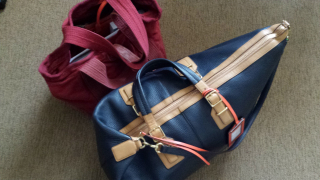
Hola de la Ciudad de Mexico.  I arrived in Mexico City for the Law and Society Association conference yesterday to get acclimated and take some personal time to see the city.  Today, I carry forward the theme I posted on last week: packing for conference travel.  Last week, I shared my prepacking strategy.  This week, I will offer some parameters for packing for the actual trip, using the trip I am on now as an example.  This is what I was working toward (and achieved).

BLPBPacking4

I noted in my post last week that I almost always travel with one carry on duffle-like bag (soft-sider) and one tote bag that holds, among other things, my handbag for the trip.  That is what I chose for this trip!  The main advantage is that I do not have to check bags.  I had a tight connection yesterday in Atlanta, and my grab-and-go luggage helped me to make that connection with time to spare.

To quote the Talking Heads, ” . . . you may ask yourself, well, how did I get here?”

Let’s begin with the things I packed in the blue soft-sider.  I started by considering what I plan do on the trip.  For this trip, I have four days of conference proceedings (for which I will dress up) and three days of walking/sight-seeing.  I also plan to attend at least two yoga classes and have to teach Barbri in Nashville on my way home.  I next consider the climate.  I am in one place almost the whole time, and the weather is forecasted to be pretty consistent–mid-eighties (Fahrenheit) during the day and mid-fifties in the evenings.  Chances of rain are slim most days, but higher at the end of the week.  Here’s what I chose to pack:

A three-piece coordinated suit set: skirt, cropped trousers, and jacket
9 shirts/blouses (6 tank tops–3 with shelf bras–and 3 wrinkle-resistant long-sleeved button-downs)
1 pair of reversible yoga shorts
1 pair of reversible dance/yoga leggings
PJs (undershirt tank top and boxers)
1 light rain jacket
1 French terrycloth embellished sweatshirt
Appropriate underwear items (gals, you can PM me for details, if you’d like)
2 extra pairs of earrings
1 necklace
1 pair of pumps
1 pair of fold-up flats
1 pair of sneakers
1 pair of flip-flops
1 traveling yoga mat

[Addendum:  I forgot to add that I also packed a printed silk scarf and a printed cotton bandana scarf!  I almost always travel with a scarf or two to accessorize outfits and make them look different when I am reusing the same basic suit pieces.]

Continue Reading The Traveling Business Law Prof: Part II – What and How to Pack

More Uber miscellany this week:

Last week, I posted about Uber and publicness – namely, that Uber is a private company that nonetheless is conducting itself as though it has public obligations.  Of course, right after I posted things got exponentially more interesting: Uber’s board met in a marathon session to discuss the results of an internal investigation of its corporate culture, resulting in the dismissal of the CEO’s right-hand man and the CEO/founder/powerful shareholder taking an indefinite leave of absence, Uber publicly announced the recommendations generated as a result of the internal investigation, and an Uber director resigned after making a sexist comment at the employee meeting intended to address workplace sexism.

There’s an awful lot to unpack here: Uber, the legendarily valuable startup, is now operating without a CEO, CFO, or COO (Twitter joke:  “I guess this is the closest it’s ever been to a self-driving car company”); the recommendations, which are telling in what they don’t tell (alcohol and controlled substances should not be consumed during business hours, yikes!); the fact that all of this was sparked by a blog post by an ex-employee detailing her sexual harassment and – amazingly enough – she was believed (one Forbes writer even recommended her for a Pulitzer); sexism that cannot be contained for the length of one employee meeting; the fact that Uber apparently is hemorrhaging talent and can’t hire more

But mostly, just to reiterate the point I made last week, to me the truly extraordinary thing is that all of this is happening at a private company – and one that still provides an exceptionally popular service.  Nonetheless, Uber felt obligated to publicize the results of an internal investigation regarding its corporate culture, and regularly updates the news media on its governance structure.  Ordinarily, the whole point of staying private, roughly speaking, is to avoid this level of public scrutiny.  Yet as companies stay private longer – and attract more and more capital, often from “public” investors (large mutual funds, pension funds, etc) – apparently, they are feeling the obligations of publicness.  Or Uber is; we’ll see how much of a precedent it sets.

The other issue I wanted to discuss concerns this article in the New York Times, describing Uber’s, umm, unusual employee buyback plan.  Uber has begun offering to buy back certain employee shares, because – in the absence of an IPO – employees have no other way to cash out.  As I understand it from the article, for some employees, Uber requires that if the employees sell any portion of his/her shares back to the company, the employee must also agree to sign over the voting rights of all of his/her remaining shares to Travis Kalanick (the CEO/founder) personally.

Now, with all appropriate disclaimers about how I haven’t read the employee agreements, and I’m relying solely on one news article that lacks specifics, I say – huh?

Uber is using corporate resources to allocate additional votes to the founder personally?  Which – presumably – he can then use to vote to advance his personal interests?  After all, outside of specific fiduciary duties for controllers, shareholders are free to cast their votes for their own idiosyncratic reasons; for example, Kalanick could vote against a merger proposal merely because he wanted to keep control, even if the proposal would be in the best interests of Uber shareholders generally.

It’s not like I expect to see any fiduciary duty lawsuits – for one thing, the amounts involved may be minimal, and I assume Uber has somewhat close relationships with its stockholders – but it’s fairly textbook that corporate resources cannot be used to buy more power for the personal use of the controllers.  The fact that this was (apparently) permitted seems to be another data point suggesting that Uber has deep governance issues it needs to address.

Next week, I will write about my focus group experience with Brooks Running.

Last week, on Global Running Day, Brooks announced “the biggest athlete endorsement deal in sports history” saying that they want to endorse everyone who runs….with $1 and a chance to win Brooks running gear.

This would have made a decent April Fools Day joke, but as a serious attempt at building brand value, it is pretty weak.

Brooks would have done much better to follow the lead of Oiselle, a women’s athletic apparel company that I have spoken and written about before in regard to their multi-level team of professional, semi-pro, and recreational athletes. The main differences between Brooks and Oiselle is that Oiselle provides value to the team members and creates shared experiences. Oiselle athletes get team gear (even though the recreational runners pay for the gear), and they get invited to numerous group events. Oiselle has state team leaders and helps connect the team members for training and races. The “birds”, as they call themselves, really seem to support each other.

Now, the Oiselle method is definitely more complicated, and it probably comes with various legal risks. For example, what if one the team leaders turns violent or what if a team member gets hit by a car on a run led by a team leader or what if someone gets a bit out of control at one of their camps or parties? (I am sure Oiselle has everyone sign waivers, but as we know, waivers don’t always prevent costly litigation and liability). There is also a fair bit temporal and financial costs involved in creating the team singlet, sending out newsletters, updating social media, planning events, etc. But building real community and brand value is almost never easy. (And Oiselle is far from perfect and has its critics, but I applaud Oiselle’s effort. That said, if they are still requiring the recreational athletes to both pay and only post photos of themselves on social media in Oiselle gear, that seems overly restrictive. If they are going for authentic, they should provide suggestions instead of mandates. With sponsored athletes, I better understand the restrictions, though even with sponsored athletes you can usually tell a difference between organic and forced marketing posts.)

Sadly, Brooks’ “endorsement” isn’t about building community, rather it is a pretty transparent attempt to buy your e-mail address and lure potential customers for $1. (Also, I uncovered in the fine print that they limited the $1 payment to the first 20,000; they have over twice that many signed up already).

As I will write next week, I was impressed with the people running the Brooks focus group, but they didn’t ask us about this “endorsement” idea, and if they asked others about it, I think they got bad advice. Brooks might get a bit of press, and they will probably even get a fair number of email addresses from curious people, but I doubt they will get much of lasting value. 

[I wonder how many people who signed up read the fine print. For example, there is a Code of Conduct that will be sent to participants. Also, see the clause below the break seemed incredibly broad.]

Continue Reading Building Brand Value through Building Community

I am such a fan of Sinclair Oil Corp. v. Levien,  280 A.2d 717 (Del. 1971), that I use the case in both Business Organizations and in Energy Law. The case does a great job of giving a basic overview of parent-subsidiary relationships, some of the basic fiduciary duties owed in such contexts, and it sets up the discussion of why companies use subsidiaries in the first place. 

On fiduciary duties and when the intrinsic (entire) fairness test applies: 

A parent does indeed owe a fiduciary duty to its subsidiary when there are parent-subsidiary dealings. However, this alone will not evoke the intrinsic fairness standard. This standard will be applied only when the fiduciary duty is accompanied by self-dealing — the situation when a parent is on both sides of a transaction with its subsidiary. Self-dealing occurs when the parent, by virtue of its domination of the subsidiary, causes the subsidiary to act in such a way that the parent receives something from the subsidiary to the exclusion of, and detriment to, the minority stockholders of the subsidiary

On what test to apply to parent-subsidiary dividends: 

We do not accept the argument that the intrinsic fairness test can never be applied to a dividend declaration by a dominated board, although a dividend declaration by a dominated board will not inevitably demand the application of the intrinsic fairness standard. Moskowitz v. Bantrell, 41 Del.Ch. 177, 190 A.2d 749 (Del.Supr. 1963). If such a dividend is in essence self-dealing by the parent, then the intrinsic fairness standard is the proper standard. For example, suppose a parent dominates a subsidiary and its board of directors. The subsidiary has outstanding two classes of stock, X and Y. Class X is owned by the parent and Class Y is owned by minority stockholders of the subsidiary. If the subsidiary, at the direction of the parent, declares a dividend on its Class X stock only, this might well be self-dealing by the parent. It would be receiving something from the subsidiary to the exclusion of and detrimental to its minority stockholders. This self-dealing, coupled with the parent’s fiduciary duty, would make intrinsic fairness the proper standard by which to evaluate the dividend payments.

. . . . The dividends resulted in great sums of money being transferred from Sinven to Sinclair. However, a proportionate share of this money was received by the minority shareholders of Sinven. Sinclair received nothing from Sinven to the exclusion of its [722] minority stockholders. As such, these dividends were not self-dealing. We hold therefore that the Chancellor erred in applying the intrinsic fairness test as to these dividend payments. The business judgment standard should have been applied. 

On whether shareholder of one subsidiary should be allowed to participate in ventures pursued by other subsidiaries: 

The plaintiff proved no business opportunities which came to Sinven independently and which Sinclair either took to itself or denied to Sinven. As a matter of fact, with two minor exceptions which resulted in losses, all of Sinven’s operations have been conducted in Venezuela, and Sinclair had a policy of exploiting its oil properties located in different countries by subsidiaries located in the particular countries.

It makes sense for companies, often, to use subsidiaries to keep certain businesses well organized and to protect assets for shareholder.  That is, I might only want to invest in a subsidiary doing business in Mexico because I trust that the assets there are secure.  I may not want to participate in work in Venezuela, which I might deemed riskier.  And it’s not just shareholders who might feel that way.  Creditors, too, may view such investments very differently and may only be willing to participate in ventures where the risks can be more easily assessed. 

It’s conference season, yet again.  It seems like just yesterday that I was embarking on my June Scholarship and Teaching Tour 2016.  In fact, it was over a year ago.  My, how time flies . . . .

This year, I am doing the “City” tour for the first part of the summer season.  I have already been to Kansas City, MO (Midwest Symposium on Social Entrepreneurship), New York City, NY (Legal Issues in Social Entrepreneurship and Impact Investing: In the US and Beyond), and Salt Lake City, UT (National Business Law Scholars Conference).  Next week, I will be in Mexico City, Mexico for the Law and Society Association’s International Meeting on Law and Society.  Not fitting into the “City” theme is my teaching day for Barbri in Nashville, TN and the Southeastern Association of Law Schools conference in Boca Raton, FL at the end of the summer.

Because of my travel schedule throughout the year, I often am asked about packing for my conference trips, which typically include some personal elements (e.g., touring, yoga, walking, or other exercise, etc.).  So, I decided to do a few posts on some packing tips and hacks that I use.  

Today, I focus on having a prepacked bag.  Given that I am a woman and choose to dress up for conferences, men and those who dress more casually will have to make significant modifications to my system.  Nevertheless, I hope that by sharing my conventions, I am offering something new to think about (at the very least). 

First things first: the generalities of my luggage (such as it is).  Unless I am teaching in a study abroad program (which I have not done since 2010), I pack in a soft-sided carryall and a tote large enough to fit my handbag (usually a small cross-body bag).  This combination works well for me.  (I am sure, however, that my doctor doesn’t approve and would like me to use a wheelie bag, given the cervical and thoracic issues that I have in my neck and back.)  I do not like to have to lift wheelie bags into the overhead bins. The carryall lifts easily and typically fits nicely, even in the overhead bins on the small puddle-jumper planes that I sometimes must take from my beloved TYS (Knoxville’s McGee-Tyson Airport). 

Continue Reading The Traveling Business Law Prof: Part I – Prepacking