
As some of our BLPB readers know, I am a habitual 12,000-step-a-day walker.  I monitor my progress on steps, stairs, and sometimes sleep using a Fitbit “One” that I have had since Christmas Day 2012.  Fitbit recently announced that it is discontinuing the One.  So, if my existing One dies off, I will have to switch trackers.  And, sadly, I am likely to have to switch suppliers.  While Fitbit has been good to me, the rest of its trackers are not at all interesting or suitable for my desired uses.  They are almost all wrist models, and the one clip-on tracker Fitbit sells is relatively bulky and antiquated.

I am not the only one who is unhappy about the discontinuation of the One tracker.  Fitbit has discussion boards for members of its “community.”  The discussion board titled “Is Fitbit One being discontinued?” (which was started over the summer) has lit up over the past week.  As of the time of this post, there were 519 posts in the Fitbit forum.  

I have been impressed by the passion of the folks who have posted comments and responses.  Many posted reviews of other Fitbit products and competitor products that might be adequate substitutes for the One for some users.  But I have been fascinated by the nature of several posts, including a number that focus on corporate governance and finance matters.  Community members were motivated to check into and comment on Fitbit’s published financial statements, litigation profile, and trends in the mix of product sales.  Some encouraged calling either Fitbit’s customer service line or mutual funds that hold Fitbit shares (and they named the funds) to express concerns.  One member of the community posted that he is worried about Fitbit’s employees, customers, and shareholders in the event Fitbit’s business goes South.  

The comments made on the Fitbit community discussion board reminded me of Hillary Sale’s work on publicness, including her article entitled Public Governance.  In that article, she observes:

Publicness is both a process and an outcome. When corporate actors lose sight of the fact that the companies they run and decisions they make impact society more generally, and not just shareholders, they are subjected to publicness. Outside actors like the media, bloggers, and Congress demand reform and become involved in the debate. Decisions about governance move from Wall Street to Main Street.
Hillary A. Sale, Public Governance, 81 Geo. Wash. L. Rev. 1012, 1013 (2013).  She later echoes that thought in a slightly different way:
 
Key to an understanding of publicness . . . is that the group demanding governance is larger than the stated partners (i.e., shareholders, directors, and officers) and includes outside actors. Employing a crabbed definition of this group is actually part of the problem. Those “outsiders” scrutinize decisionmaking and incentives. They monitor failures of internal governance, press for more external governance, and then publicness grows.
 
Id. at 1034.  The users of Fitbit’s discussion board are digesting and reporting on Fitbit’s operations and seeking governance changes in a public forum.  They are seeking ways to be heard by management.  Moderators occasionally post commentary and promise to pass on comments to Fitbit’s management.  This is publicness–feedback loops that enhance public scrutiny and sway over the firm.
 
I doubt any of this will save the Fitbit One.  It seems that the firm is moving on with new products, notwithstanding significant customer demand.  So, once my rechargeable battery dies, I will be in the market for a new tracker.   I am accepting recommendations . . . .

Earlier this week, the Wall Street Journal reported that many institutional investors – including large mutual fund complexes like BlackRock and State Street – have become concerned about “overboarding,” namely, the phenomenon where corporate directors sit on multiple boards.

There are good reasons to be concerned.  Researchers have found that in many, though perhaps not all, cases when corporate directors are “overboarded” – and thus presumably unable to devote their full attention to governance at particular companies – companies are less profitable and have a lower market to book ratio.  (Similarly effects are found for distracted directors.)

That said, there’s a particular irony in seeing mutual fund companies, of all investors, leading the charge.  Most mutual fund companies employ a single board – or a few clusters of boards – to oversee all of the funds in the complex.  This can result in directors serving on over 100 boards in extreme cases.  State Street’s Equity 500 Index Fund, for example, reports trustees who serve on 72 or 78 boards within the complex.  BlackRock’s Target Allocation Funds have trustees who serve on either 28 and 98 different boards (depending on how you count).

I’ll admit this is something of a cheap shot: presumably each fund is much more similar to the other funds than are the various companies at which overboarding concerns are raised.  Still, when you get to over 20 funds per director, that’s a lot, no?  Or 50 funds?  Especially since the funds have varying interests – they might stand on opposite sides of a merger, or invest at different levels within a single firm’s capital structure, or compete for limited opportunities like IPO allocations and pre-IPO shares.  Different funds might even be differently invested  in firms within an industry, and thus have divergent interests regarding competition between the firms.  (Cf. Jose Azar et al., Anti-Competitive Effects of Common Ownership).  Not to mention the fact that the independent directors of a mutual fund are supposed to be the fund’s “watchdogs” against exploitation by the sponsor, but service on multiple boards – with associated salaries – may cause the relationship to become suspiciously cozy.

Point being, the overboarding concern is a real one.  But… I’m not quite sure BlackRock is the right face for the resistance.

I recently finished Elizabeth Pollman and Jordan Barry’s article entitled Regulatory Entrepreneurship. The article is thoughtfully written and timely. I highly recommend it. 

————-

This Article examines what we term “regulatory entrepreneurship” — pursuing a line of business in which changing the law is a significant part of the business plan. Regulatory entrepreneurship is not new, but it has become increasingly salient in recent years as companies from Airbnb to Tesla, and from DraftKings to Uber, have become agents of legal change. We document the tactics that companies have employed, including operating in legal gray areas, growing “too big to ban,” and mobilizing users for political support. Further, we theorize the business and law-related factors that foster regulatory entrepreneurship. Well-funded, scalable, and highly connected startup businesses with mass appeal have advantages, especially when they target state and local laws and litigate them in the political sphere instead of in court.

Finally, we predict that regulatory entrepreneurship will increase, driven by significant state and local policy issues, strong institutional support for startup companies, and continued technological progress that facilitates political mobilization. We explore how this could catalyze new coalitions, lower the cost of political participation, and improve policymaking. However, it could also lead to negative consequences when companies’ interests diverge from the public interest.

You couldn’t pay me enough to be the owner of an NFL team right now. I almost feel sorry for them. Even if you’re not a  fan, by now you’ve heard about the controversy surrounding NFL free agent Colin Kaepernick, and his decision to kneel during the national anthem last year. You’ve also probably heard about the President’s call for NFL owners to fire players who don’t stand while the anthem is played and his prediction of the league’s demise if the protests continue. Surprisingly, last Sunday and Monday, some of the same owners who made a business decision to take a pass on  Kaepernick despite his quarterback stats (citing among other things, the potential reactions of their fans) have now themselves made it a point to show solidarity with their players during the anthem. The owners are locking arms with players, some of whom are now protesting for the first time.

Football is big business, earning $13 billion last year, and the owners are sophisticated businessmen with franchises that are worth on average $2.5 billion dollars each. They care about their fans of course, and I’m sure that they monitor the various boycotts. They are also reading about lawmakers calling for funding cuts for teams that boycott. But they also care about their sponsors. Fortunately for the NFL (and for the players who have lucrative deals), most sponsors that have made statements have walked a fine line between supporting both the flag and free speech. The question is, how long will all of this solidarity last? There is no clear correlation between the rating shifts and the protests but as soon as there is definitive proof or sponsors start to pull out, I predict the owners will do a difficult cost-benefit analysis. Most teams aren’t like the Green Bay Packers, which has no “owner,” but instead has over 100,000 shareholders. Most teams don’t have boards of directors or shareholders to answer to. Most of these owners used their own money or have very few business partners. 

The NFL teams owners’ decision to maintain support of the players will likely be more difficult than those of the many CEOs who have expressed their disagreement with the President over race-related matters by quitting his advisory boards  (see my previous post ). Those CEOs could point to their own corporate codes of conduct or social responsibility statements. Those CEOs considered the reputational ramifications with their employees and their consumers, and the choice was relatively straightforward, especially because there was a more unified public outrage. The NFL owners, on the other hand, have highly skilled “employees” from a finite pool of talent who have been called SOBs by the President but who are also being booed by the fans, their consumers. The owners can’t be fired, and it’s very difficult to remove them. Should the owners stick with the players (some of whom are brand new to the protest scene) or should they wait to see the latest polls about what fans think about the leadership of America’s favorite sport? Should they fire players, as they probably could under their contracts? The big test may come during a planned boycott by veterans during Veteran’s Day Weekend. Perhaps I will be proven wrong, and maybe boycotts will have an effect on what the NFL owners and players do, but I predict the players and owners will want to get back to the business of playing football sooner rather than later.  I’ll keep monitoring the situation this Sunday and for the rest of the season.


The United States District Court for the Northern District of Mississippi seems to understand that LLCs are different than corporations, but they don’t really want to keep them separate. See this passage, to which I have added notes: 

Regarding complete diversity, the citizenship of a limited liability corporation [no, limited liability company]  is determined by the citizenship of all its members. Tewari De-Ox Sys., Inc. v. Mtn. States/Rosen, Ltd. Liab. Corp., 757 F.3d 481, 483 (5th Cir. 2014). The “citizenship of an unincorporated [yes!] association must be traced through each layer of the association, however many there may be.” Deep Marine Tech., Inc. v. Conmaco/Rector, L.P., 515 F.Supp.2d 760, 766 (S.D. Tex. 2007). Further, “§ 1332(c)(1), which deems a corporation [wait, what?] of ‘every State and foreign state’ in which it is incorporated and the ‘State or foreign state’ where it has its principal place of business, applies to alien corporations.” Vantage Drilling Co. v. Hsin-Chi Su, 741 F.3d 535, 537 (5th Cir. 2014). The defendants submitted an upstream analysis of their organizational structure, tracing through each layer of association, to properly allege the citizenship of each member, ultimately establishing that they and Tubwell are citizens of different states.

JOE TUBWELL PLAINTIFF v. SPECIALIZED LOAN SERVICE LLC (SLS), Agents and Successors, Loan No. 1012441108; MORGAN STANLEY MORTGAGE CAPITAL HOLDINGS LLC, Agents and Successors DEFENDANTS, 3:17-CV-15-DMB-RP, 2017 WL 4228760, at *2 n.2 (N.D. Miss. Sept. 22, 2017). 
 
The court seems to have gotten to the right answer (I think), but this is hardly helping clarify anything.  It appears maybe they have left some of the key facts out. This is a time where a diagram might be helpful.  And properly identifying the entity types would definitely be.  

Belmont University’s College of Law is hiring for two professor position. I am in Belmont’s College of Business, and have taught in our College of Law, so I selfishly hope they make some great hires across campus. My family loves Nashville and Belmont University is a great place to work.

——–

The Belmont University College of Law, located in vibrant Nashville, Tennessee, invites applications from entry-level and experienced candidates for two anticipated tenure-track faculty positions to begin in 2018-2019.  For the first tenure-track position, our primary areas of recruiting interest include business associations, secured transactions and family law. The second tenure-track position is in Belmont’s legal writing, research and advocacy program. Belmont is an EOE/AA employer under all applicable civil rights laws.  Women and minorities are encouraged to apply. 

Applicants for both positions must have an exemplary academic record and possess a J.D. or equivalent degree. They should demonstrate outstanding achievement or potential in teaching and scholarship, and also share the University’s values and support its mission and vision of promoting Christian values by example. Our goal is to recruit dynamic, bright, and highly motivated individuals who are interested in making significant contributions to our law school and its students. Practice experience is preferred, and teaching experience is desirable. To apply, please contact lawfaculty.recruitment@belmont.edu.

The Belmont University College of Law is an ABA accredited law school with approximately 275 students in the heart of Nashville, one of the fastest growing and most culturally rich cities in the country.  The Belmont faculty is dedicated to teaching, service to the community, and an active engagement in scholarship. Professors at the College of Law have published in top academic journals, written scholarly books and treatises, and addressed academic conferences across the country. The median LSAT and GPA for the 112 students who entered the law school in August 2017 were 155 and 3.47 (75th percentile: 158 and 3.70; 25thpercentile: 152 and 3.16). The two-year average pass rate (90.5%) for graduates of the College of Law on the Tennessee Bar Examination was the highest among Tennessee law schools. The employment statistic reported to the ABA for the class of 2016 is 94.2%. For more information about the College of Law, please visit our website at www.belmont.edu/law

Belmont University is a private, comprehensive university, focusing on academic excellence.  The university is a student-centered teaching university, dedicated to providing students from diverse backgrounds an academically challenging education. It is located in a quiet area convenient to downtown Nashville and adjacent to Music Row.  It is the second largest private university, and the largest Christian-centered university, in Tennessee. Belmont’s student body of over 8,000 includes students from every state and more than 25 countries.  It offers seven baccalaureate degrees in over 50 areas of study, master’s degrees in Business Administration, Accountancy, English, Education (including Sports Administration), Music, Nursing and Occupational Therapy, and doctorates in Occupational Therapy, Physical Therapy, Nursing Practice, Pharmacy, and Law.


 RockyTopPride

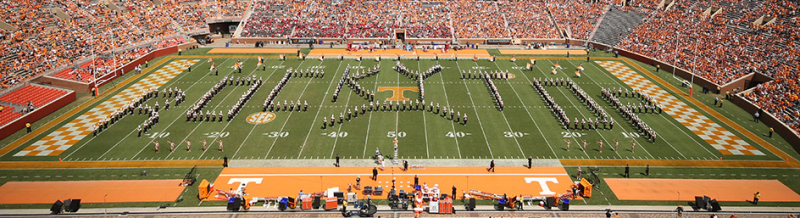
A recent Knoxville New Sentinel article (as well as articles and other press coverage, including stories on local television outlets like this one) noted the golden anniversary of The University of Tennessee’s unofficial* fight song (also a Tennessee state song), Rocky Top.  Any of you who have been to Neyland Stadium–or to Thompson-Boling Arena or any other venue at which the Vols are accompanied by the Pride of the Southland Marching Band or one of the pep bands–are familiar with the tune.  Many of our opponents just despise it.  It’s catchy, and it’s country.

And it has led to merch in which The University of Tennessee has an interest.  Rocky Top hats, t-shirts, etc. abound.  Lyrics from the song (especially “Home sweet home to me”) adorn the same.  That little song has become a big (read: commercially successful) deal.

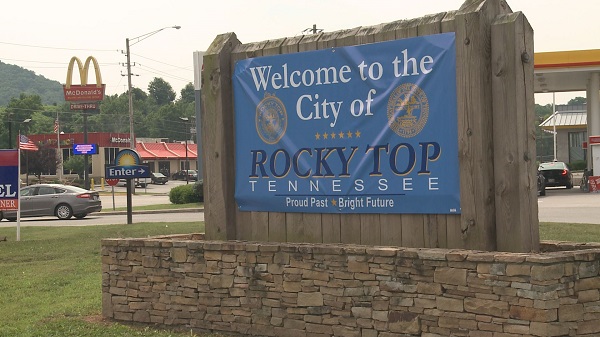
But it also has been involved in some recent intellectual property law controversies involving a town just North of us here in Knoxville–a town formerly known as Lake City, Tennessee and now known as (you guessed it) Rocky Top, Tennessee.  It will take me two posts to cover this without boring you all, but I will start with the article written by my colleague Brian Krumm and one of our alums, Liz Natal.  In Good Ole Rocky Top: Rocky Top Tennessee, Brian and Liz lay out the details of how our beloved song (which co-blogger Doug Moll says periodically rings in his head from a football game long ago . . .) became the name of a town despite a trademark suit over the affair.  The details are in the article.  For those interested in trademarks, the article lays out the controversy and offers some interesting observations.

But Brian and Liz’s piece just tells the early part of the story.  There’s more to say about the intellectual property ramifications of this name change.  Another of my colleagues, Gary Pulsinelli, is working on a piece along those lines now.  I will share it with you once he’s got at least a draft posted somewhere.  But I have heard presentations on this work, and it’s also quite interesting–even if Rocky Top is not your thing.  Stay tuned! 

RockTopTownSign

* The word “unofficial” was added to this post on September 28 in response to a reader’s comment, reflected below.  The official fight song of The University of Tennessee, Knoxville is “Down the Field,” also known as “Here’s to Old Tennessee.”